

Disaster
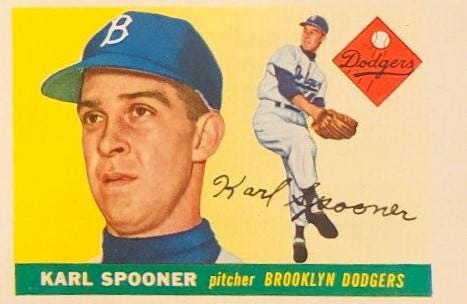
It’s easy for us to forget that there are actually people behind the baseball statistics that we adore and share with each other. And sometimes they have really tragic stories.
Karl Spooner was a born athlete; there’s no question about that fact. The earliest mention I could find of him from the papers in upstate New York comes from the basketball court, not the baseball diamond:
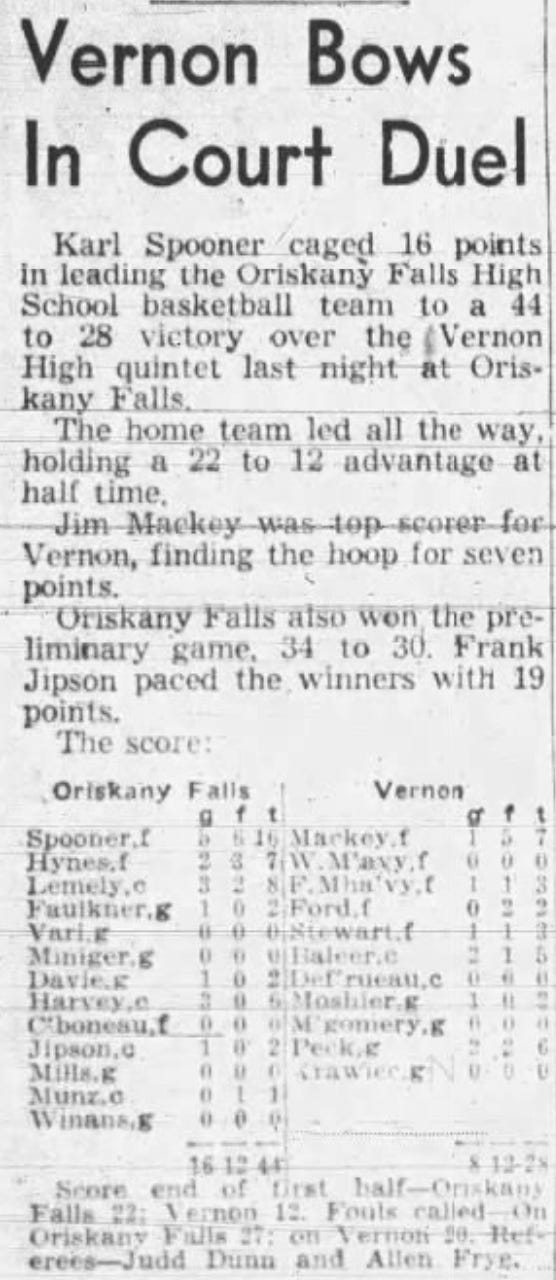
This is something I’ve noticed about all the athletes I’ve written about in this blog. The players destined for major league stardom tended to demonstrate incredible ability in all sports at a young age.
Though Spooner’s SABR biography makes it seem like he was throwing strikes for fun, I haven’t found much evidence of that in the old New York newspapers. He would pitch well, sure, but he only managed 4 strikeouts in this game:
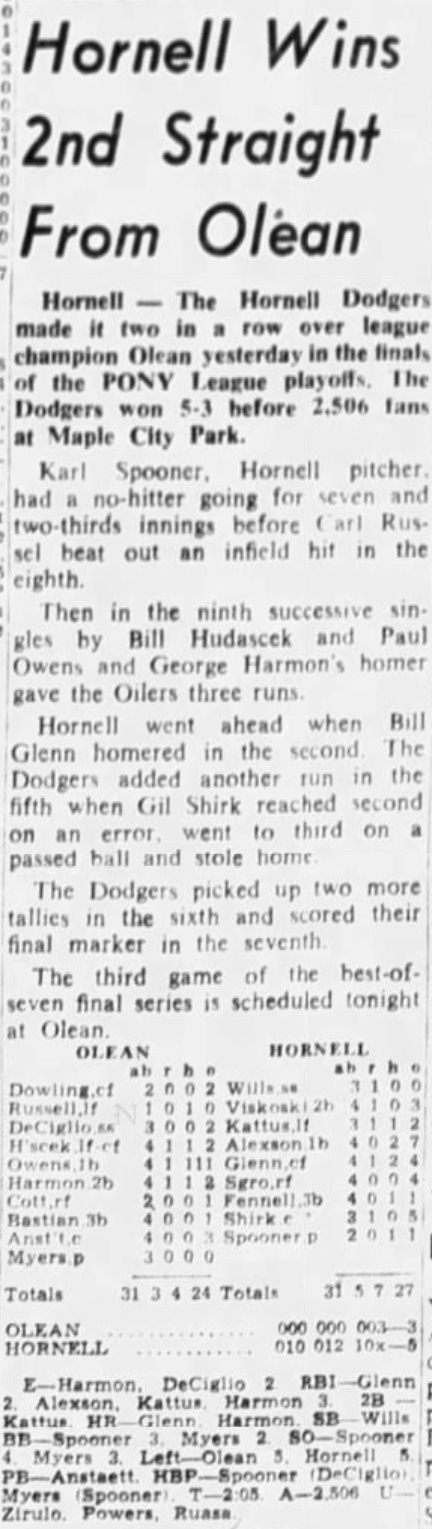
Of course, Spooner had already signed with the Dodgers by this time. And it didn’t take him long in the minor leagues to really make his mark:
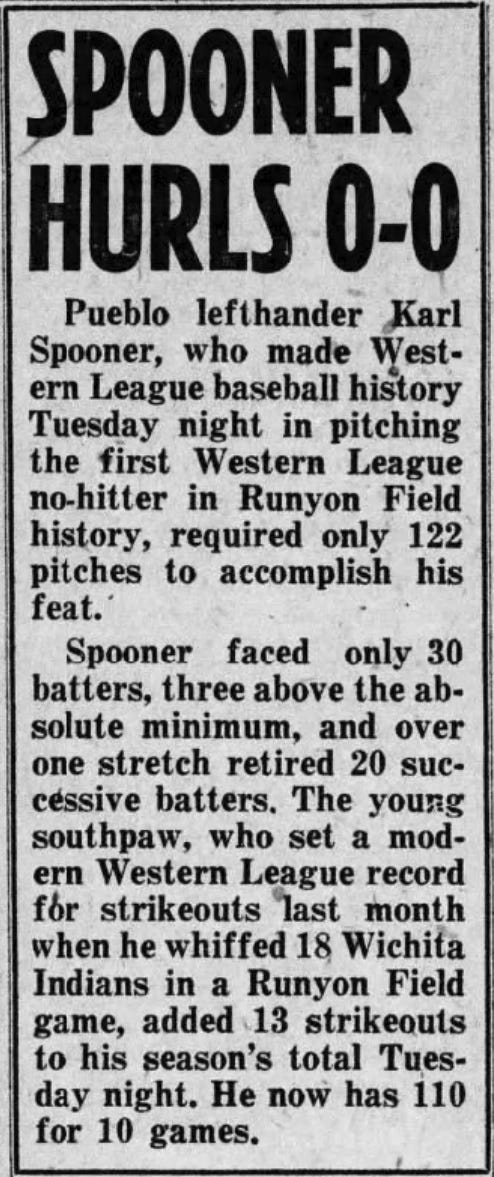
This no-hitter was particularly impressive because it came against the Denver Bears, who led the Western League at the time. Spooner had also struck out 18 Wichita batters a month before to set a Western League strikeout record.

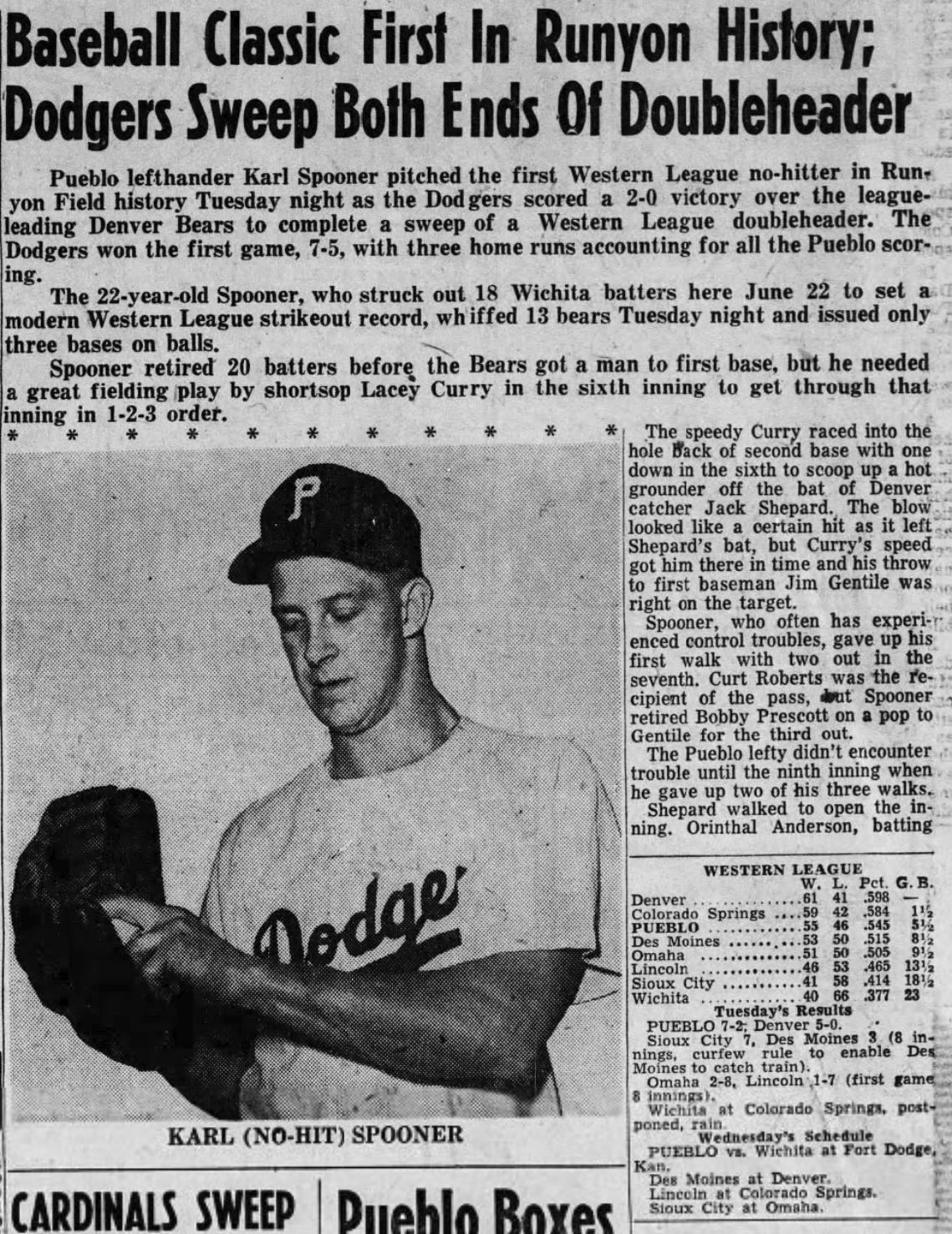
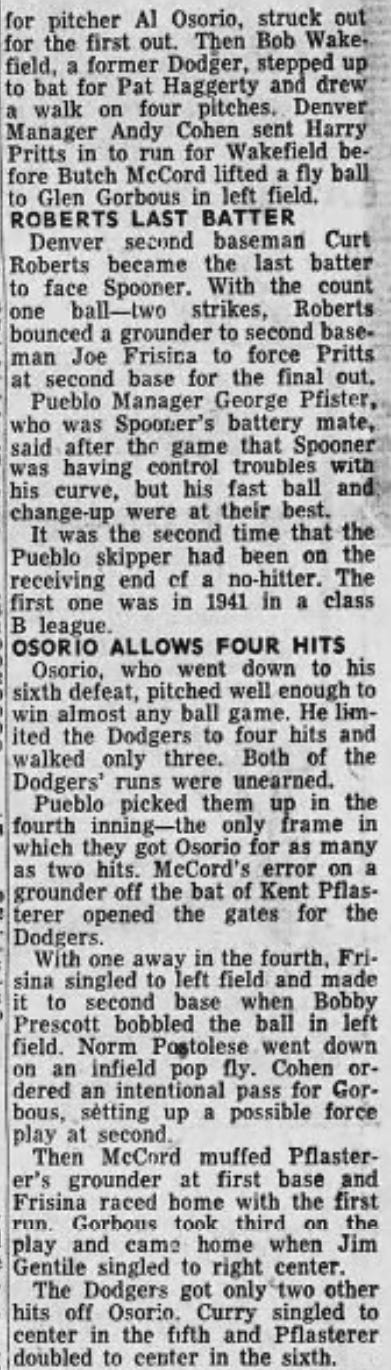
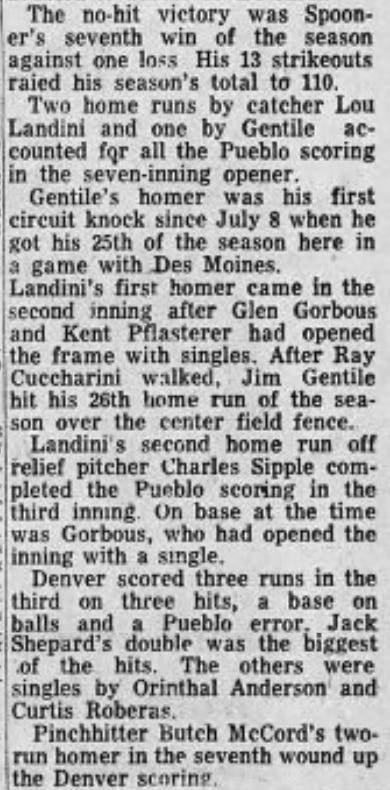
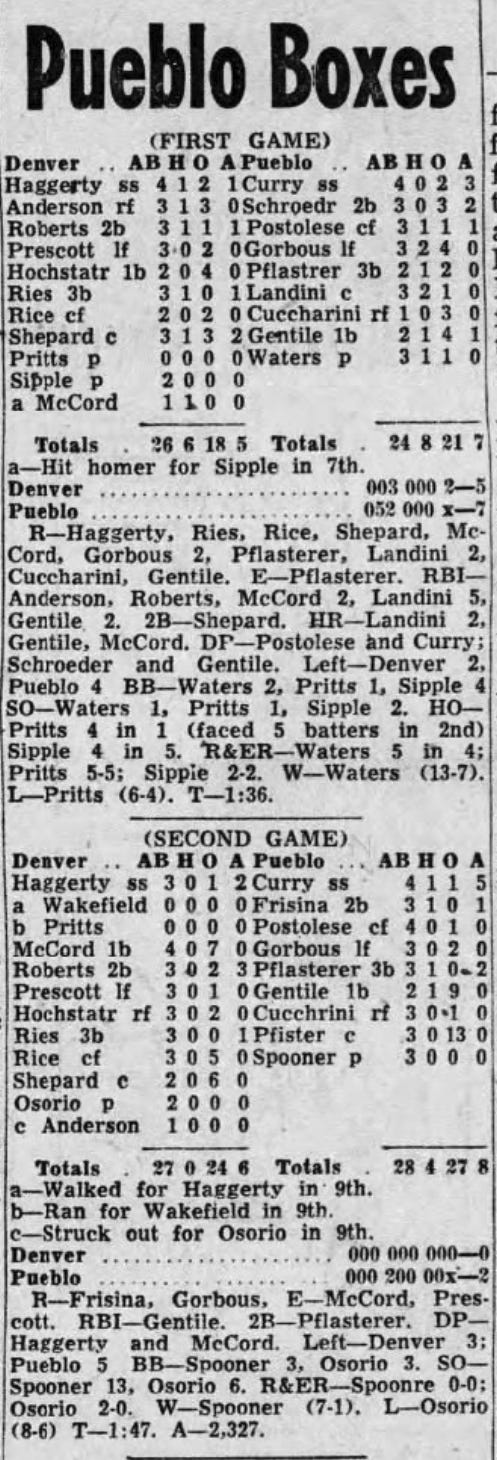
It was obvious by this time that Spooner was something special, even if he did struggle with his control from time to time.
It wasn’t until September 1954 that Karl made his way to the major leagues. And, boy oh boy, did he make an impact:
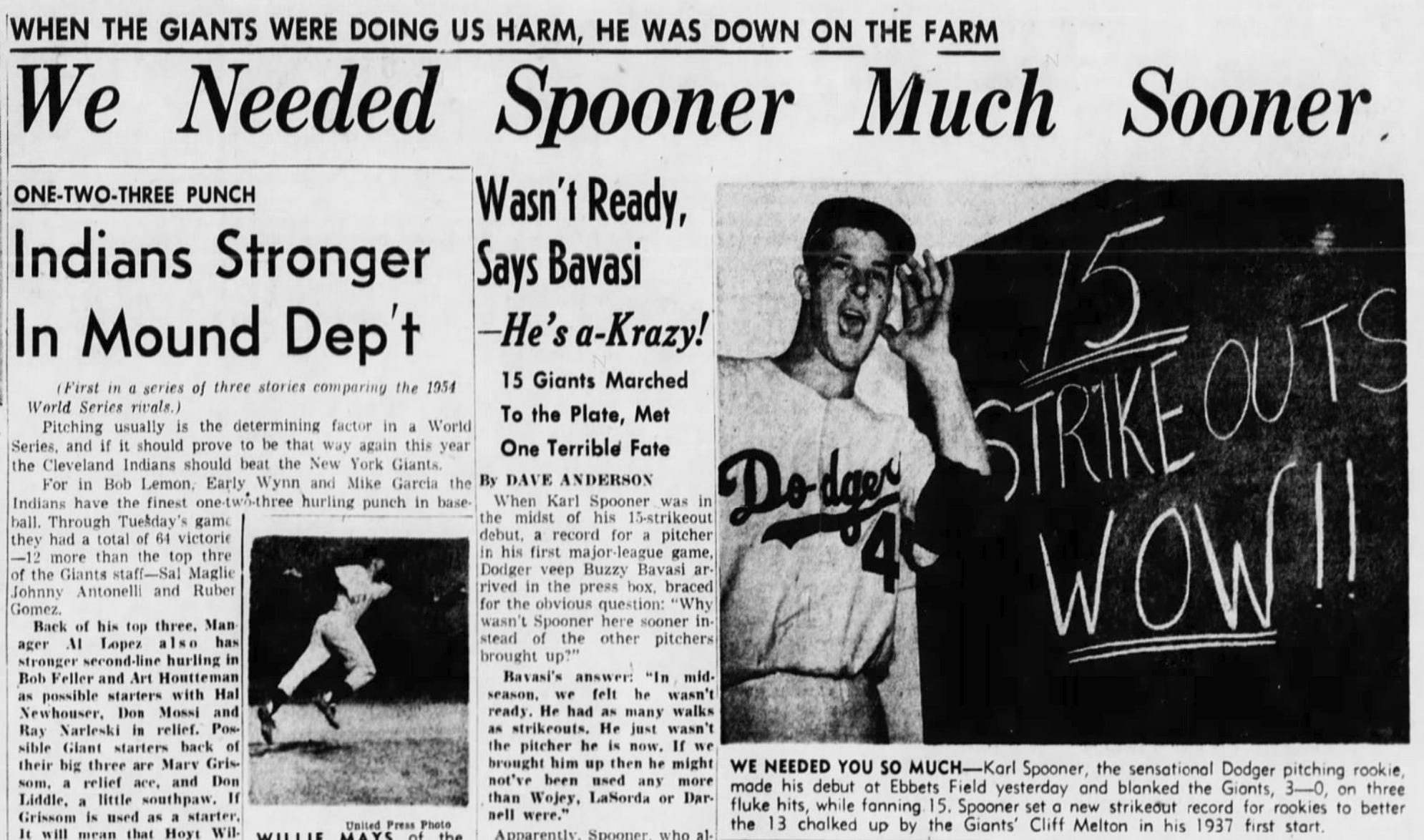
Spooner struck out 15 New York Giants in a 3-0 victory on September 22nd. And then, for good measure, he struck out another 12 Pittsburgh Pirates on September 26, giving him an amazing 27 strikeouts in 18 innings pitched. His ERA for 1954 was 0.00.
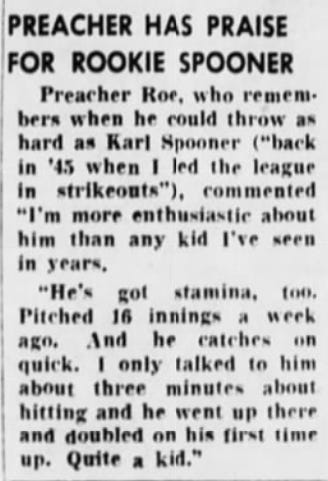
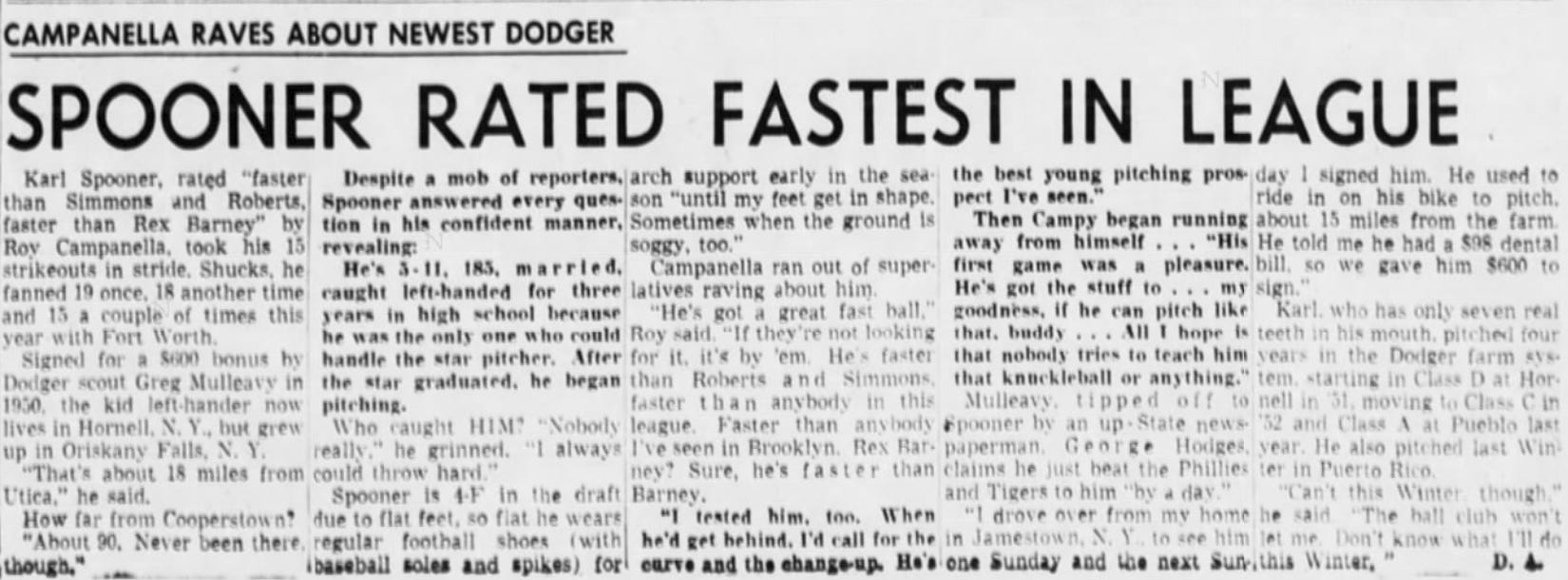
I’m not kidding, by the way. Spooner was the up and coming young pitcher in the Dodger organization at the beginning of 1955. Sandy Koufax was a fresh bonus baby, Don Drysdale was in the minor leagues along with Roger Craig, and Johnny Podres was finally ready for the rotation, but Karl Spooner was the man everybody was talking about:
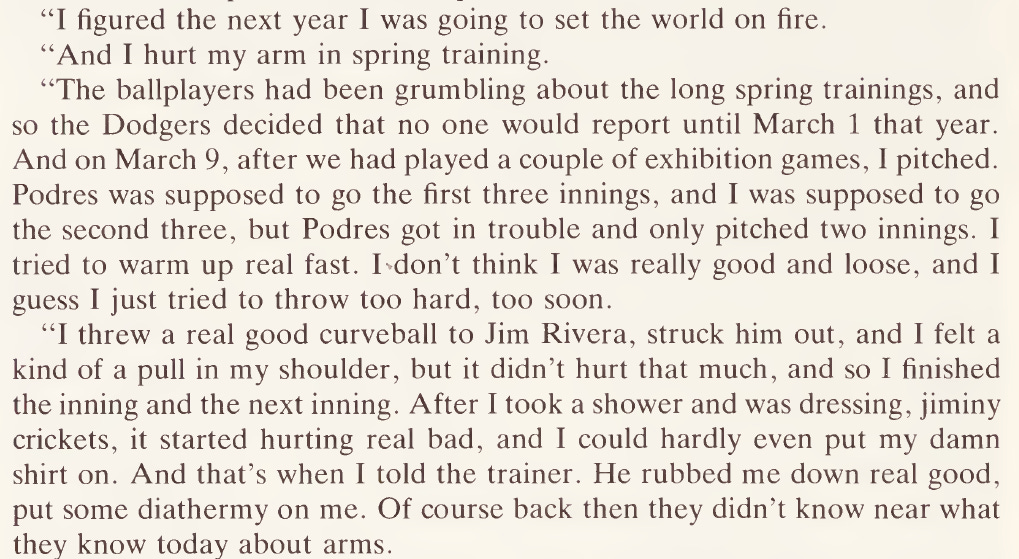
Now, we know that Spooner hurt his arm sometime in March 1955. His SABR biography tells us that he was injured on March 9th. The source for this is Bums by Peter Golenbock:
However, if Spooner was really hurting in 1955, you couldn’t tell. He went 8-6 that season with 14 starts and 15 relief appearances. In his 98 2/3 innings, Spooner struck out 78 and walked 41. His control wasn’t great, sure, but he still showed signs of brilliance.
Spooner’s most brilliant outing that season came on September 8th, the day the Dodgers clinched the pennant:
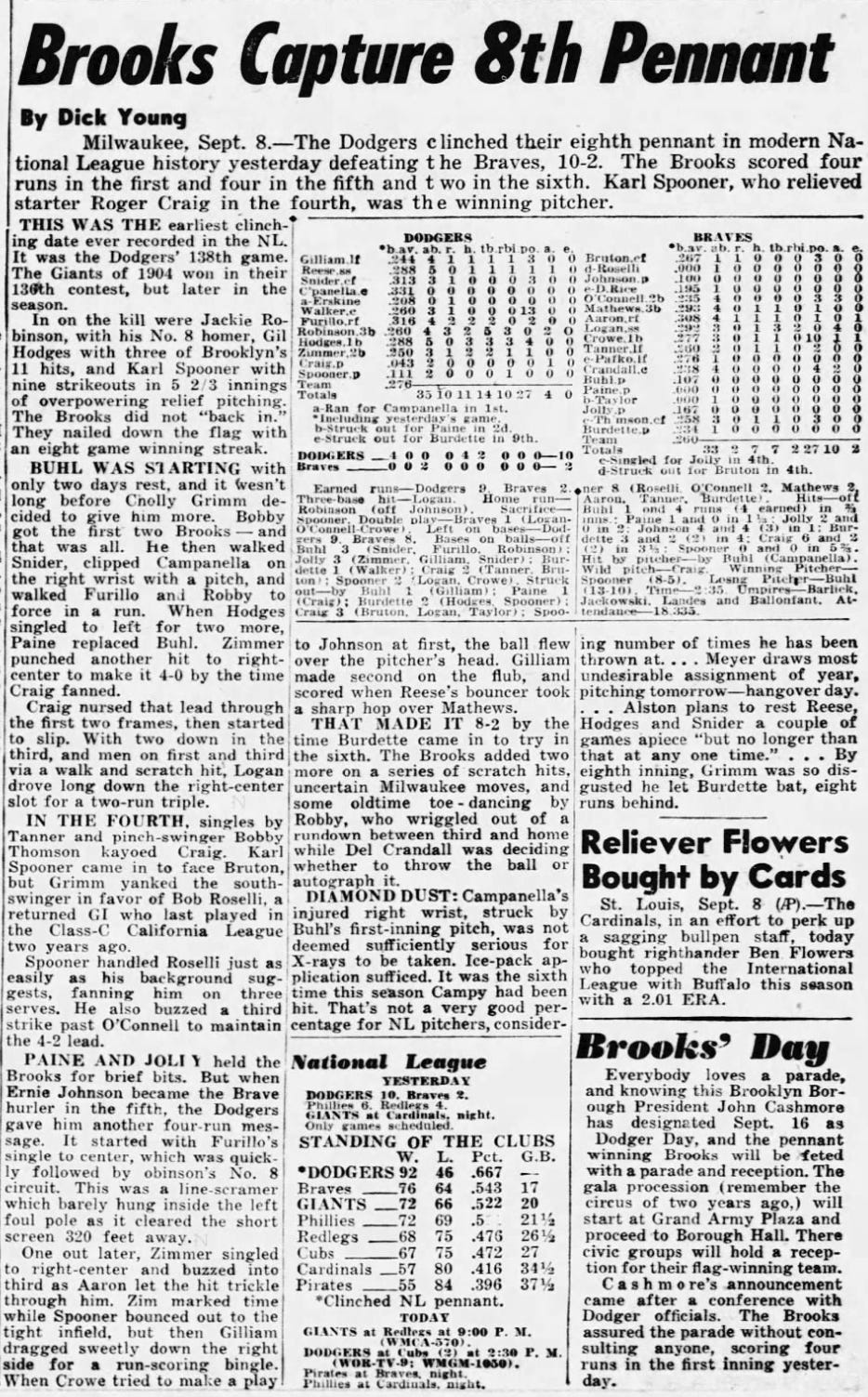
In 5 2/3 innings, Spooner gave up 0 hits, struck out 9, walked only 2, and looked as dominant as he ever had.
And yet his Major League career would only last a few more weeks.
Spooner pitched in relief in game 2 of the World Series, giving up only 1 hit in 3 innings, walking 1, and striking out 5. Walter Alston wanted a victory, but didn’t have Don Newcome available - and so he decided to go with the kid.
The 24 year old Spooner walked Phil Rizzuto, then struck out Billy Martin.
But these were the famous New York Yankees. When Spooner walked Gil McDougald, you knew there was trouble afoot.
Yogi Berra singled, scoring one and sending McDougald to third. Hank Bauer then singled home another run, sending Berra to second base. It was 2-0 Yankees with only one man out.
Moose Skowron then came up and hit a little pop fly down the line in right field.
It exited the stadium right over the head of Carl Furillo:
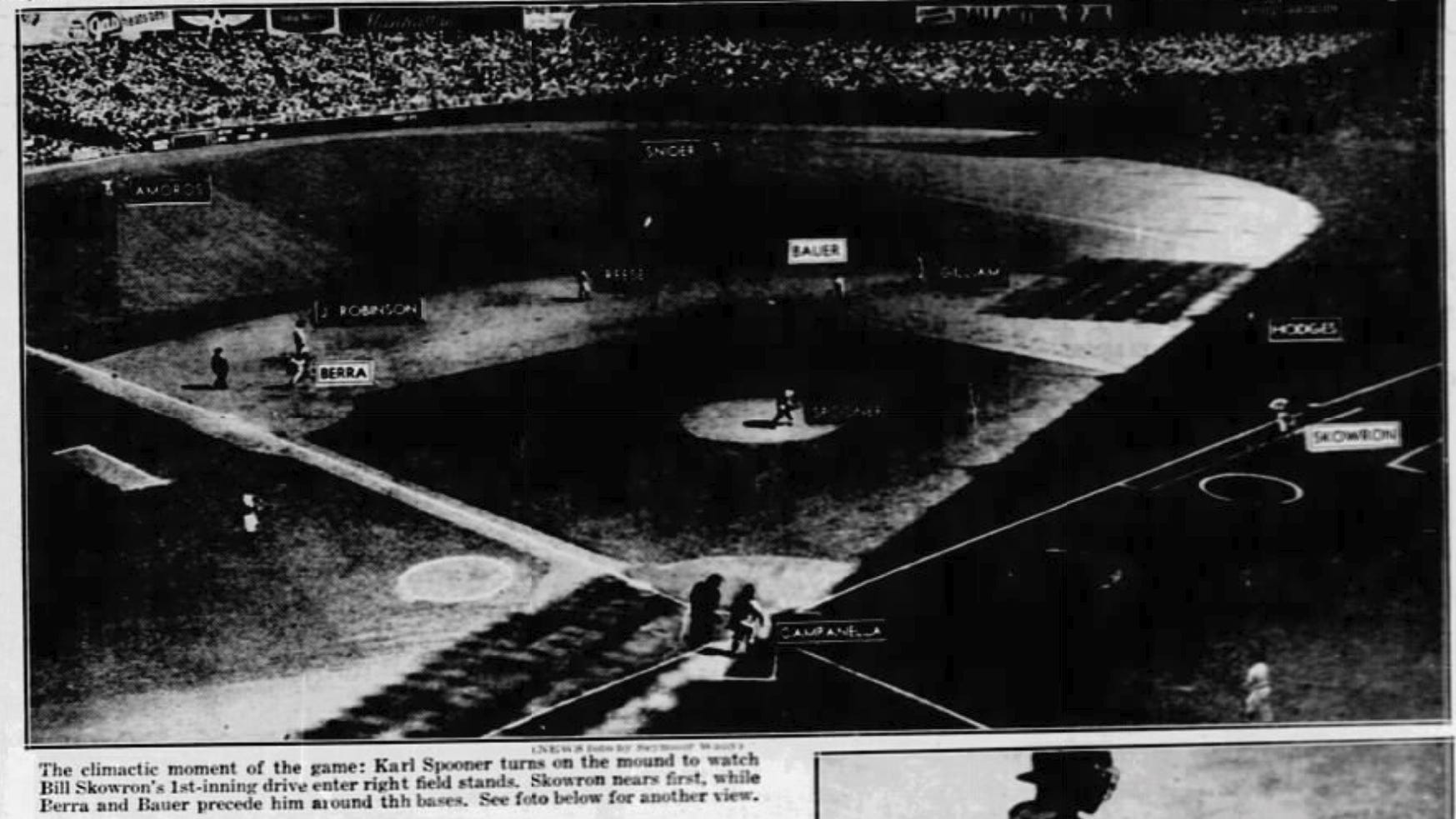
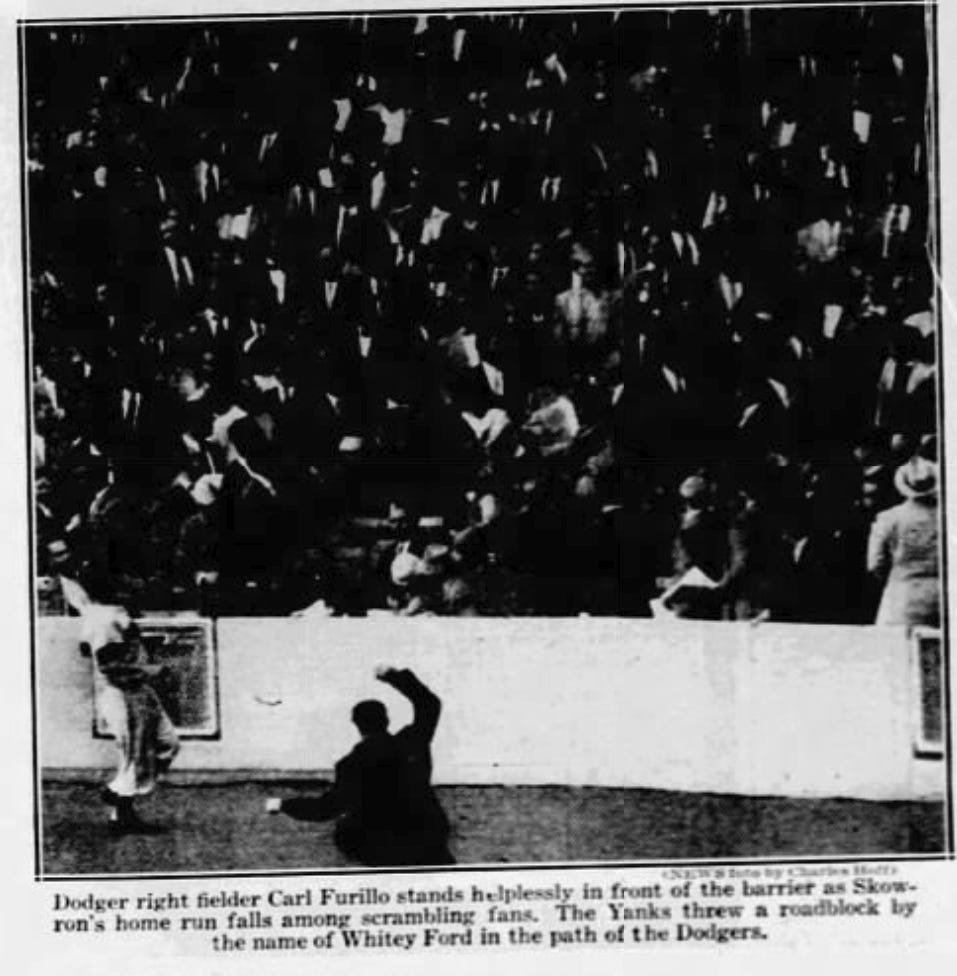
Before Skowron had even touched home plate, Alston was out to take Spooner out of the ballgame:
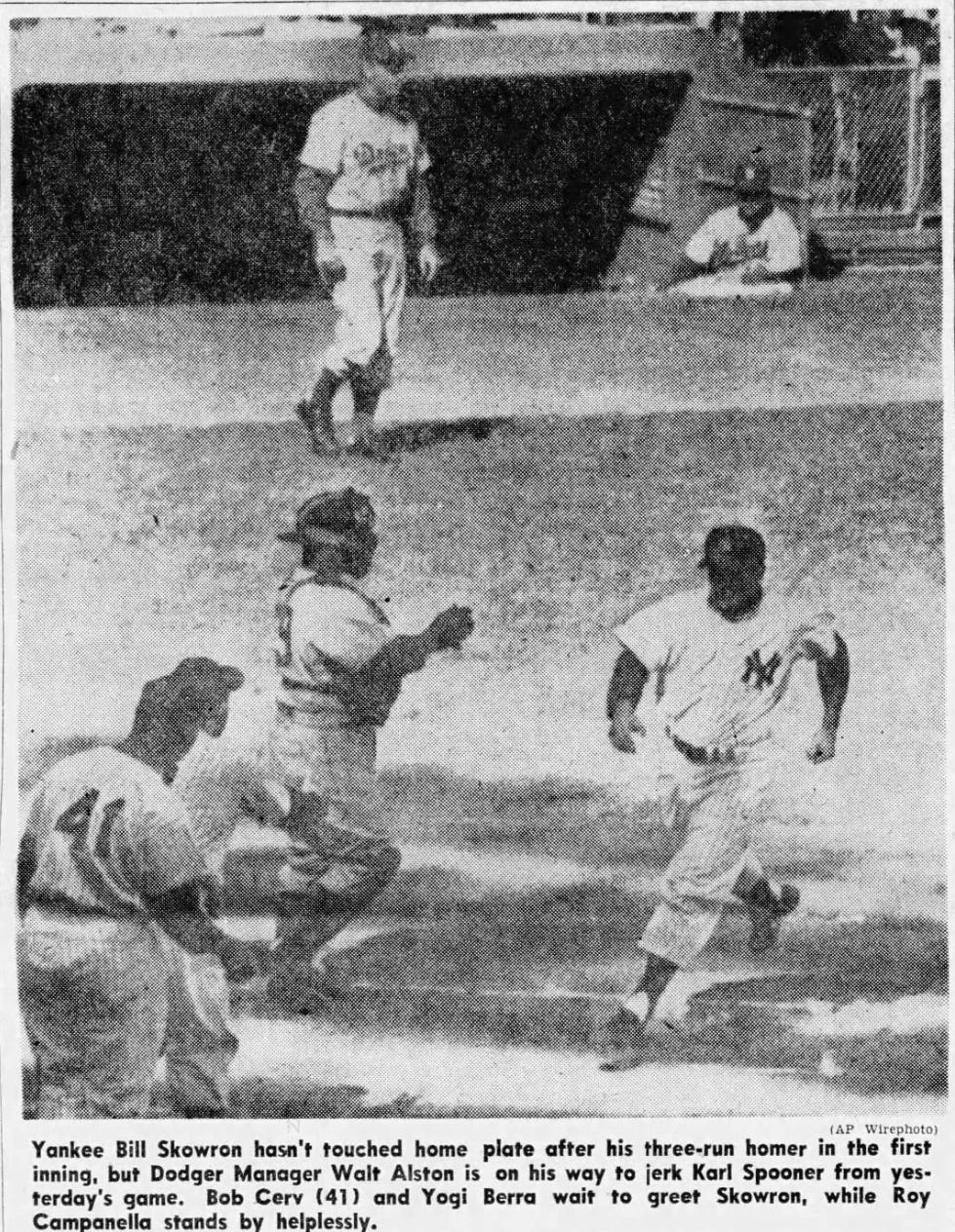
The Dodgers held the Yankees the rest of the way, but couldn’t do anything with Whitey Ford. Ford mowed down Brooklyn’s hitters, the Yankees won 5-1, and the stage was set for a winner-take-all 7th game the next day.
And, as sad as it sounds, this was the last game Karl Spooner ever pitched in the major leagues.
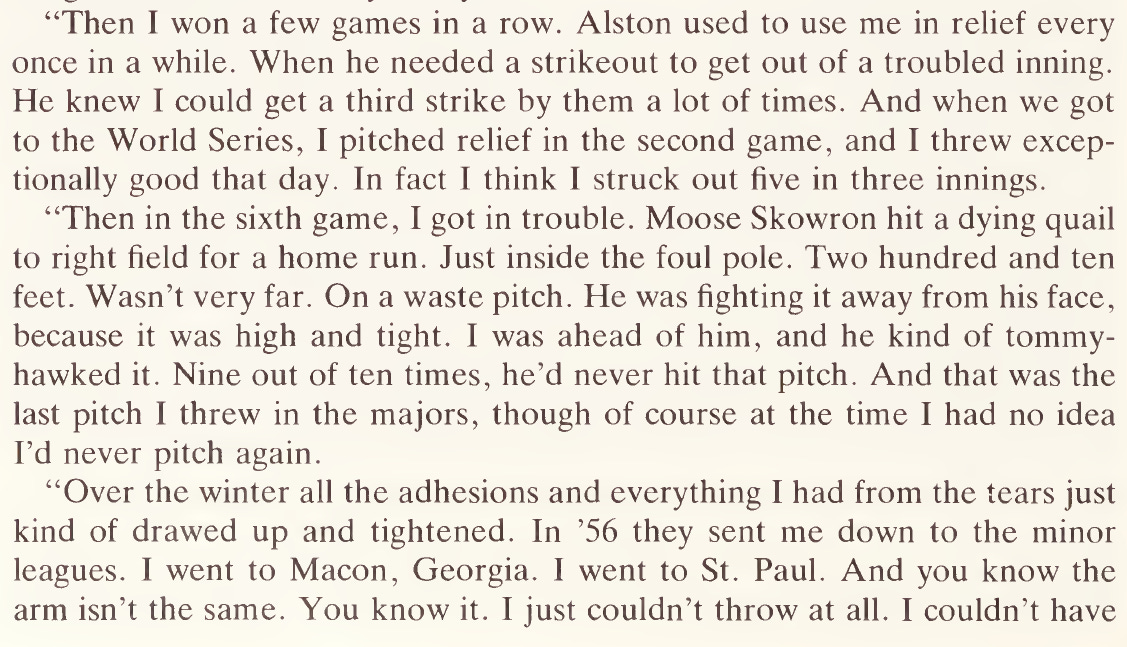
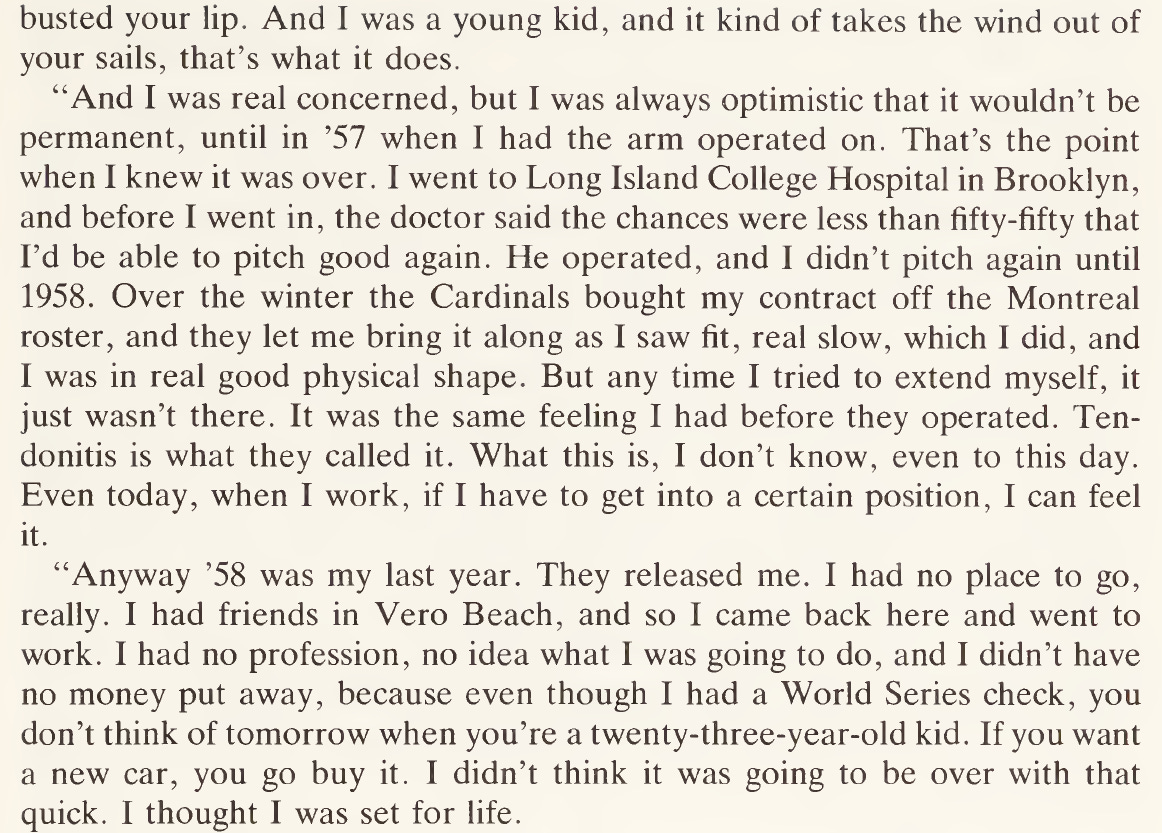
The strain Spooner had put on his arm during his years of high velocity pitching did him in:
Keep this story in mind when you hear about some awesome rookie throwing the ball a million miles an hour and striking out everybody left and right.
Though the powers that be seem to have forgotten this lesson, the truth is that pitching in baseball is about more than just overpowering hitters. You’ve got to pace yourself. You’ve got to strengthen your arm, you need to make sure you’re not destroying it every time out there, and you’ve got to trust your fielders.
Spooner tried to do it all by himself, and he did himself in.
Just wanted to mention that the "Wills, ss" in that first 1951 Class D box score is indeed Maery Wills, who wouldn't reach the big leagues until June of 1959, by which time the Dodgers had been out of Brooklyn for more than a year and Spooner's fourth and final comeback attempt had failed.