

Holding Back
I’ve been holding back on talking about pitching on this blog.
I know that it’s a big topic. There are a lot of questions out there about whether modern pitching methods are actually healthy for players, especially given the high rates of Tommy John surgery and general injuries. There’s also a lot of frustration among older baseball fans who remember the way things once were.
Rather than giving a boring lecture like everybody else, however, I want to let a few voices from the past do the talking.
About 25 years ago, back when I started studying at BYU, I was surprised to discover that the library held a number of relatively rare books. This included an original edition of Pitching in a Pinch by Christy Mathewson.
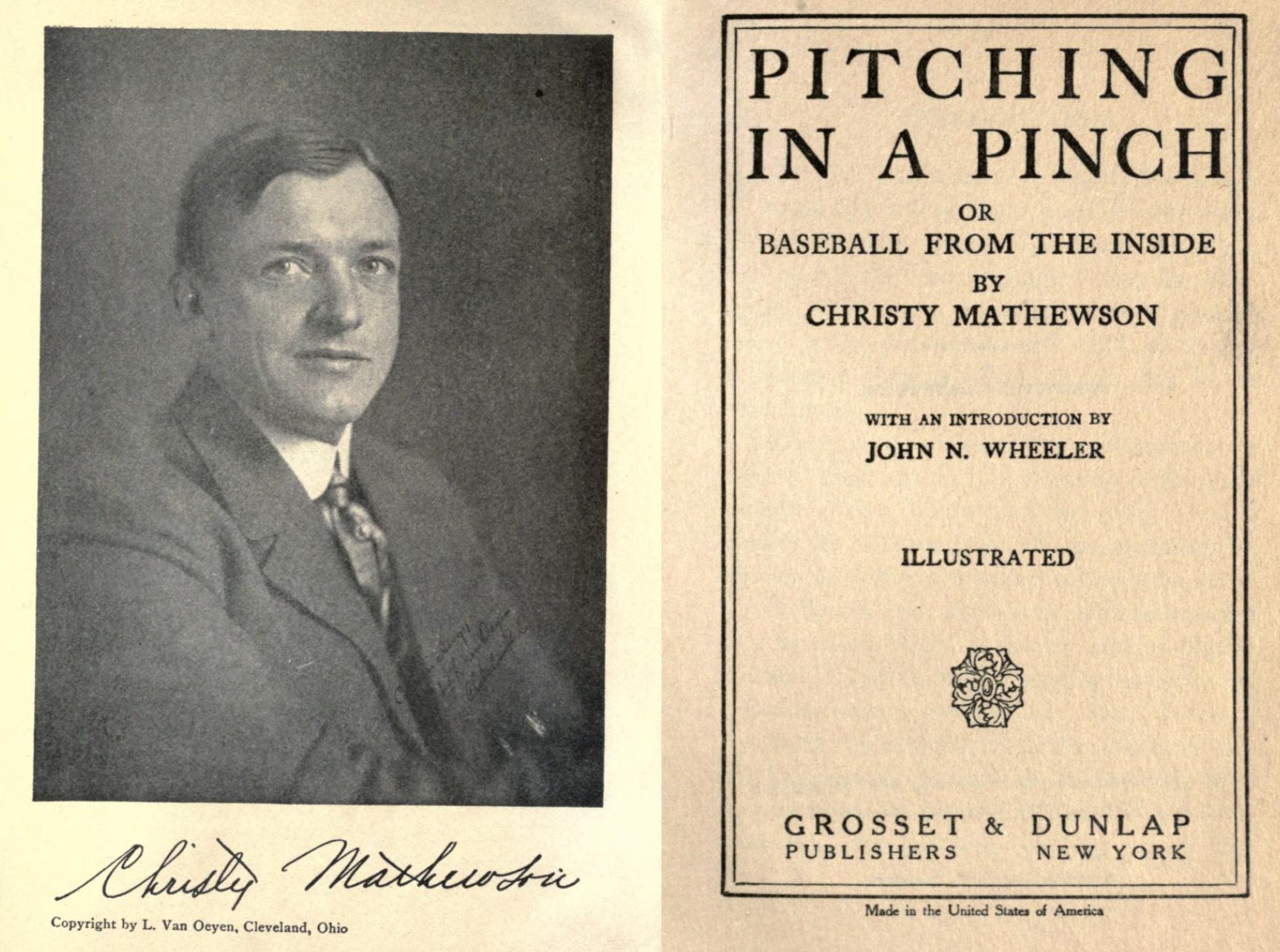
Of course, you can find it for free through the Internet Archive. The idea of having an original paper copy is not quite as attractive and amazing today as it was 20 years ago or so.
If you’ve never read Mathewson’s book, you’re really missing out. While I know some people question whether he wrote it himself, the book is really interesting and a lot of fun to read.
And there are things that Christy says that might strike you as interesting, especially in our age of pitchers going full out on every pitch.
For example, Matty talks about how his famous “fadeaway” screwball really took a toll on his arm:
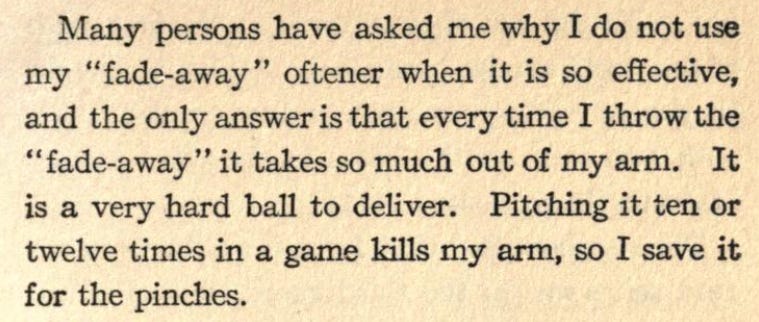
The “pinches,” in this case, refers to those important moments in each game - what we’d probably call “the clutch” these days. Mathewson is talking about conserving his strength and energy for those moments in time where he needs it the most.
Now, the thing that Mathewson realized that gave him a major competitive advantage is that he needed to stay in the ballgame as long as he possibly could. He talks a lot in this book about the importance of longevity as a pitcher, and about knowing when it was time to bear down and when he could let up a tad:
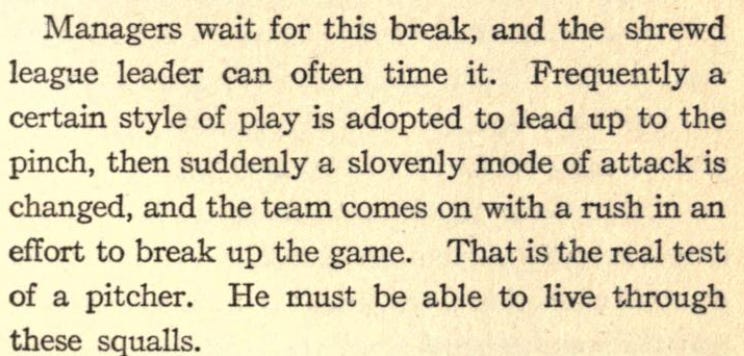
And Mathewson also concedes that sometimes even the “weakest” hitters wind up getting the best of you:

Most modern critics of this book note that Mathewson didn’t have to worry about the possibility of every hitter in the lineup hitting a home run the way modern pitchers worry. Of course, part of this is due to batter strength, but another part is due to smaller stadiums, part is due to the makeup of modern bats, and part is due to the reliance modern pitchers have on velocity.
But there’s a psychological component to all of this as well:
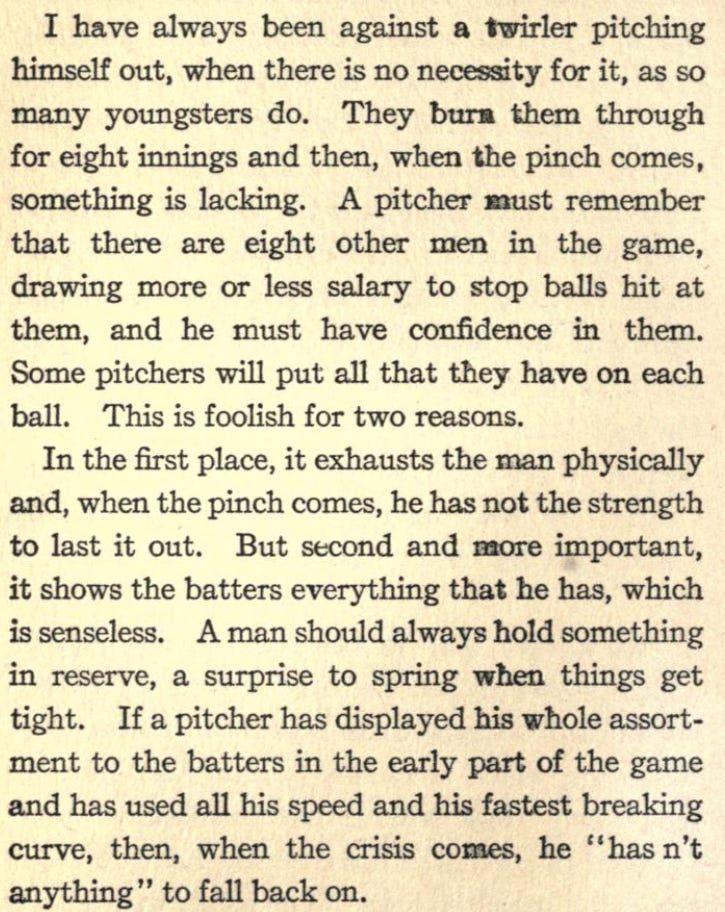
As amazing as it is to see a young phenom throw dozens of 100+ mile per hour fastballs in an amazing start, it’s honestly more impressive to see a young pitcher throw 300 innings regularly without completely throwing his arm out.
But, as Mathewson correctly notes, you’re not going to be able to do that if you’re throwing your arm out on every pitch. And it doesn’t require much medical knowledge to see that the modern approach will likely lead to injury.
But, when you understand the psychological aspect of the sport, you can figure out ways to get guys out without necessarily throwing your arm off:
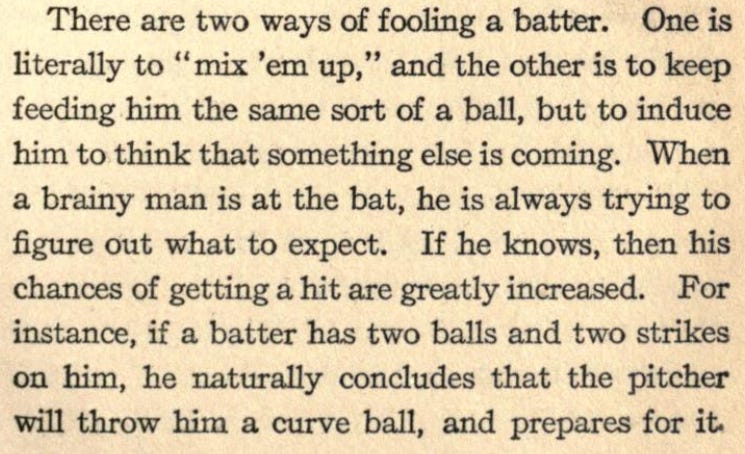
Anyway, this gives you a simple idea of the Mathewson school of pitching according to his book.
I think Christy actually wrote the book himself, with perhaps some light editing help. It’s pretty poorly organized and includes a lot of anecdotes, the sort of thing that you’d expect a professional ballplayer to talk a lot about. Mathewson was actually a quite literate man regardless of what John Thorn wrote in the article I linked to above.
While it might seem old fashioned at times, I have a hard time believing that the sport has changed so dramatically these days that the only way to pitch is to throw your arm out on every single pitch.
What I do understand, though, is that there’s a general tendency to feel that the advice of the older generations is old fashioned and not exciting. After all, ESPN will show highlights of your 105 mile per hour fastball over and over again. If you get a lot of ground balls, mix up your speeds and arm angles, and manage to keep your pitch count low while getting a lot of outs, you don’t get the highlights.
Maybe that’s what’s wrong with pitching after all.
I wonder what the Big Train 🚂 had to say about this book 📕
Interesting comment. Interesting pitcher. Very interesting NYT correspondent covering the 1919 World Series. https://johnnogowski.substack.com/p/the-mysterious-mr-mathewson?r=7pf7u&utm_medium=ios