

Jack Dunn’s Triumphant Return
If you’ve been around this blog for a while, you probably remember this article on the time Baltimore Orioles owner Jack Dunn was forced to sell Babe Ruth:
This is the sort of story that tends to be lost in the baseball history shuffle. Most fans, as well as most historians, tend to ignore the history of the minor leagues and focus instead only on the leagues that were considered “major.”
Actually, the truth is that Jack Dunn’s 1914 Baltimore Orioles were probably just as good as any Major League team in the country. The Baltimore papers were reporting this early in spring training:
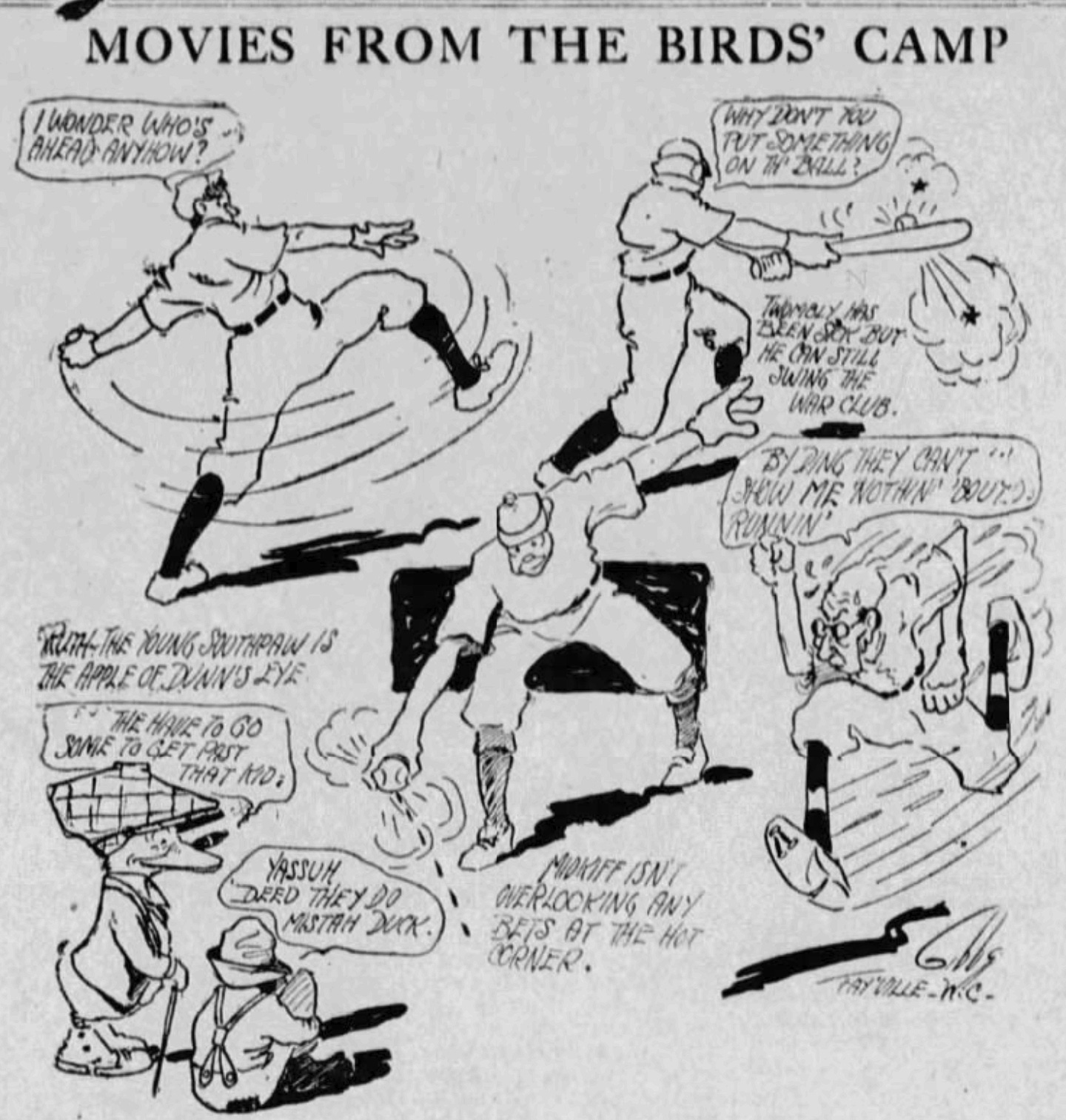
And, yes, that is a reference to Babe Ruth on the bottom left.
In fact, the Orioles showed their power by demolishing the Philadelphia Phillies in a spring training exhibition in mid-March:
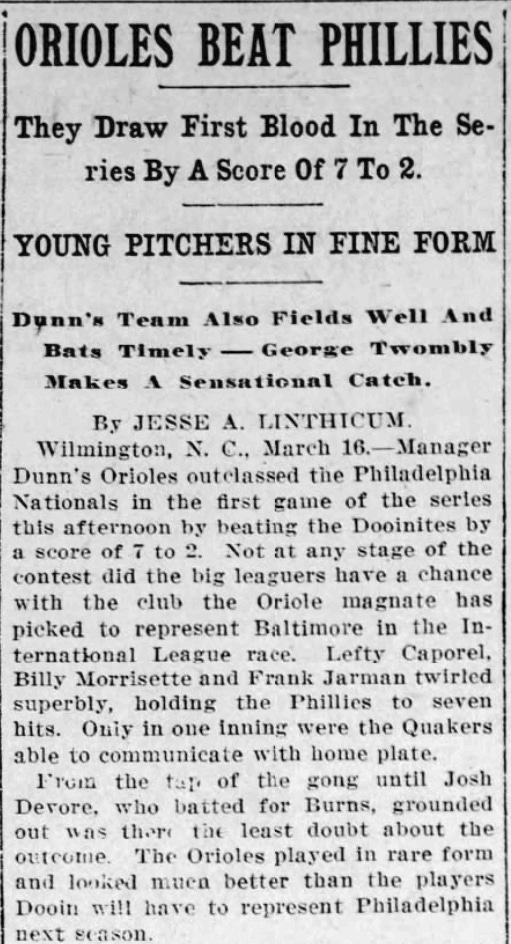
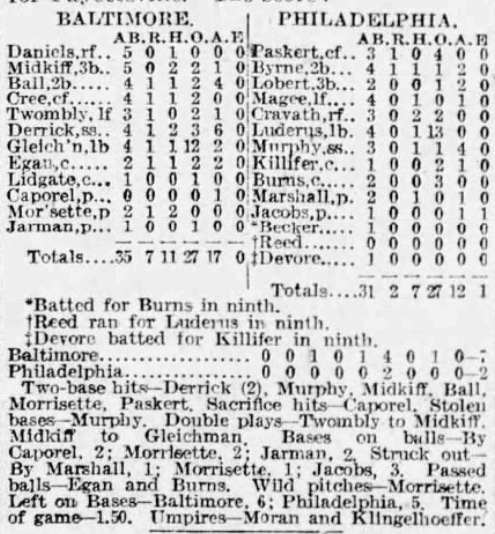
Of course, as much fun as it is to play “what if” games and look for all sorts of old exhibitions, it doesn’t really prove all that much. Dunn’s problem is that the Baltimore Terrapins of the Federal League stole away a lot of his audience. And, of course, the Federal League was considered a “major league” at the time, even though the actual talent gap with the International League was in question.
The problem with that local competition is that Dunn couldn’t attract enough paying customers to keep his bank balance in the black. And so he slowly started selling off his stars.
The Orioles were stuck in third by early June:
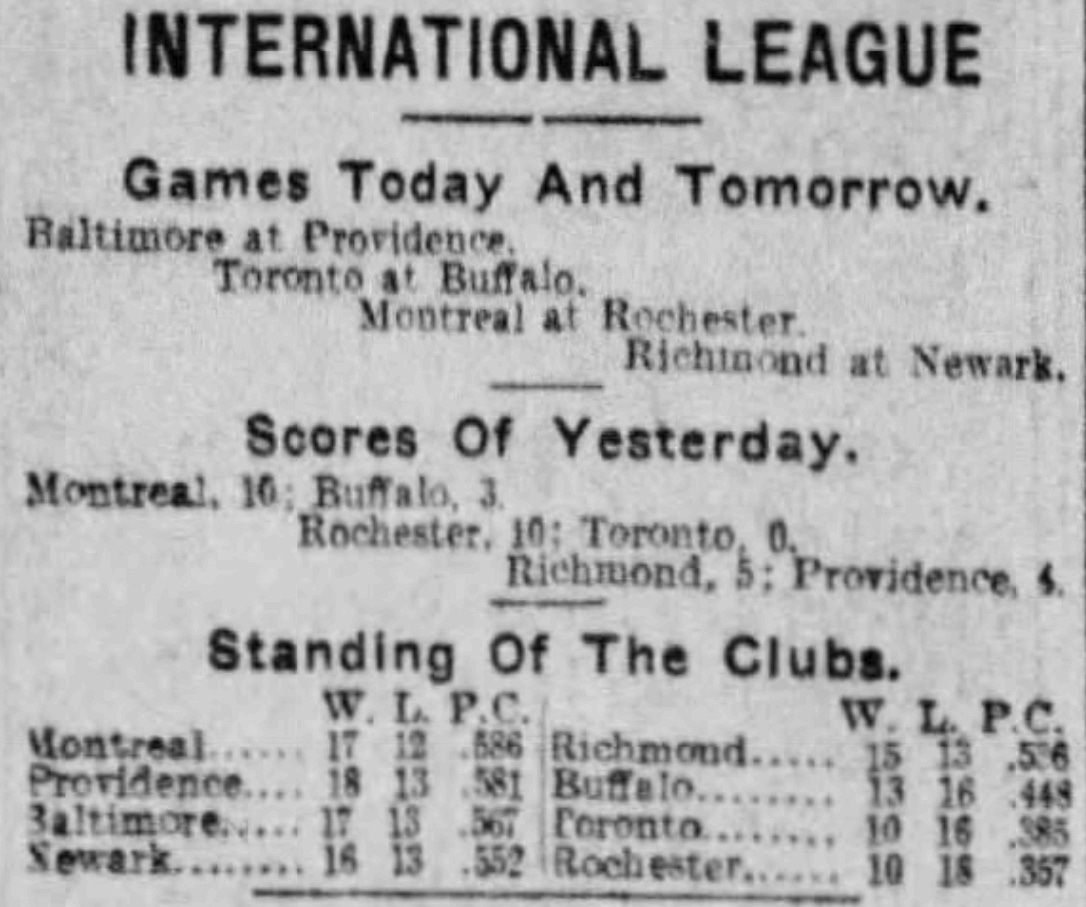
They faded soon after that, hurt in large part by the departure of star pitchers Babe Ruth and Ernie Shore.
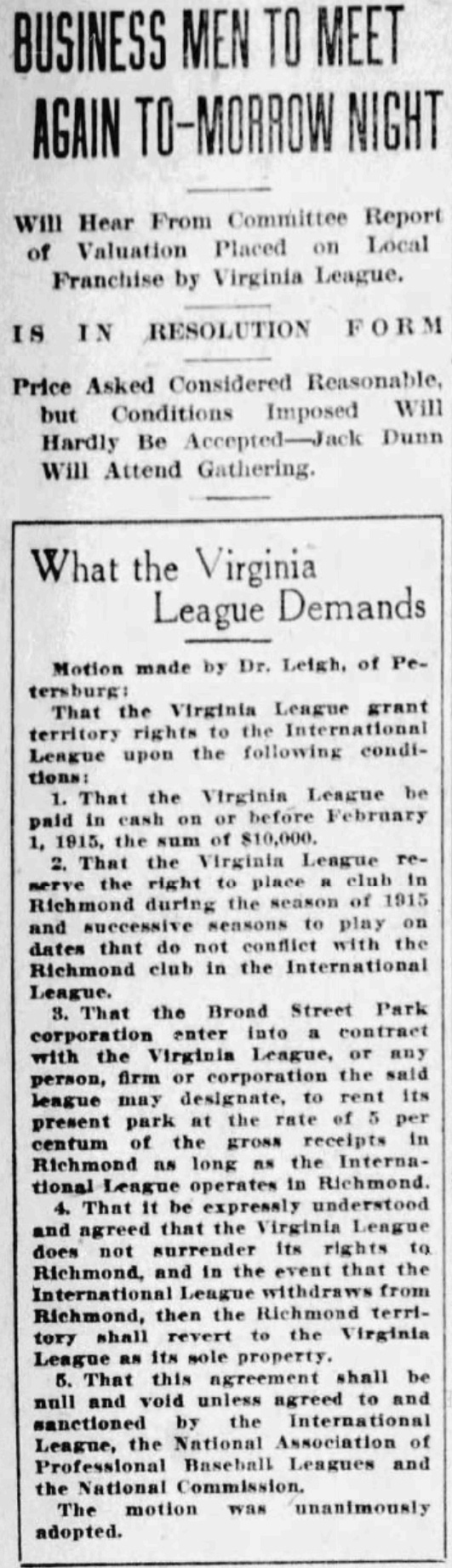
Anyway, by the very beginning of 1915 Dunn decided that he had to move his team. He decided to move it out to Richmond, Virginia. The only problem, of course, is that there was already a minor league team in Richmond, which meant Dunn had to make a cash offer to buy them out:
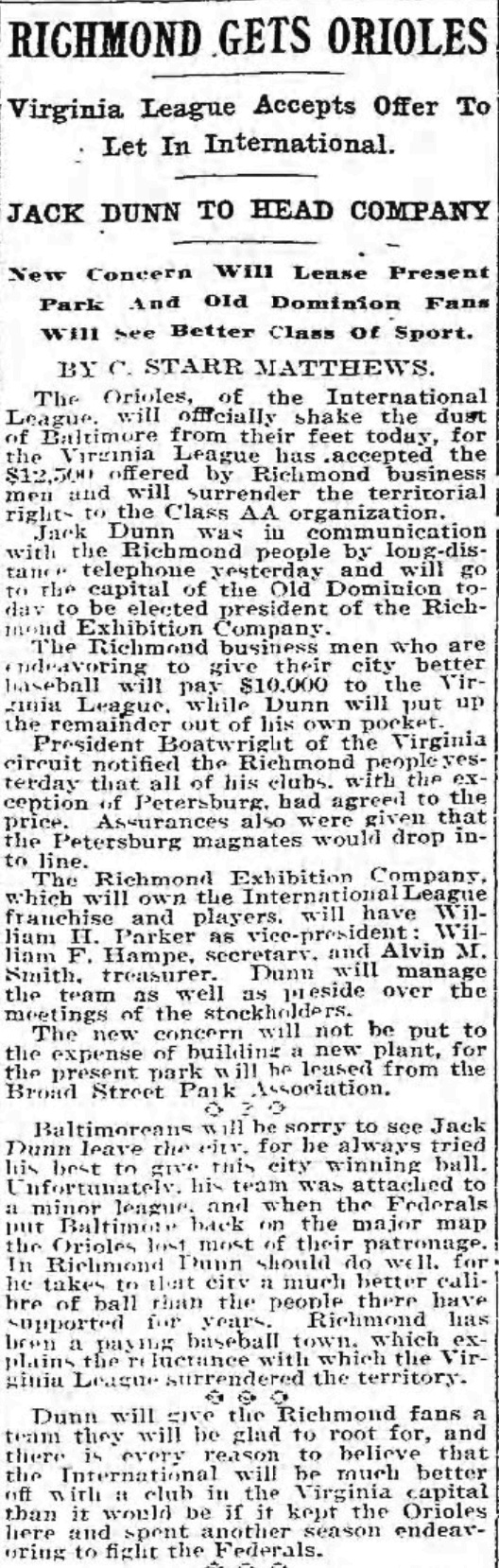
Dunn succeeded in the end, though he had to throw another $2,500 at the Virginia League to make it official:
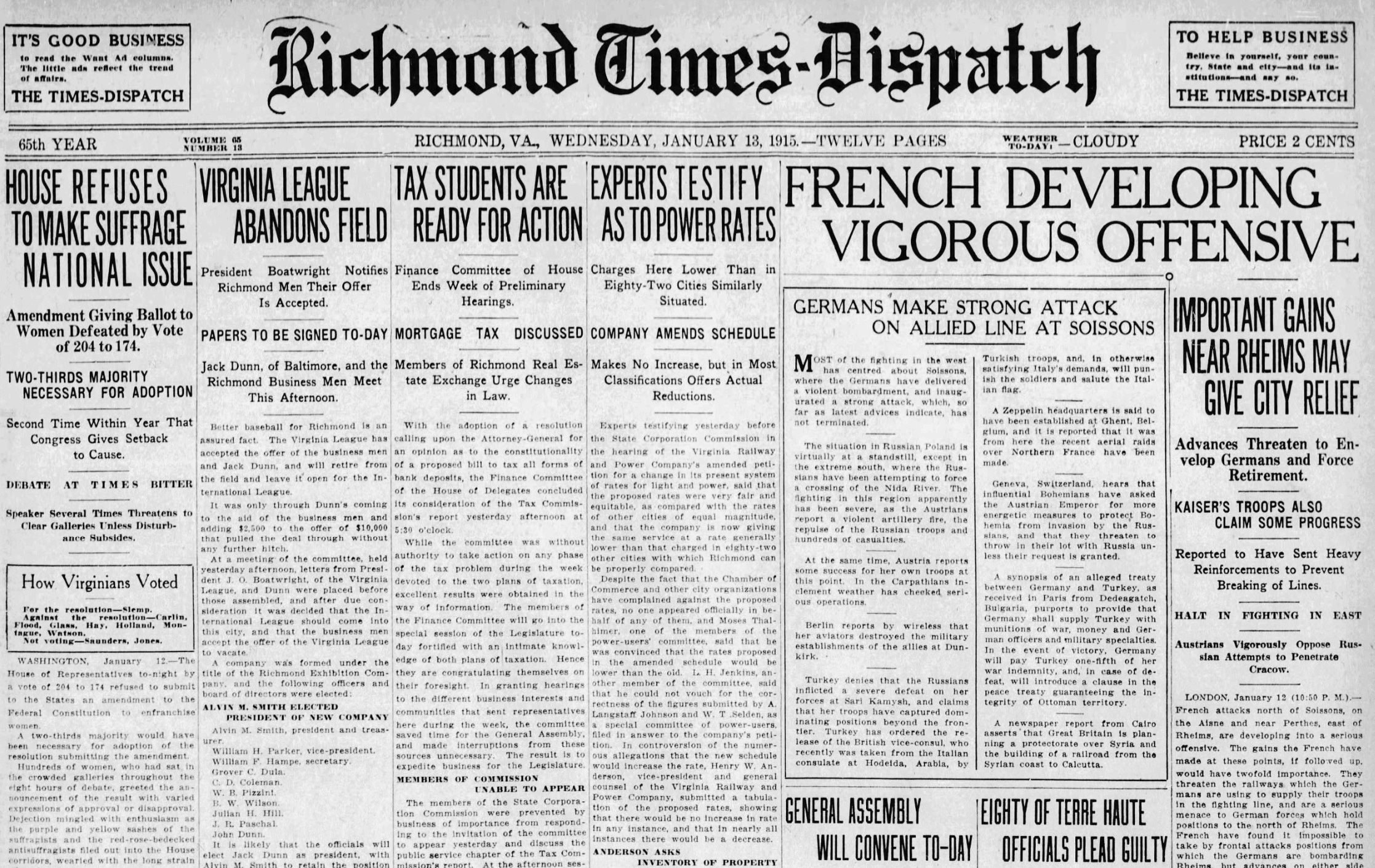
Now, this was really big news in Richmond - big enough to be on the front page, right next to the news of the endless war:
Now, this is the part where things get kind of complicated.
As you know, most of the Federal League teams were bought out by Major League Baseball. The Federal League owners in Chicago and St. Louis were allowed to purchase the Chicago Cubs and St. Louis Browns, respectively.
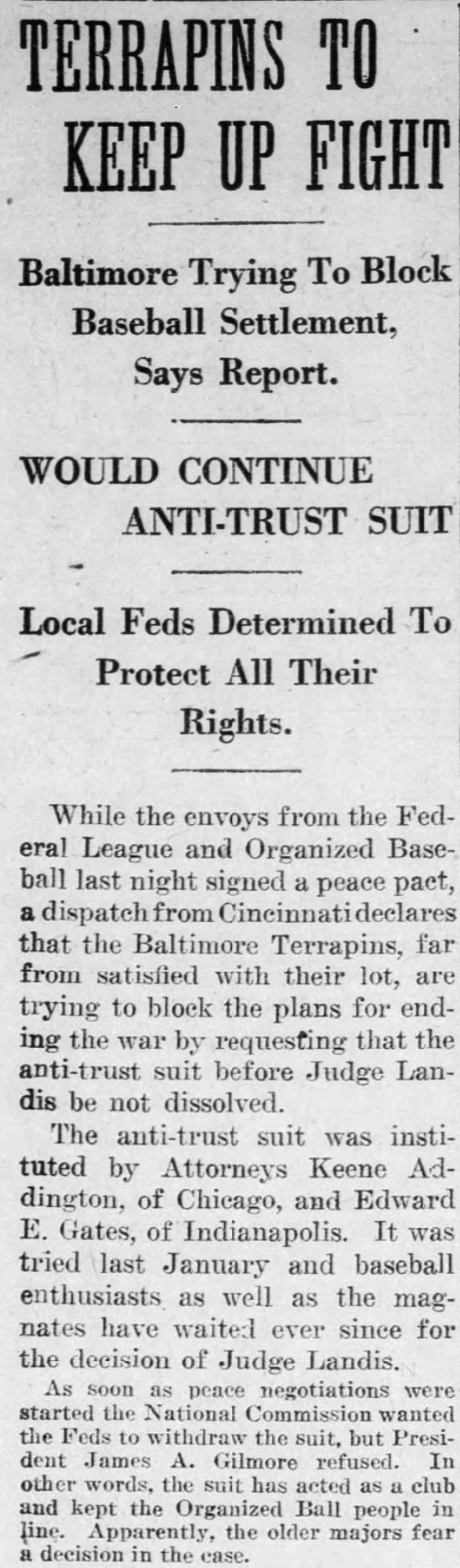
The Baltimore Terrapins, however, weren’t part of any big buy out deal, which prompted the Terrapins to sue organized baseball in federal court. This is the case that put Kenesaw Mountain Landis on the map, and that wound up shaping organized baseball up until the reserve clause finally fell in the 1970s.
That case was made public in December 1915:
And it seems that the Terrapins owners were upset that they weren’t given the chance to buy their way in to the major leagues - something that might have meant a franchise shift to Baltimore:
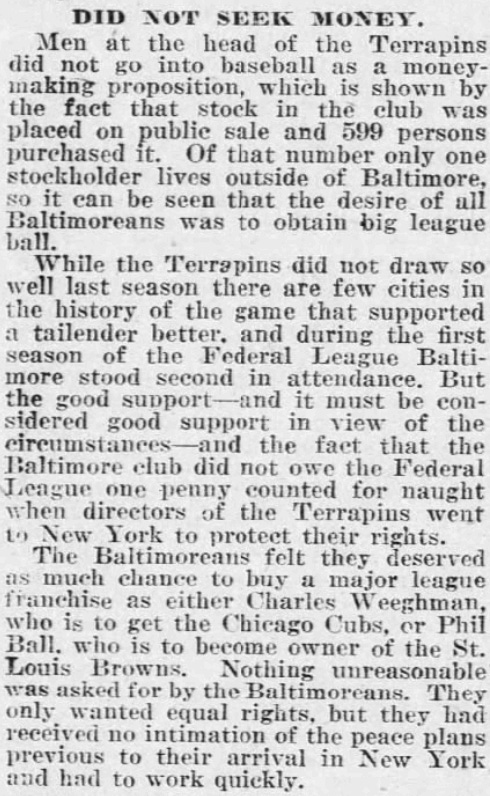
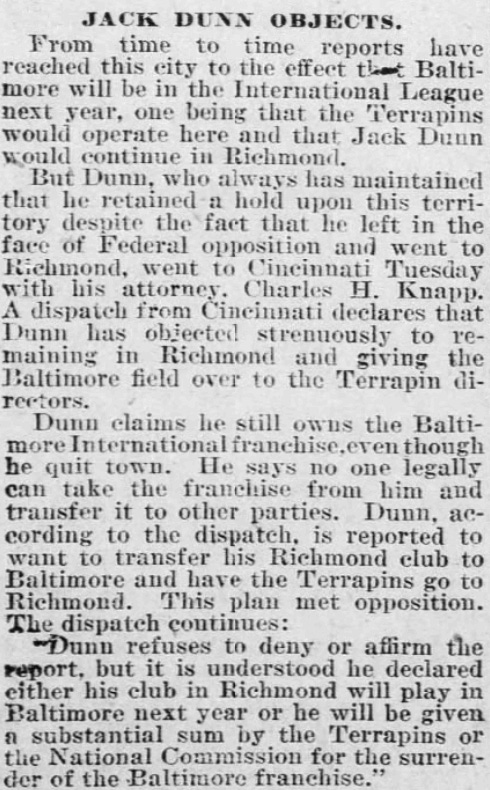
The newspapers in winter 1915 reported that the Terrapins would likely return to the International League, which got Jack Dunn excited:
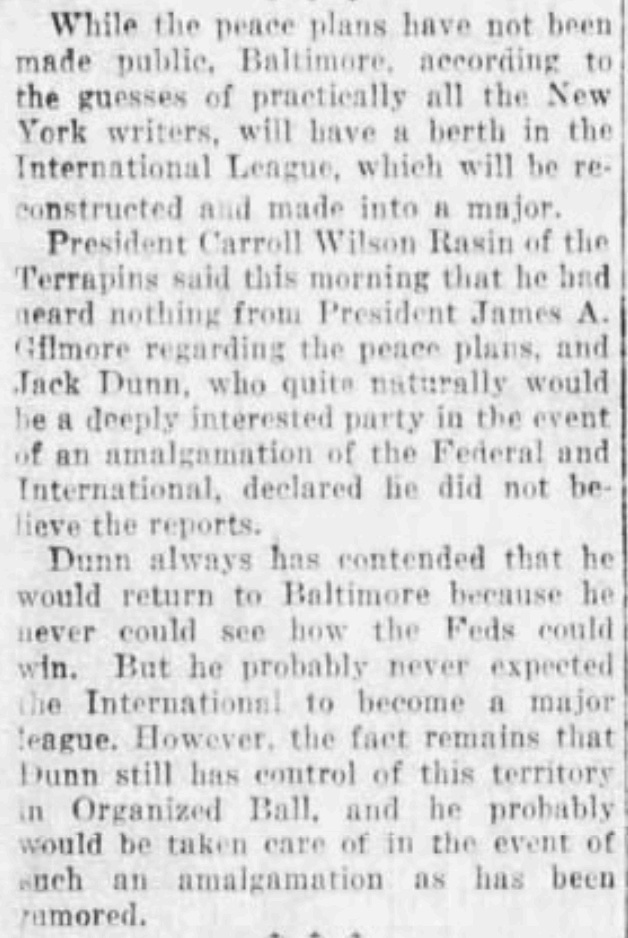
Now, the other interesting thing is that there were rumors and hints in other articles of the International League possibly declaring itself to be a major league, following the path the old Federal League went down:
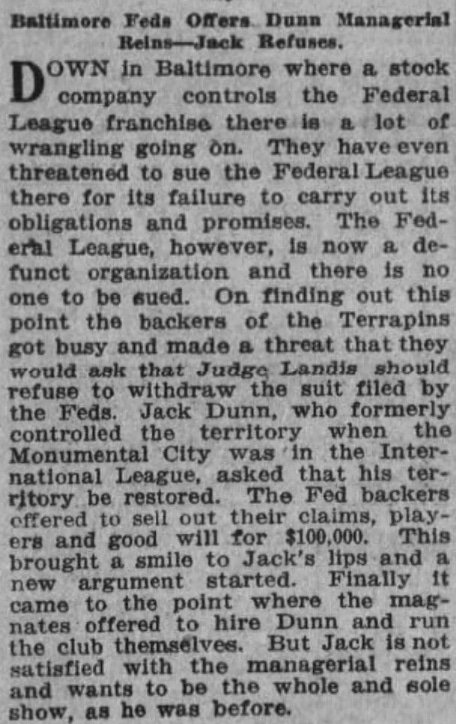
Some of the old newspaper reports are pretty interesting. For example, the Terrapins ownership group apparently tried to offer Dunn the chance to manage the Orioles under their control, a compromise that Dunn flatly rejected:
It seems to me that the reason Dunn won out is because he knew how to play the political game behind the scenes. Dunn was on good terms with International League President Edward Barrow, and was somehow able to convince Barrow to let him take over the Jersey City Skeeters and move them to Baltimore:
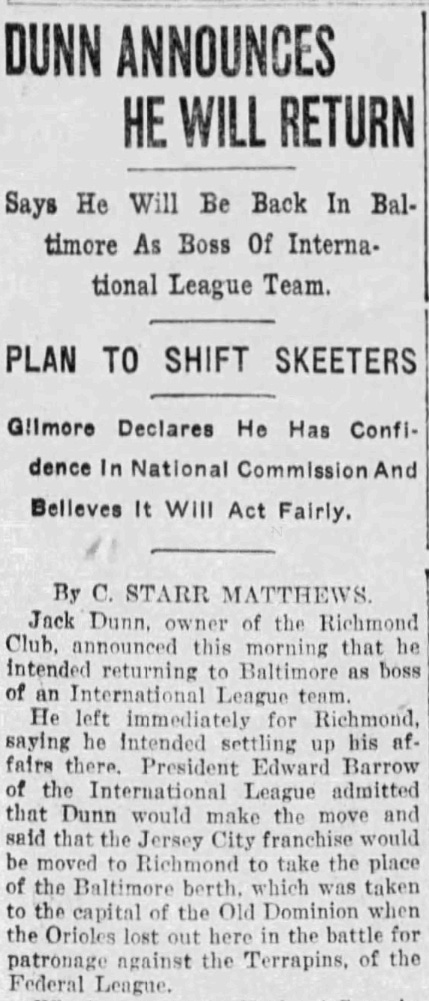
In the end, that’s precisely what happened.
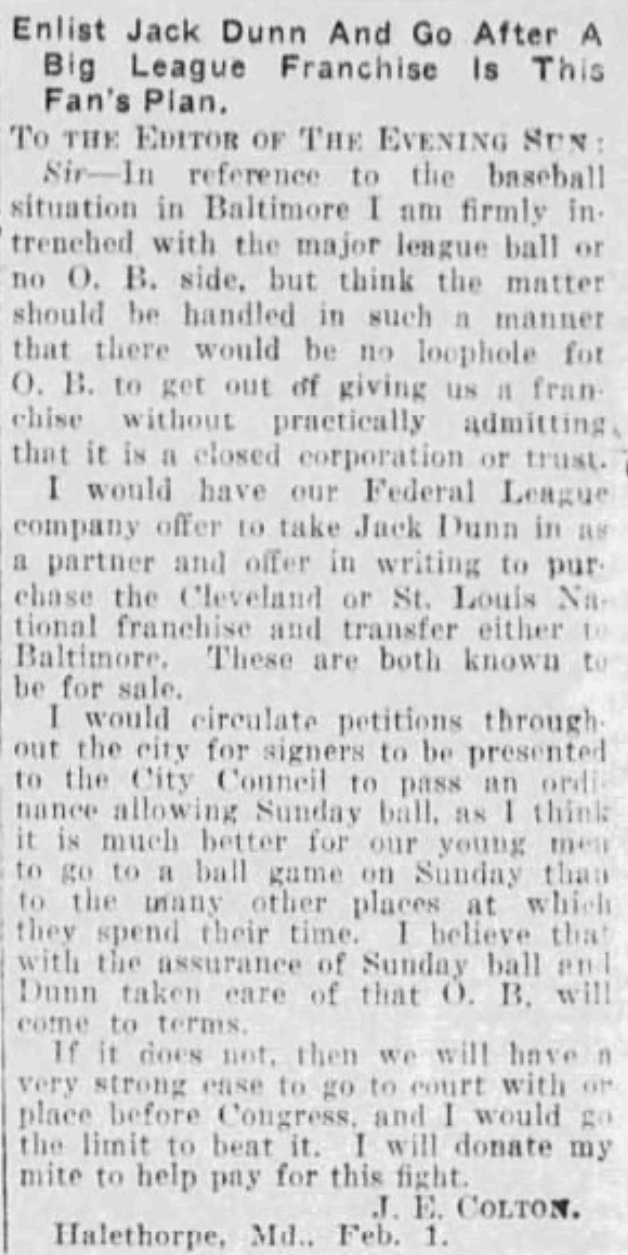
But the most interesting thing here is the outpouring of support for Dunn in the letters to the editor that both major Baltimore newspapers featured.
The Terrapins were popular early in 1914, but were such an awful team in 1915 that the local fans largely abandoned them. And so you saw letters to the editor like this one:
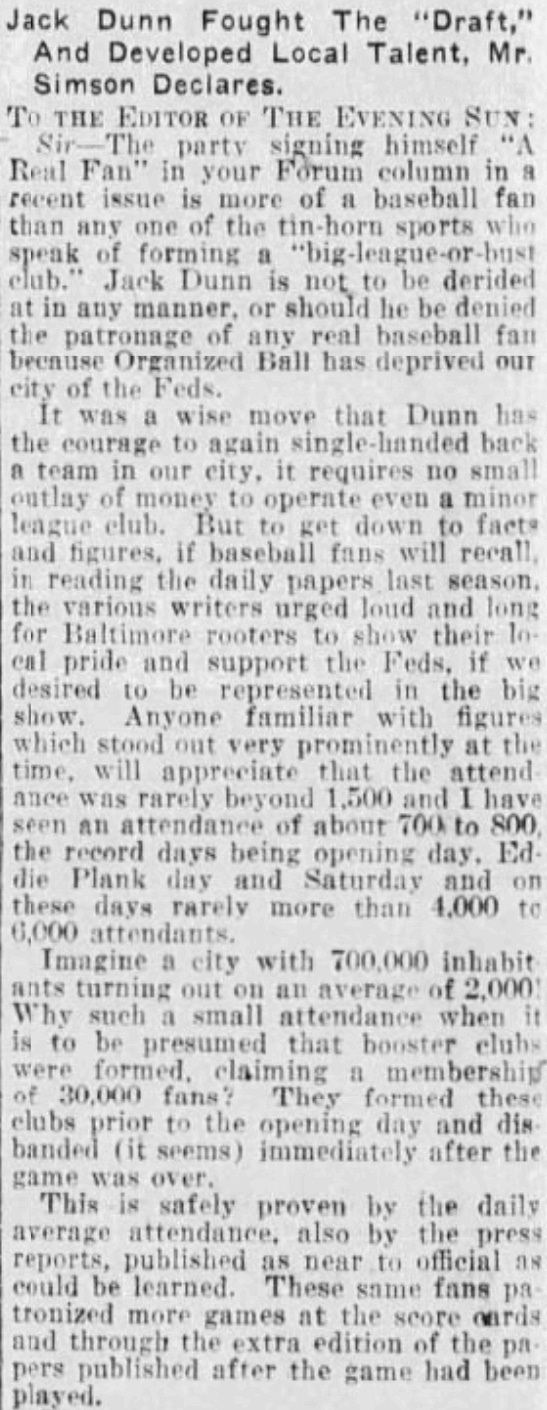
There were also long letters like this one, asking questions that have popped up in Major League Baseball numerous times over the years:
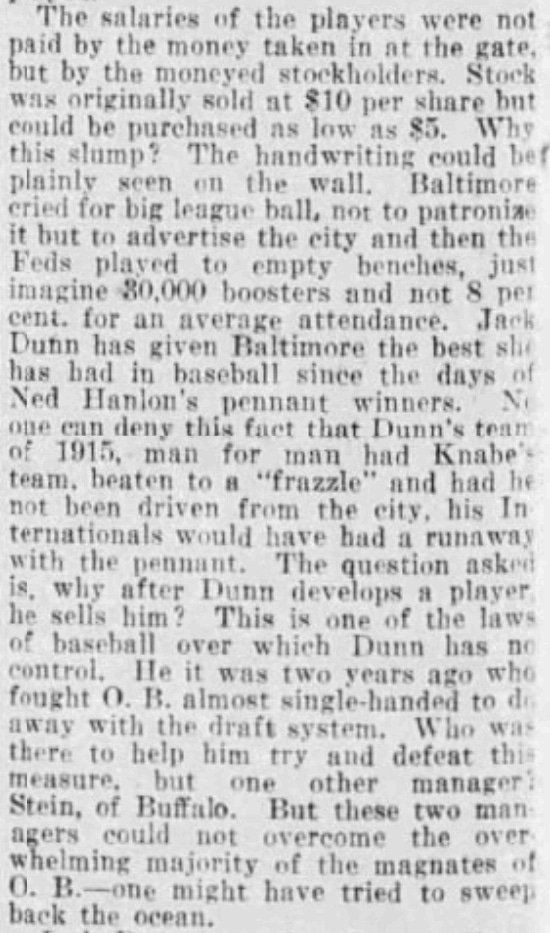
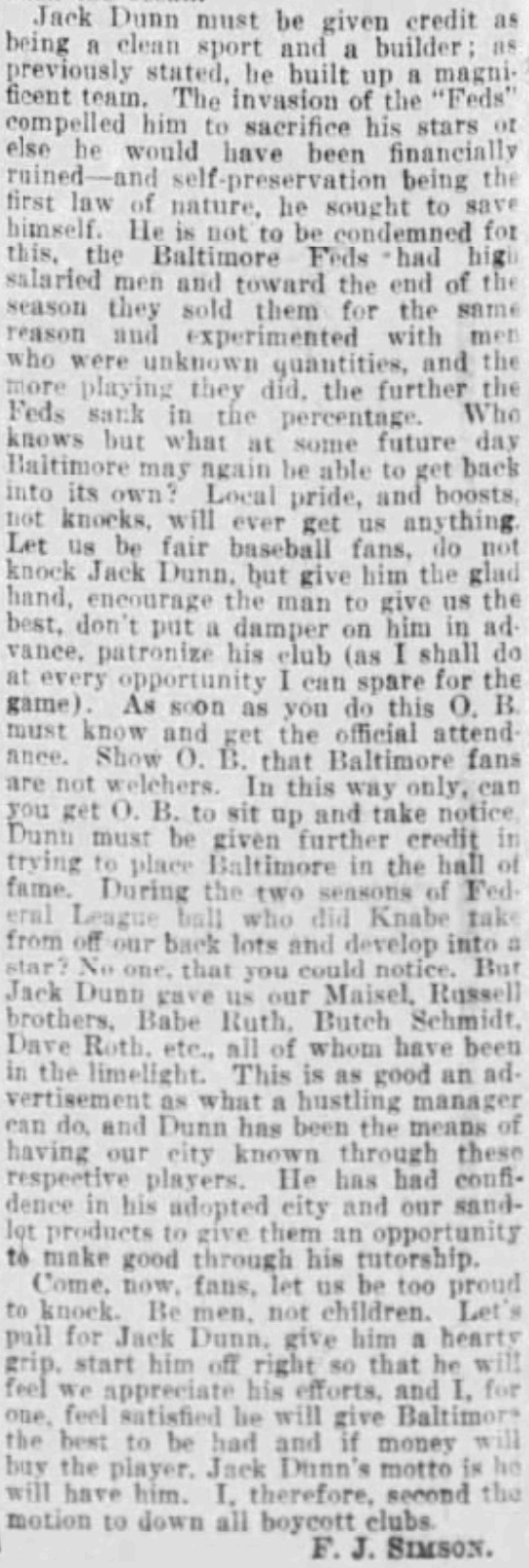
And then there were the memories of that legendary club Dunn had put together in spring 1914, the one that he had to sell off because of local competition:
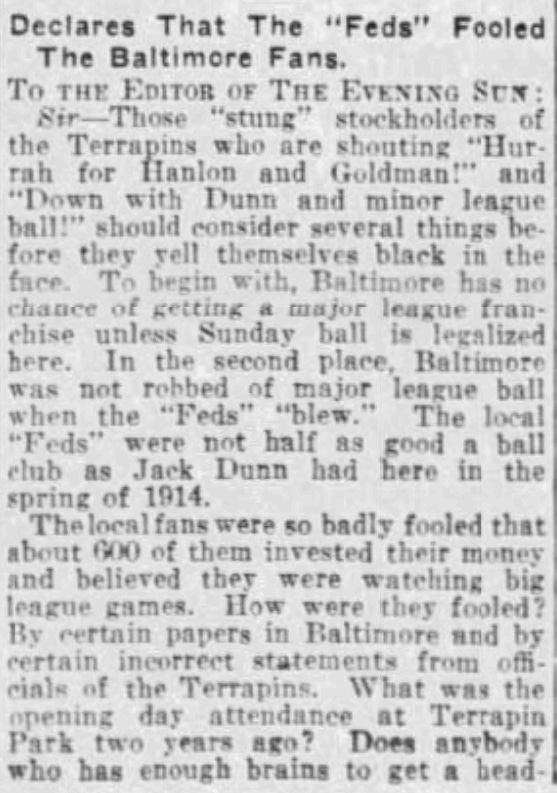
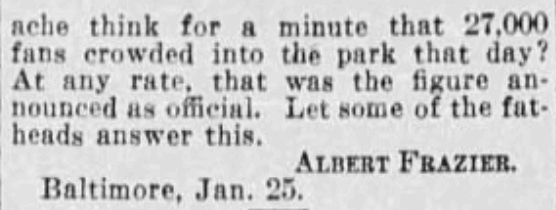
Anyway, that’s only a small sampling of the dozens and dozens of letters to the editor that were printed in those days.
It’s clear that Dunn knew how to get the major businessmen and community leaders of Baltimore on his side. And, of course, this defiant attitude and emphasis on quality at all costs caused the Orioles of the early 1920s to become arguably the greatest team in minor league history.
It also makes you wonder exactly how we’re supposed to distinguish between “major league” and “minor league” teams in the deadball era.