

More Scheduling Shenanigans
As you probably remember, I posted the other day about the odd 1910 National League schedule:
The truth is that the 1911 National League schedule was just as strange.
The official reason given for the long schedule is because Charles Ebbets was convinced that he would have a big draw for Columbus Day, which he thought would give him a strong doubleheader crowd.
Columbus Day wasn’t actually an official federal holiday at that time, though it seems to have been widely celebrated anyway. And what I’ve been able to gather from the Wikipedia article on the holiday is that it was traditionally held on October 12.
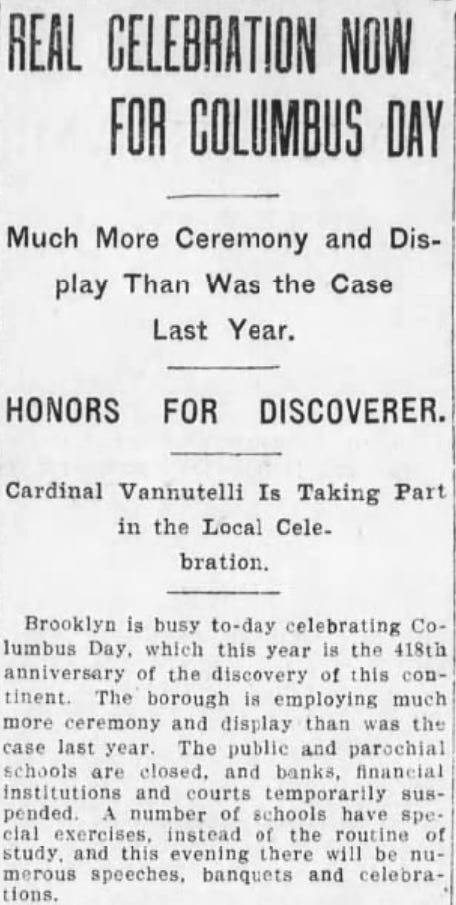
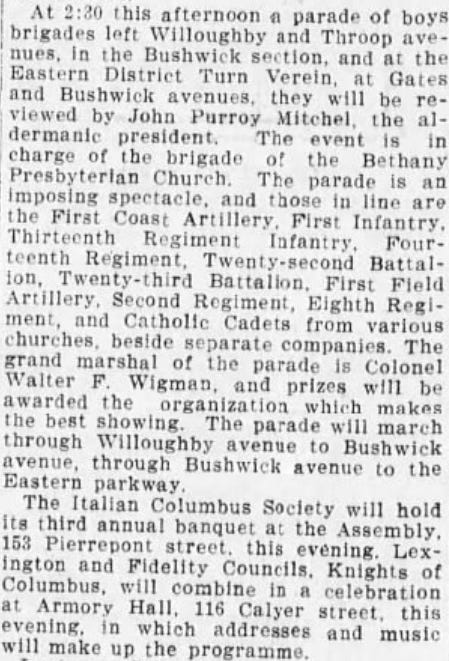
There was some pomp and circumstance attending Columbus Day in Brooklyn in 1910, though it wasn’t quite as impressive as you might expect:
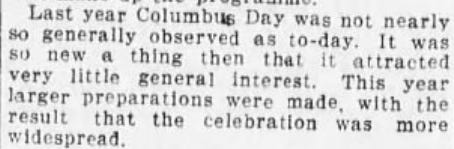
And the other interesting bit of trivia is that it seems 1909 was the first year the borough tried to do anything like this:
There was at least a mention of a somewhat large crowd in the report of the Brooklyn home doubleheader on October 12, 1910:
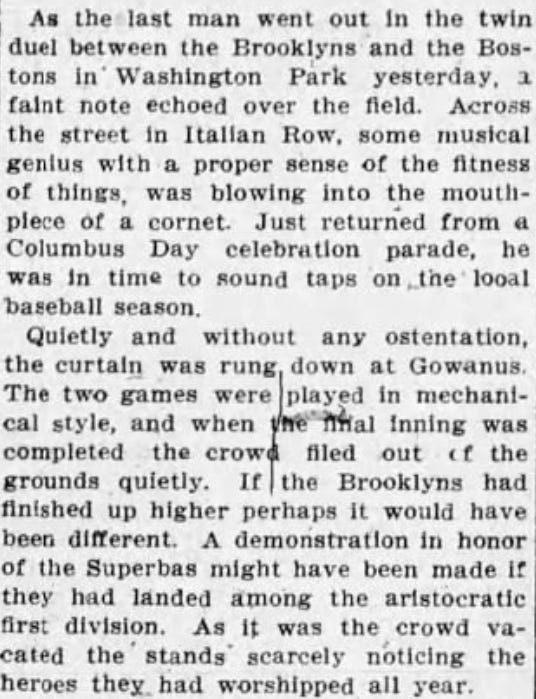
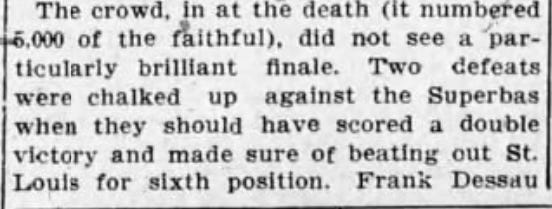
A crowd of 5,000 doesn’t really sound all that impressive, does it?
However, Ebbets was convinced that he could make Columbus Day a success. And so he pushed for a similar schedule in 1911:
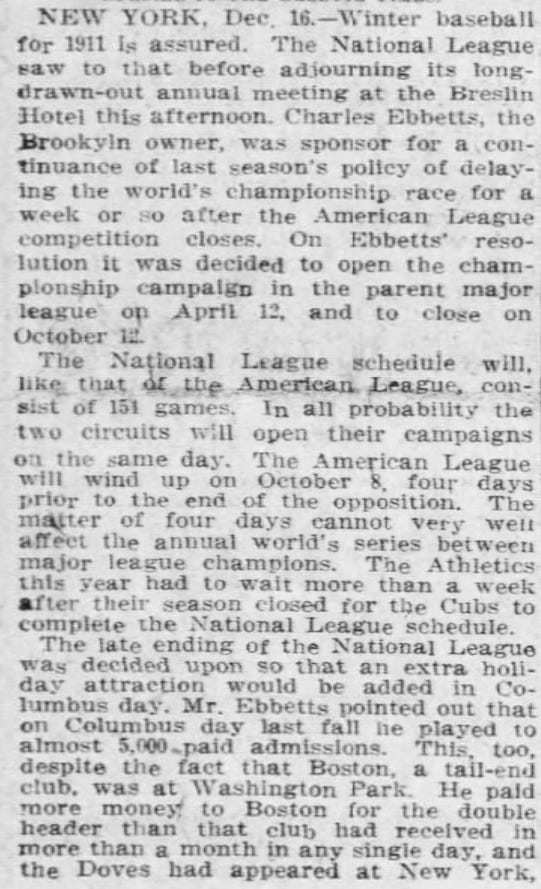
It turns out that the Columbus Day crowd at Washington Park in 1910 was “almost 5,000 paid admissions,” which seems even less worth the hassle.
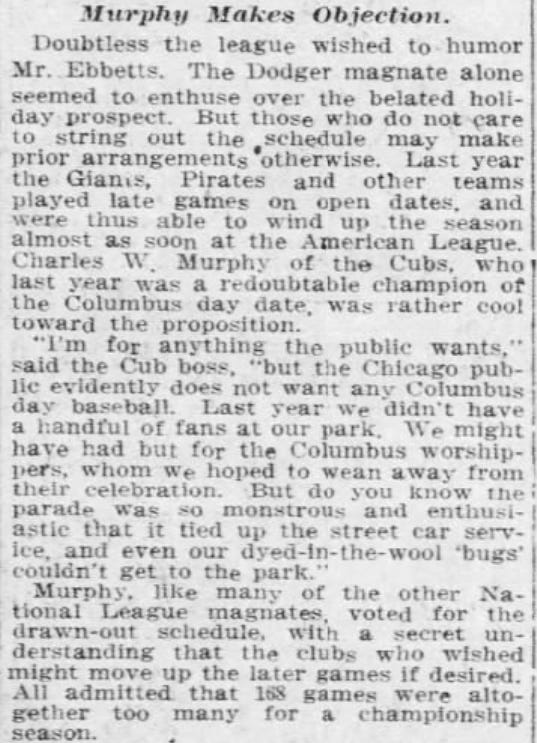
Anyway, there was a bit of push back on the idea, but the other owners got in line anyway:
A few articles here and there in December 1910 point to other items of internal National League politics that are pretty interesting:
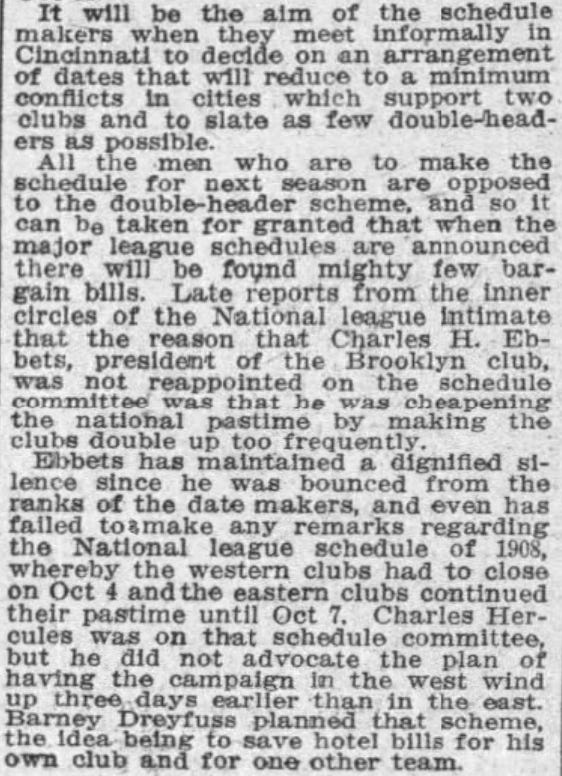
It’s obvious that owners at the time didn’t prefer to schedule those single admission doubleheaders. What I don’t think the author of this article fully understood is that doubleheaders on holidays were a completely different story, and usually required two separate tickets: one for the morning game and one for the afternoon game. It’s still interesting to know that Ebbets may have been kicked off the scheduling committee for too many wild schemes, however.
The comments on the 1908 schedule are also pretty insightful. The Cubs, for instance, ended their season at home on Sunday, October 4 against the Pirates. The Giants, meanwhile, had a home series against Boston from October 5th to the 7th; this is the famous series that New York had to sweep to be assured of a tie for first place. In other words, the Cubs had 3 extra days of rest before the Merkle game was replayed, while the Giants didn’t have any rest at all.
Anyway - the next time you do a really old replay and wonder who in the world thought up this crazy schedule, just keep in mind that there was probably a bizarre story behind it.
Thanks for checking it out. With that Columbus Day Giants-Superbas twin bill turning out to be at the Polo Grounds, was the new scheduler trying to get back at Ebbets for making them play that late, or did someone figure he'd get more from the visitors' share of a larger crowd -- with no travel costs -- than he could at Washington Park? (Very likely true, if they did draw 10,000 to Coogan's Bluff compared to 5000 in Brooklyn in 1910.) Sort of amusing, given Murphy's lament that playing Columbus Day in Chicago was hopelessly difficult logistically, that he ended up playing on the holiday, but in Cincinnati. My recollection -- though it could be wrong; I didn't look it up -- is that Columbus Day stayed on October 12 even after the US started moving some other holidays around to create three-day weekends in the 1970s. But I thought the elaborate annual celebrations went back at least to the 400th anniversary in 1892, when Chicago held the World's Fair in its honor. (But not until 1893, according to Wikipedia.)