

Sabotage?
As the years have gone by, the old stories of Walter O’Malley being the most evil man in all of America have quieted down.
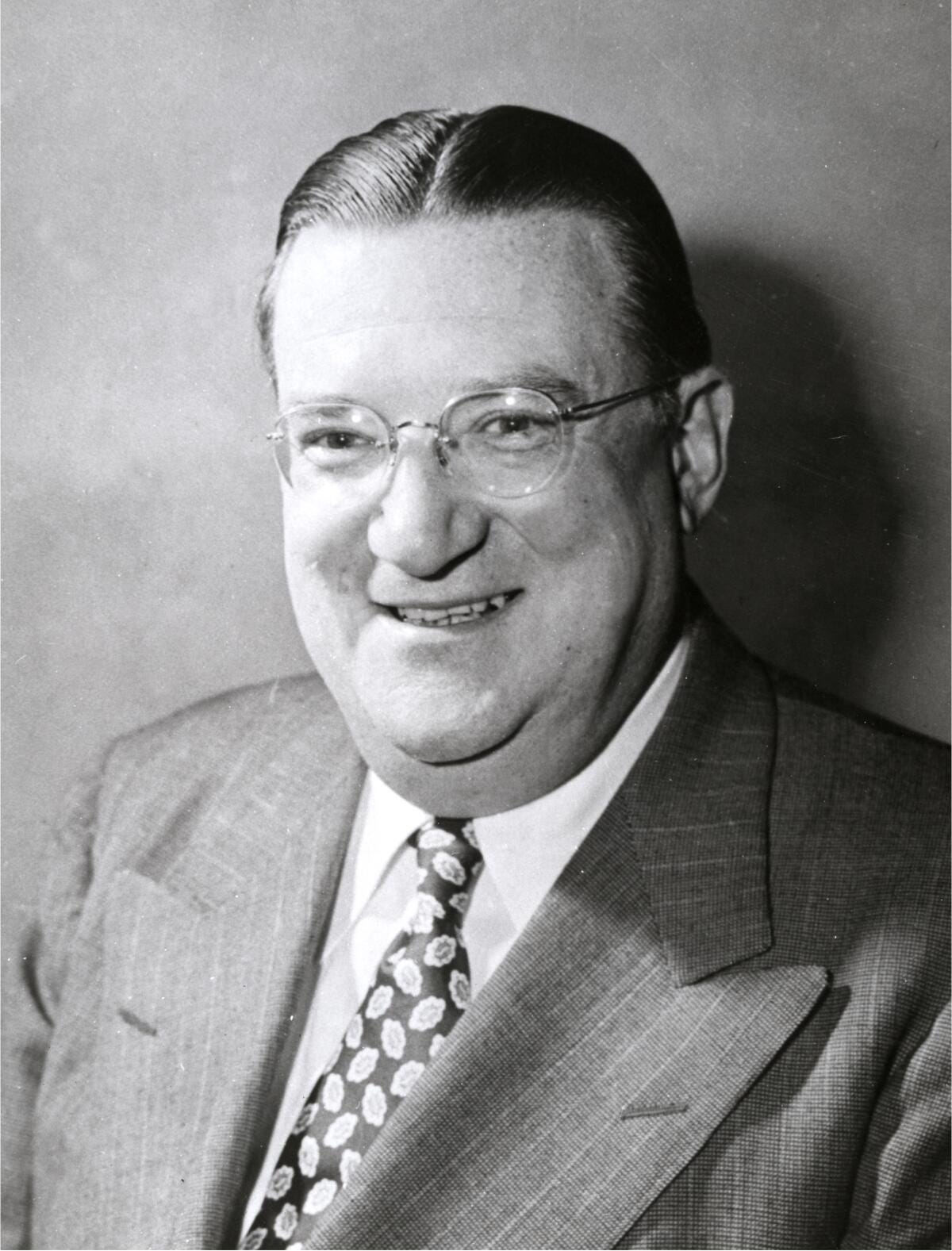
But, if you read through some of the books that were published in memory of the old Brooklyn Dodgers, you’ll still find reports here and there of him deliberately sabotaging the club.
This example comes from Seasons Past by Damon Rice, a story of three generations of New York baseball fans that was published back in 1976. Below are a few excerpts of how Rice, a diehard Brooklyn Dodgers fan, remembered the O’Malley years.
The problems seemed to start with the selection of announcers for the team:
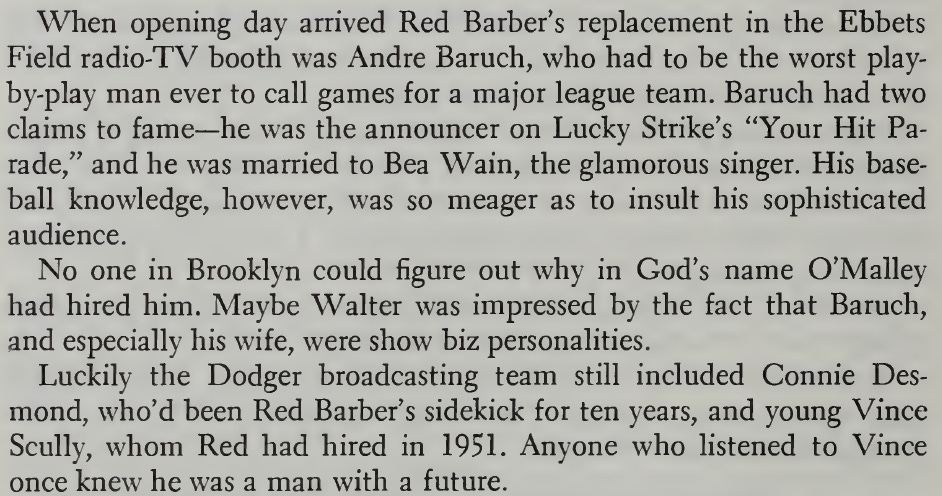
We don’t have enough surviving Brooklyn broadcasts from 1954 or 1955 for me to have much of an opinion on André Baruch. I will say, though, that he only seems to have lasted for two years, which tells you something about his abilities.
Rice describes Baruch’s style this way:
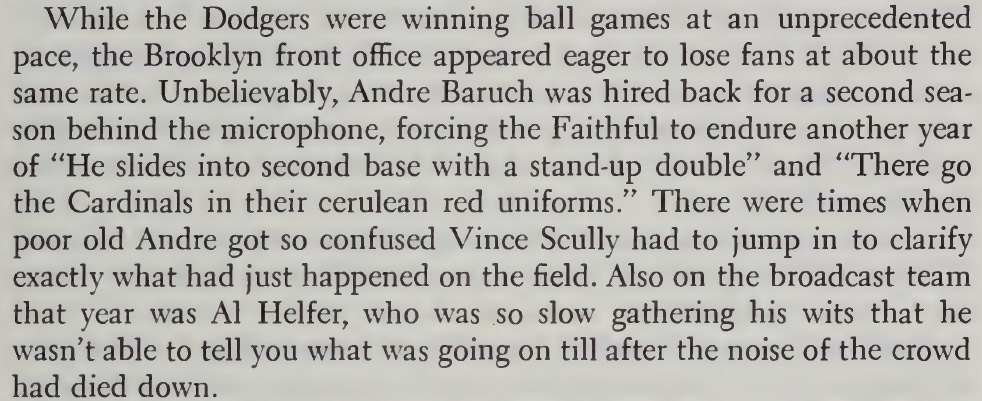
The most interesting part, though, is the bizarre thing that happened to Brooklyn Dodger ticket sales:
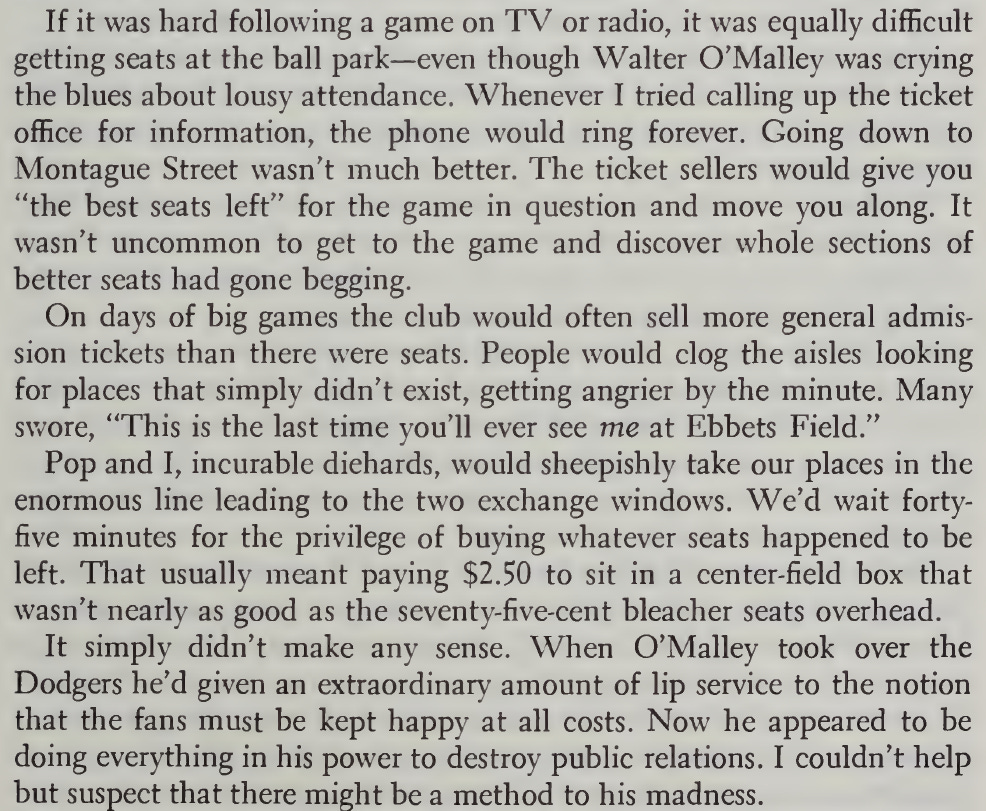
When Rice talks about the experiment of having the Dodgers play games at Roosevelt Stadium in Jersey City, he doesn’t mention that this move had been rumored for years. The press officially blamed this on the success the Braves had drawing a crowd in Milwaukee:
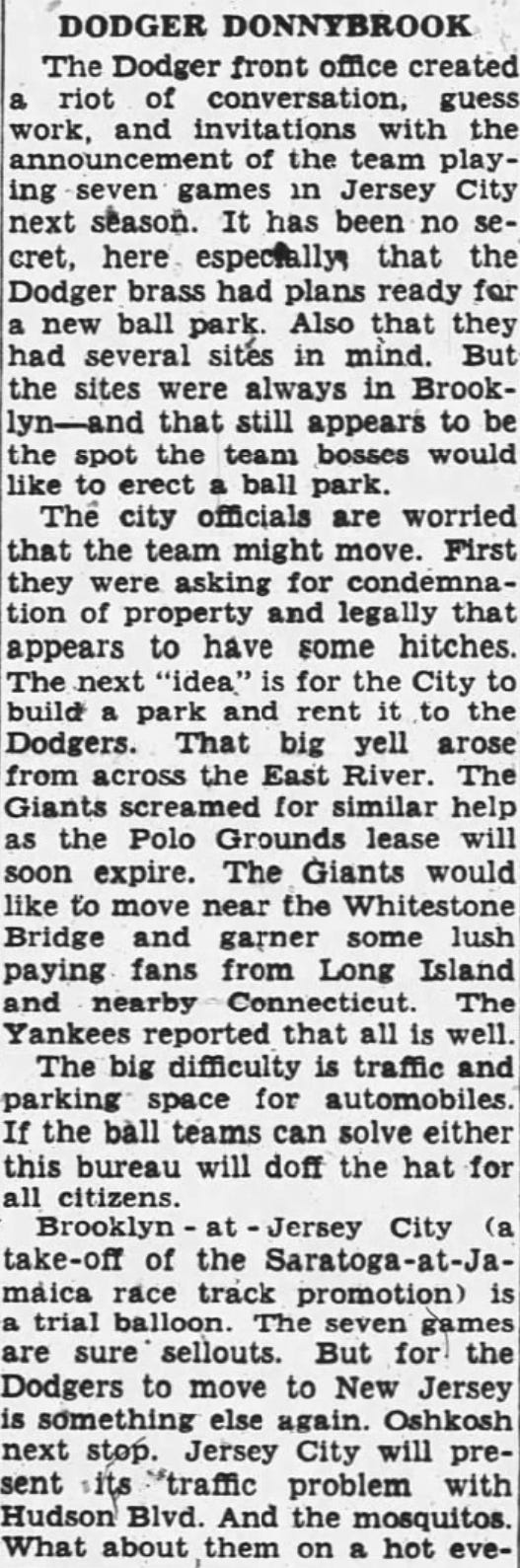
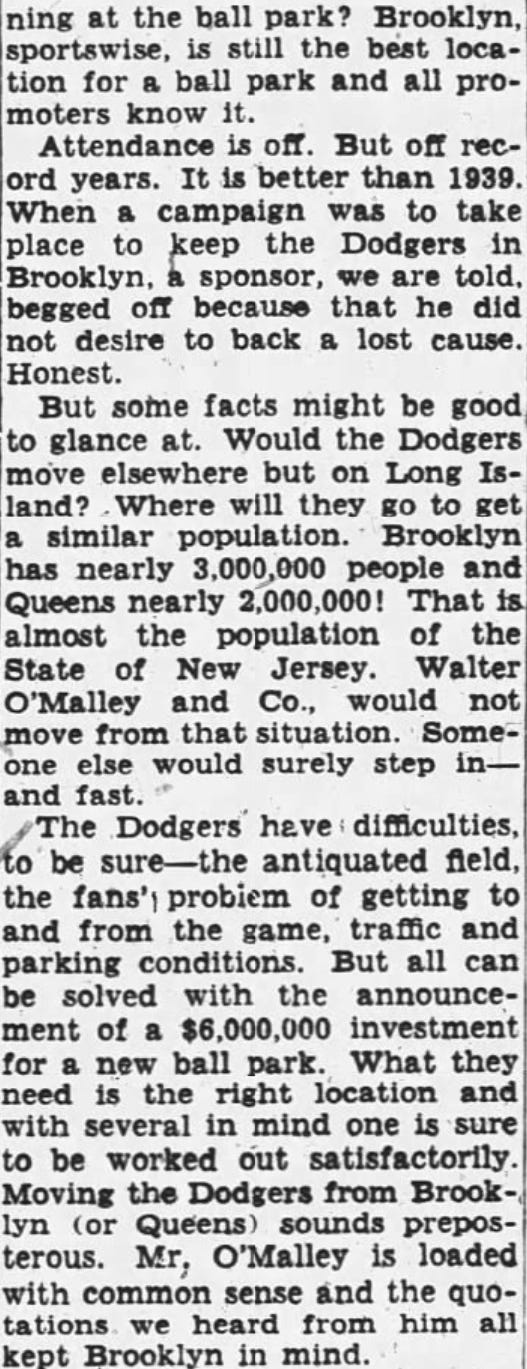
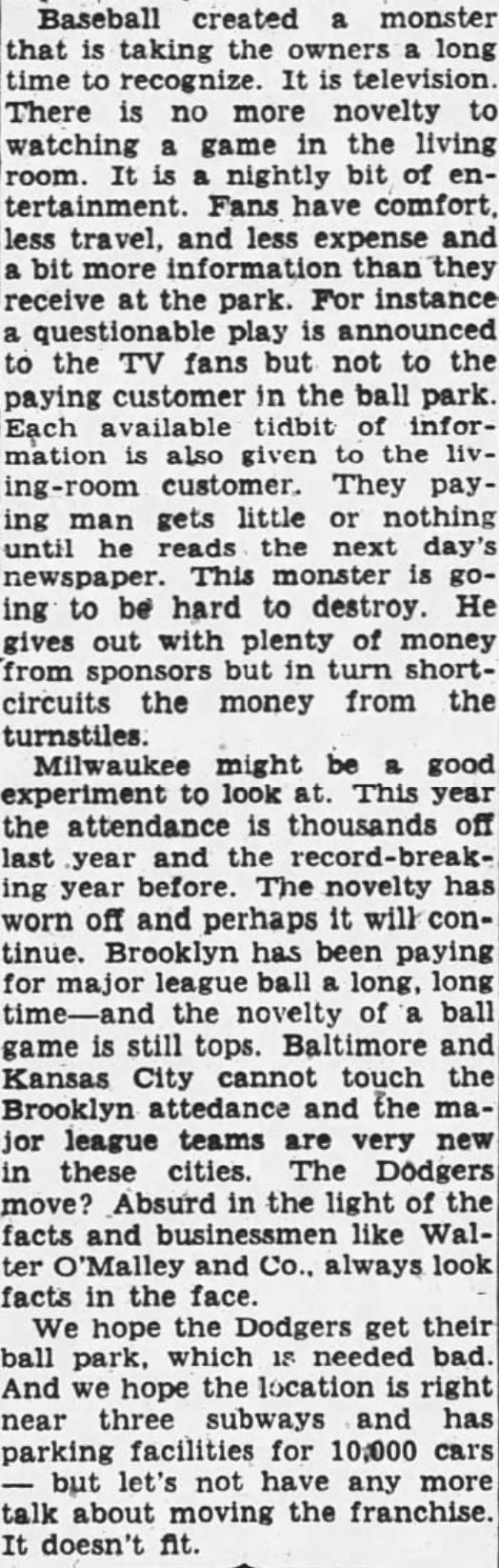
Now, in hindsight, all of this talk about how the Dodgers couldn’t draw fans anymore and about how the team desperately needed more parking spaces seems to have been an attempt to build political support for a new stadium in Brooklyn. Here’s how Rice describes how all of that went down in 1956:
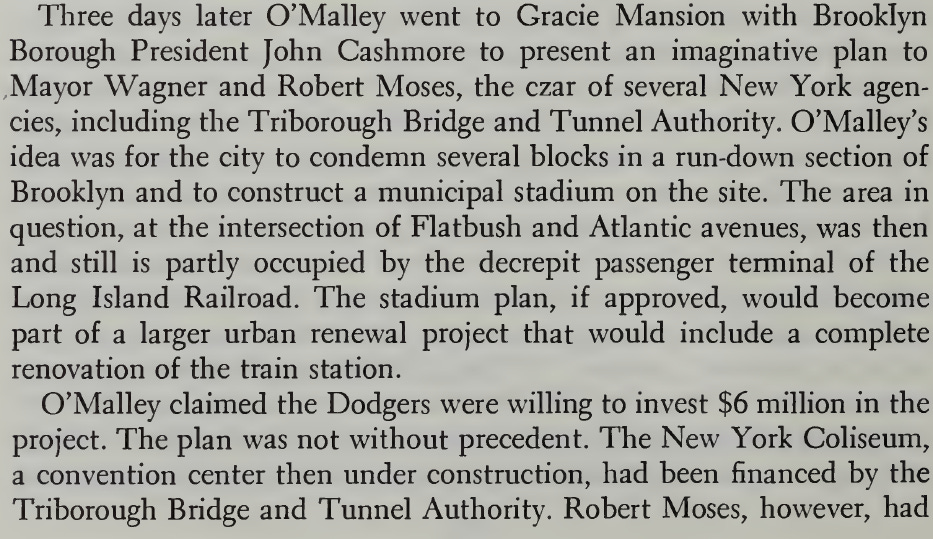
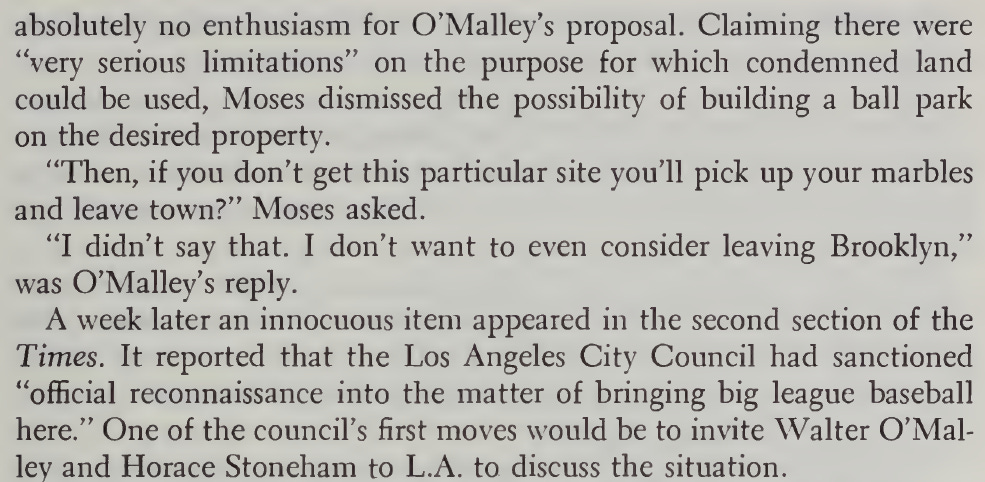
It wasn’t long after this that O’Malley bought up Wrigley Field in Los Angeles, giving him the territorial right to move the Dodgers as he saw fit.
When you look at Brooklyn’s attendance figures in the late 1940s and early 1950s, you’ll notice something odd. The Dodgers were hugely popular in 1946, and flirted in 1947 with the possibility of drawing 2 million fans. But the popularity died down as soon as O’Malley took over the club.
So, if you watch the surviving video of Game 6 of the 1952 World Series and wonder why there were so many empty seats in Ebbets Field, remember O’Malley and his plan for a new stadium.
It's interesting too to see how in 1976 this rabid Dodger fan doesn't even think of placing the blame for the move on New York Parks Commissioner Robert Moses, which has become the standard revisionist interpretation pushed by the O'Malley family and which successfully got Walter into the Hall of Fame. That's because until Robert Caro wrote his epic biography of Moses, "The Power Broker" no one even thought for a moment that the fault was Moses' because he'd been trying to push the eventual site of Shea Stadium as the location for a new ballpark and rejected O'Malley's idea of an Atlantic Avenue Stadium. Because Moses had no heirs that made it even easier for Peter O'Malley and their allies (starting with Neal Sullivan in his book "The Dodgers Move West" and then Michael D'Antonio's "Forever Blue") to push this nonsensical revisionism that conveniently overlooked the fact that (1) the Atlantic Avenue site wasn't going to solve the ballyhooed traffic problem O'Malley kept citing and (2) it wasn't just Moses who opposed the site, so did every other prominent figure in city government, including those who were enemies of Moses. Giving O'Malley the land at Atlantic Avenue for a new ballpark would have in effect amounted to a $10 million giveaway at the taxpayers expense and in 1950s New York that would have been considered ridiculous on all levels.
hank-you for your insightful look at the Brooklyn Dodgers and the O'Malley yrs. I've often wondered with the Dodgers being perennial winners why the attendance dropped so dramatically in the mid-50's. If you get a chance I'd like to see an article by you on the Milwaukee Braves...Sometime in the 50's I believe they drew over 2 million in attendance but slowly but surely their attendance waned. Thanks again for a GREAT read!