

The Brush Rules
Even if you’re a diehard baseball fan, there’s a good chance that you don’t know much about how the World Series rules were formalized.
We all think of the 1903 World Series as being the first “true” World Series. However, the arrangement of that best-of-9 series was actually pretty spur of the moment and informal.
As you likely already know, the 1904 World Series was never played. This is because New York Giants owner John T. Brush and manager John McGraw flatly refused to play the American League champions. Their refusal came before the end of the 1904 season, back when it looked like the New York Highlanders might win the American League pennant.
I actually wrote about the lack of a 1904 World Series a couple of months ago:
However, chances are that you’ll find this piece on the end of the 1904 American League season much more interesting:
After all the hubub and excitement had calmed down, Brush apparently had a change of heart. As detailed in this excellent 2002 article on the evolution of World Series scheduling, Brush proposed a set of rules in February 1905 that wound up being the basic agreement behind the annual fall classic.
The best source of those rules is Spalding’s Official Base Ball Guide, 1905. The annual guide had a three page segment devoted specifically to detailing Brush’s new rules:
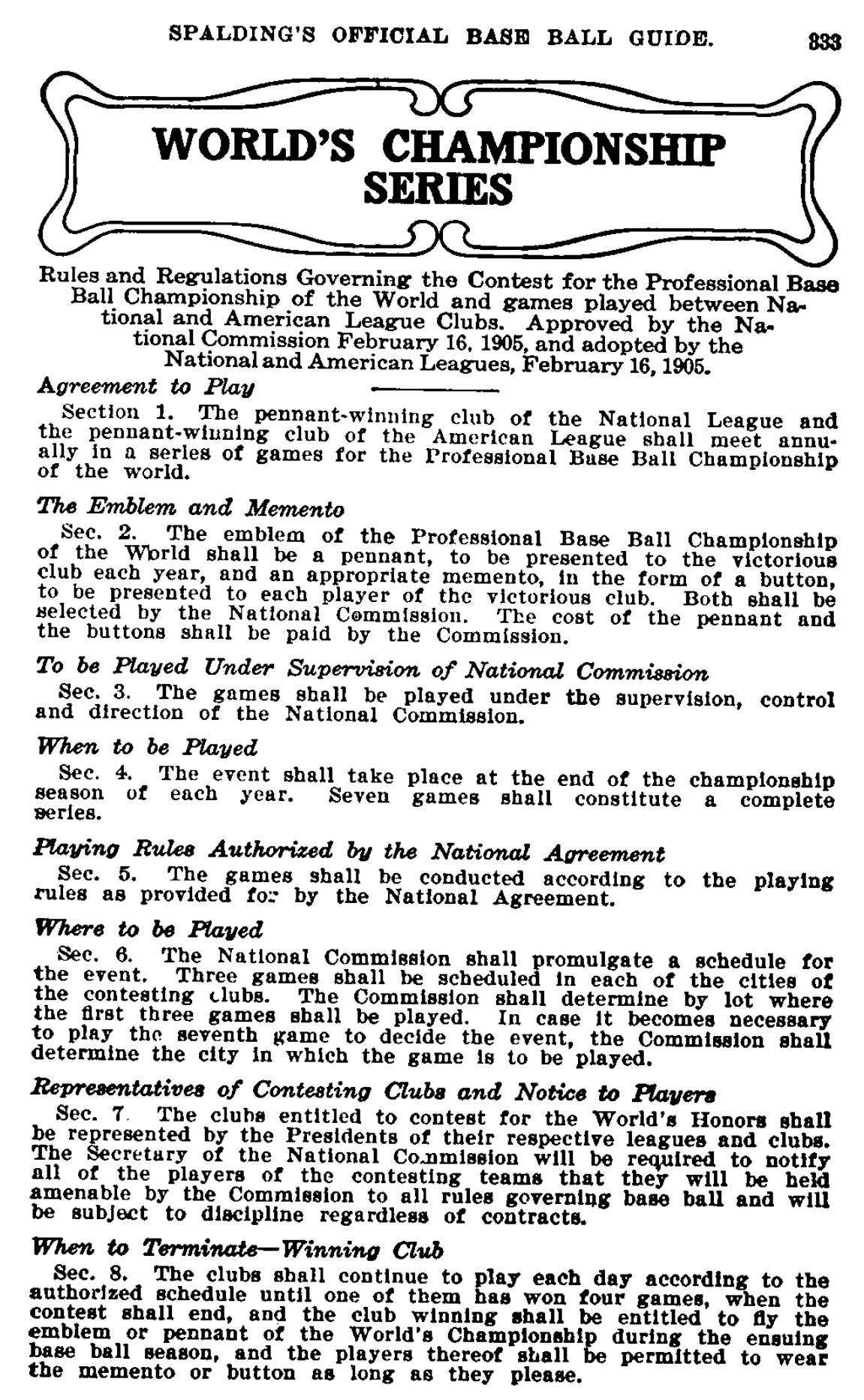
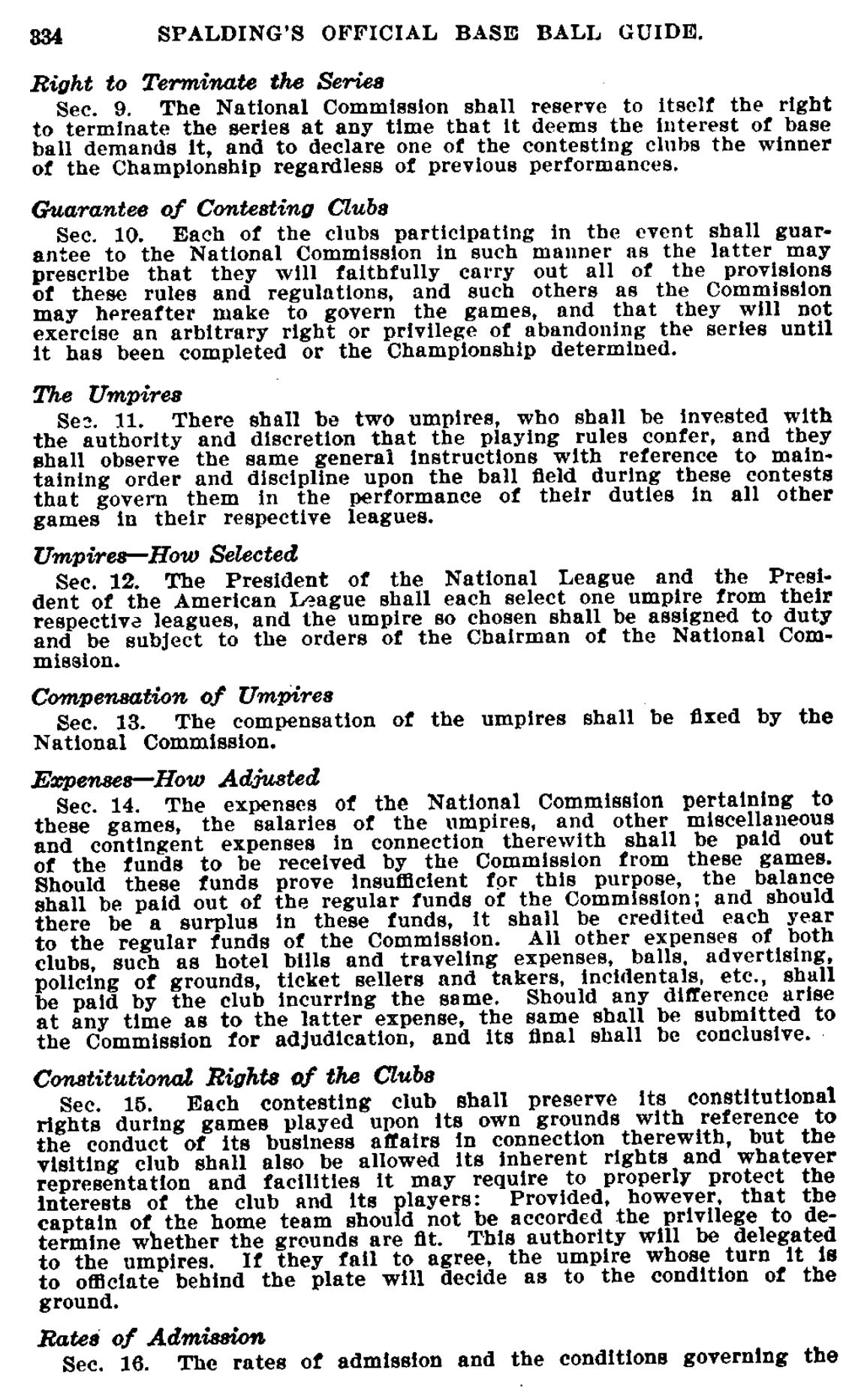
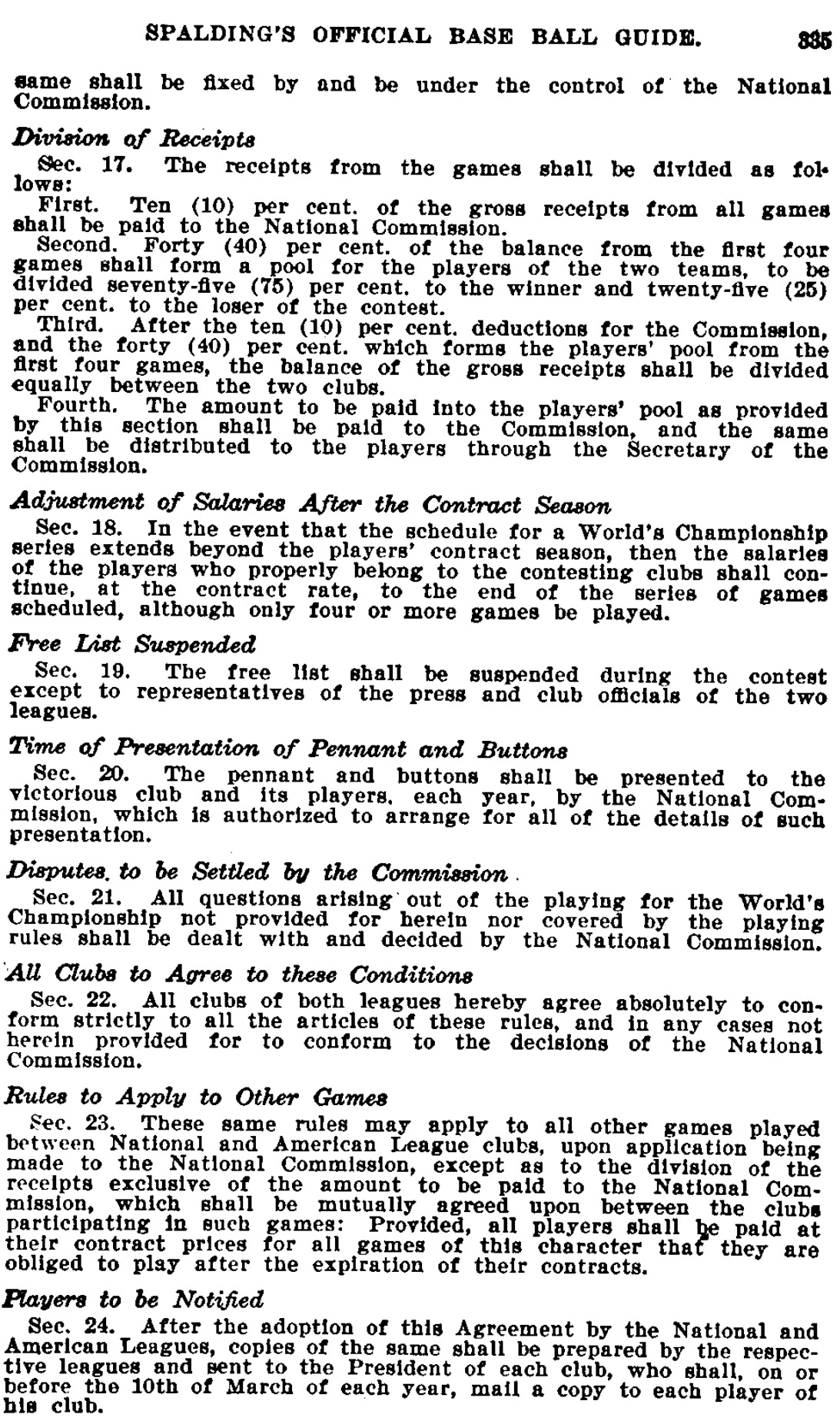
There are a few really interesting things to note here:
The winning club would literally win a pennant, and every player on the winning side would win a button (not a ring).
The original format was apparently 3 home games in each city, with the 7th game decided by lot. Again, this SABR article has a lot more information on how scheduling actually worked in those days.
The National Commission had the right to end the Series early, or decide that one club deserved to win for whatever reason it chose.
At a time when it was still common for games to only have a single umpire, the rules specifically called for two umpires during each World Series game, one from each league.
Ticket prices would be set by the National Commission, not by each individual club.
There was a provision for automatically extending player contracts to allow the World Series to be played. This might seem odd to you today, but it was one of the chief reasons why there was no World Series in 1901: the Chicago White Sox had disbanded at the end of the American League season.
The rules were also designed to apply to other interleague series, which were actually pretty common at the end of the season in those days.
In the original newspaper articles about this discussion, a few common debating points came up:
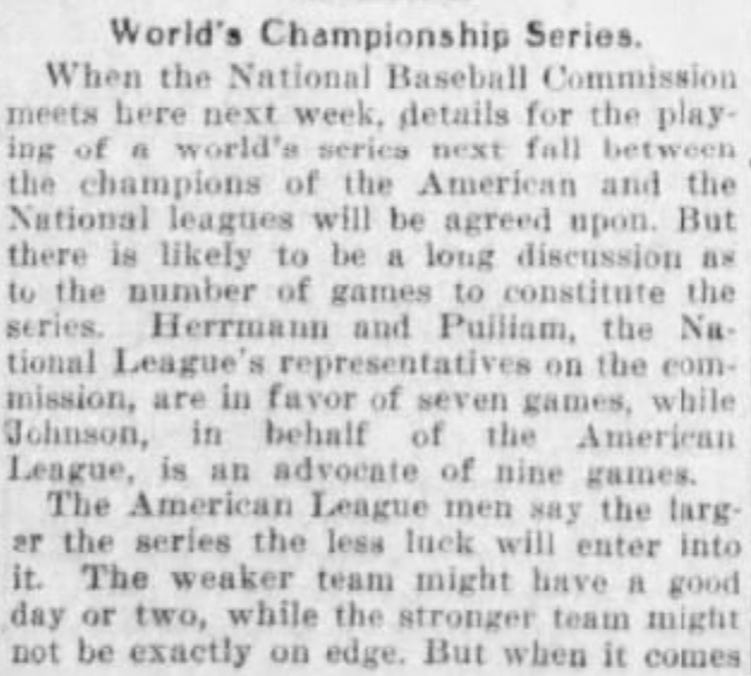
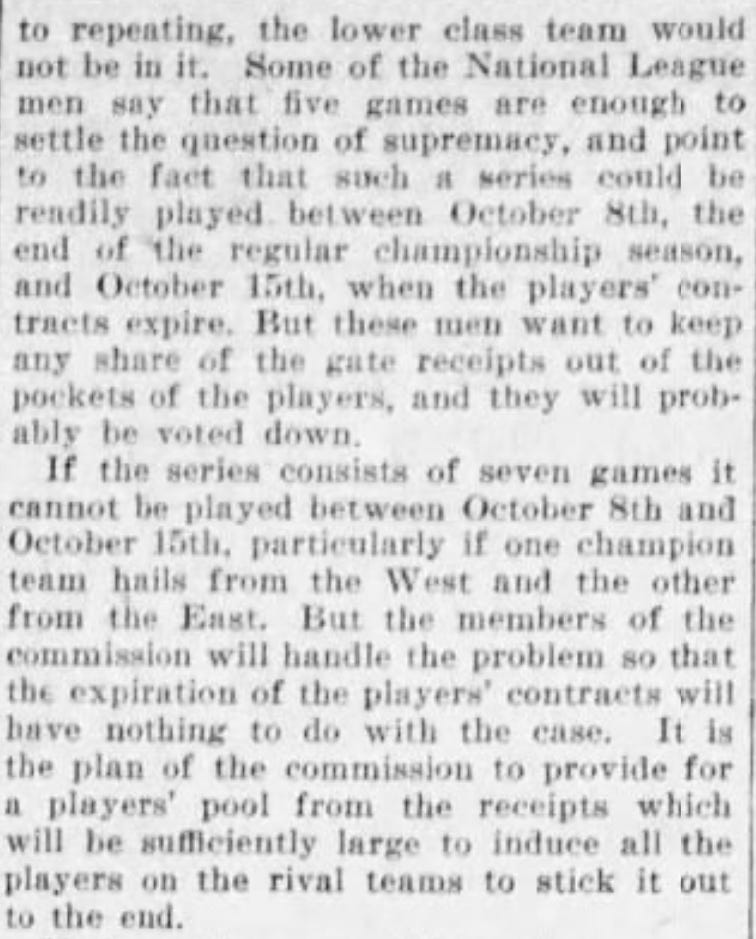
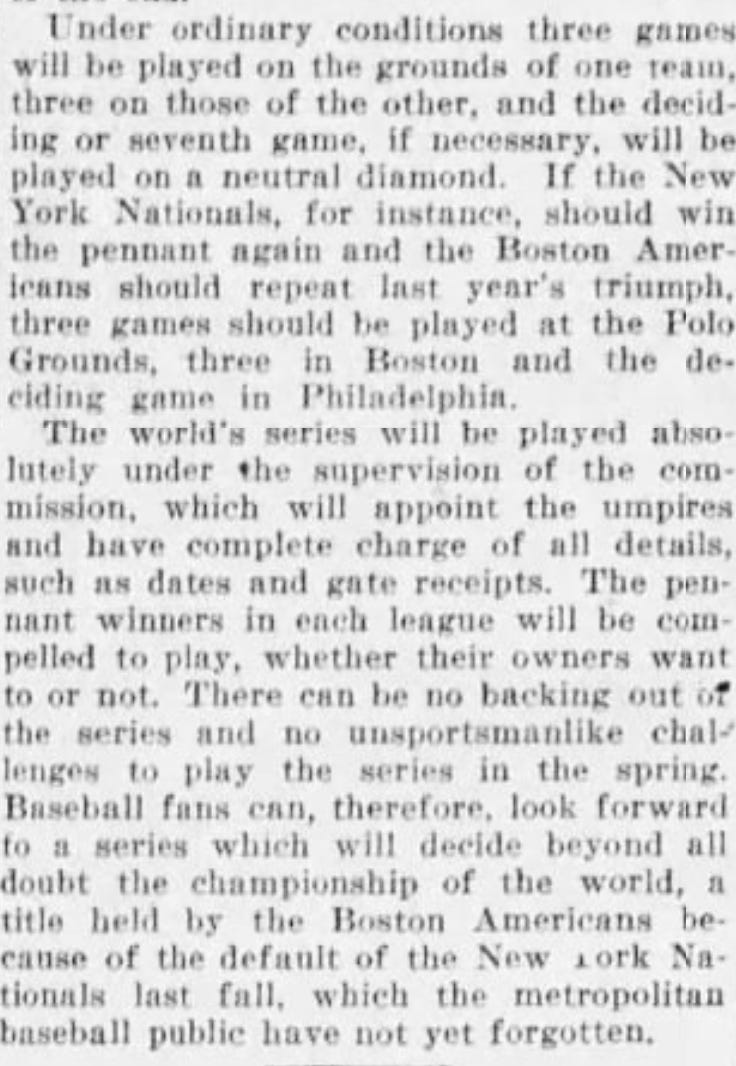
Note in particular the debate over how many games would be enough to avoid having a fluke champion. There was also concern over how late into October the Series would wind up being played, as well as concerns over enforcing the actual playing of the World Series. It might seem odd for a team to refuse to play in the World Series to us today, but this was naturally an issue after John T. Brush’s team had just refused to do so a few months earlier.
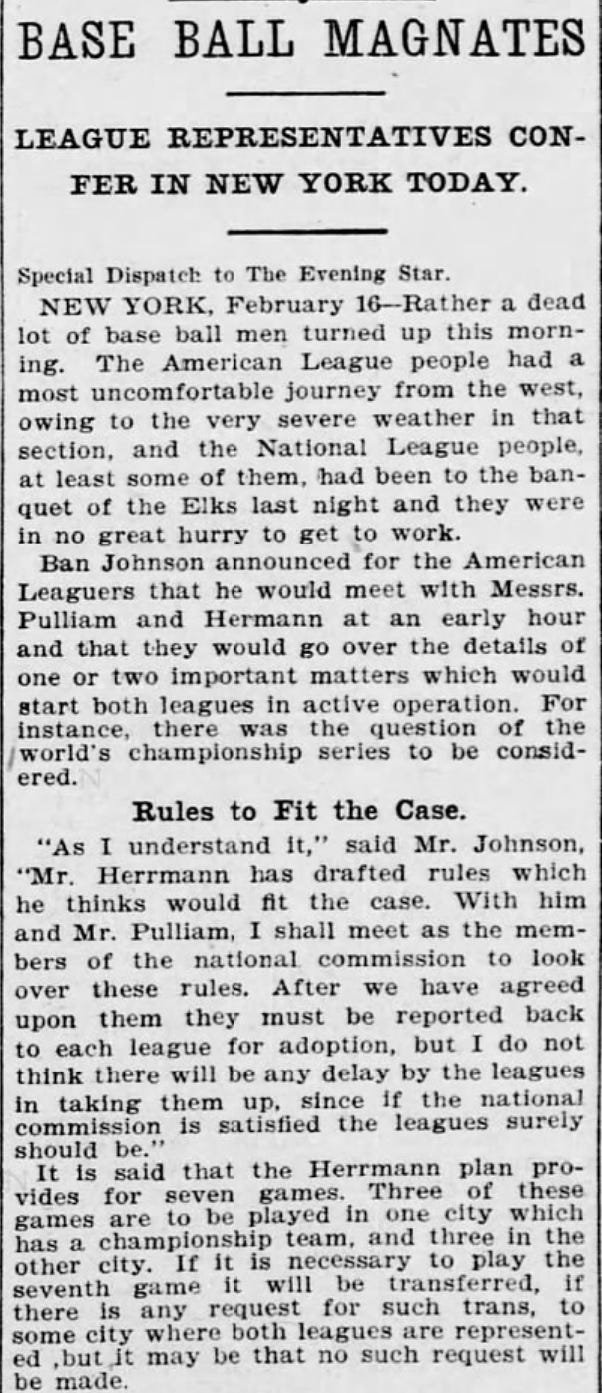
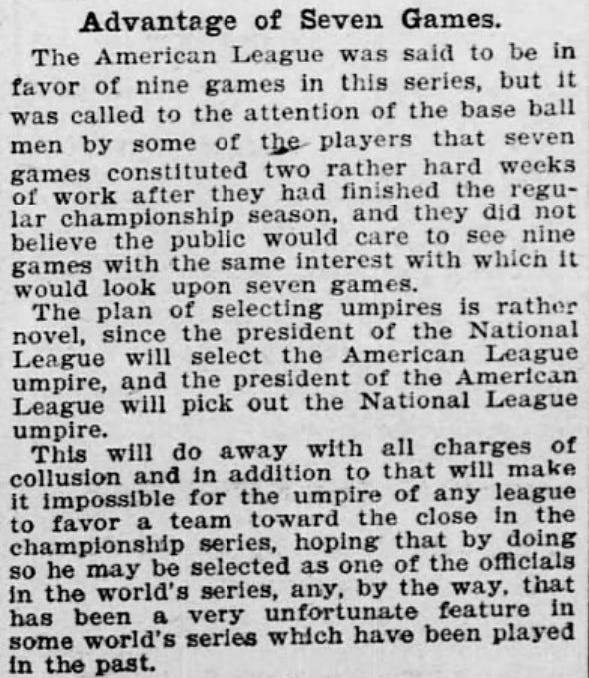
Interestingly enough, it seems that none of the newspaper editors picked up on the irony of the person who was responsible for cancelling the 1904 World Series drafting the rules that would govern the World Series for the indefinite future.
Re the Commission's right to truncate the series and designate a winner, it was probably still within memory that in an NL-AA postseason championship series in the 1880s, the loser had split the pitching between an infielder and a catcher in one game (the scheduled starter had arm trouble), losing 13-1, and then lost the final game the next day. The impression left -- and the small crowds -- suggested that the teams weren't terribly upset about it. I think there was still a concern that an owner or his team might not take the games seriously enough.
Ha! That is a funny irony.