

The Imbalanced Schedule
When the American and National Leagues decided to move to a two division structure in 1969, both leagues made a controversial decision. They both decided to move to an imbalanced scheduling format.
This newspaper snippet explains it:
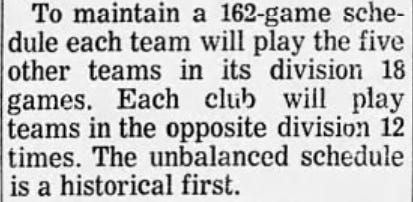
Until the American League expanded in 1977, both leagues used this basic imbalanced scheduling format.
Now, as you can imagine, this is problematic for statistical analysis. Sure, the large number of games played (162) means that we can analyze statistics in a way we couldn’t with, say, the 1969 college football season. However, the truth is that the teams and players did not play opponents of equal caliber. The 6 game difference between teams in the same division and teams in the other division really does make a difference, one that we usually don’t account for in our statistical analysis.
In 1977, the American League moved to a format in which teams would play 15 games against in-division opponents, and either 10 or 11 games against opponents from the other division.
But then the league moved to a more balanced approach in 1979: 13 games against in-division opponents and 12 against opponents from outside the division:
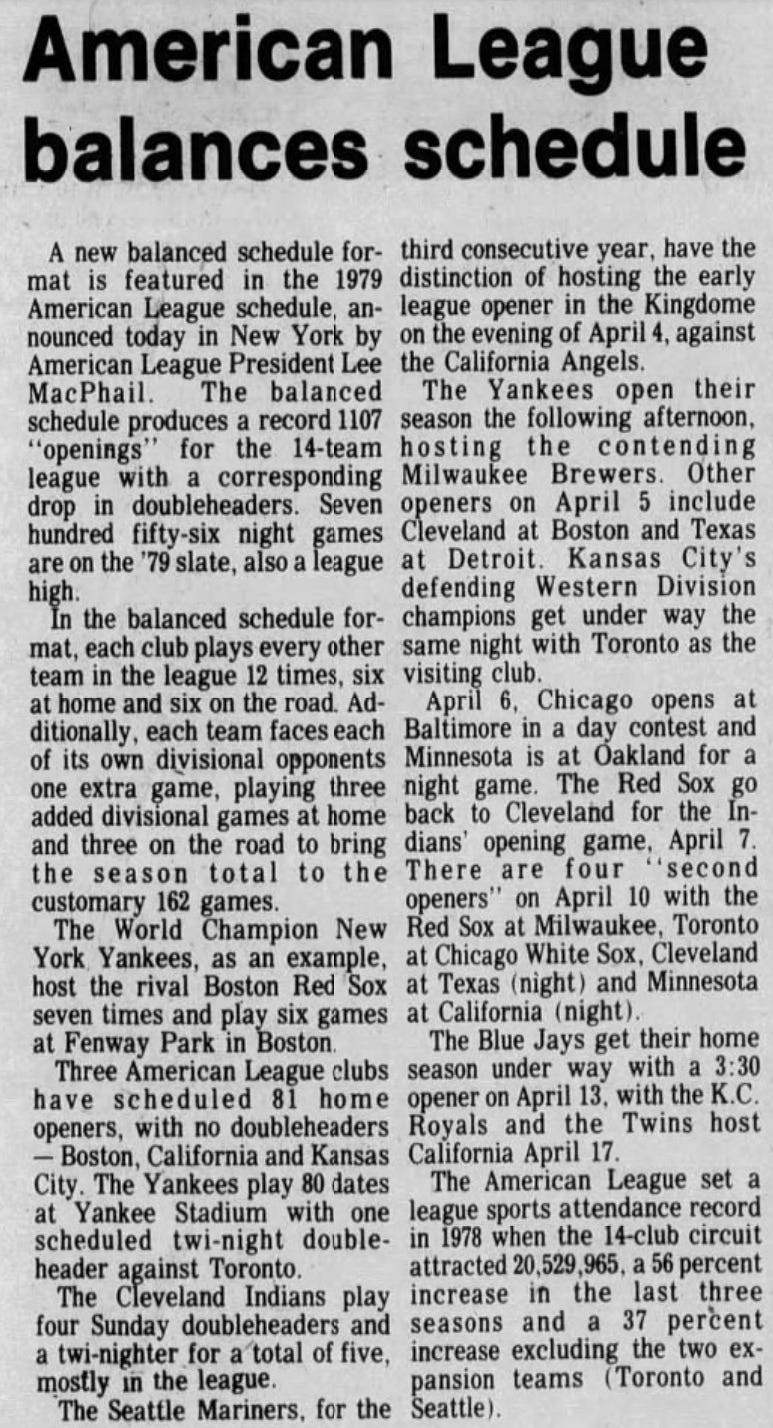
This caused some fans to feel frustrated:
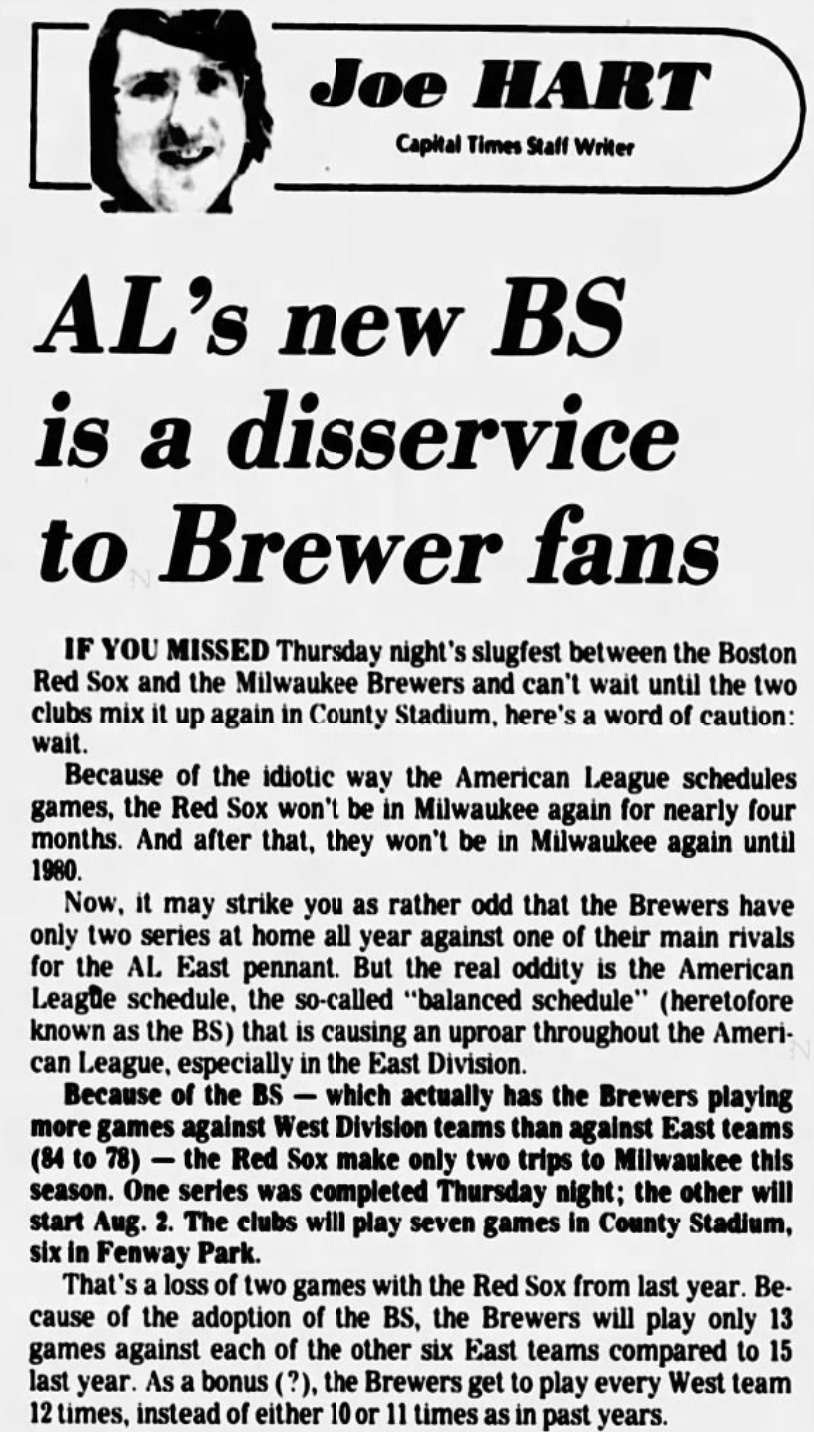
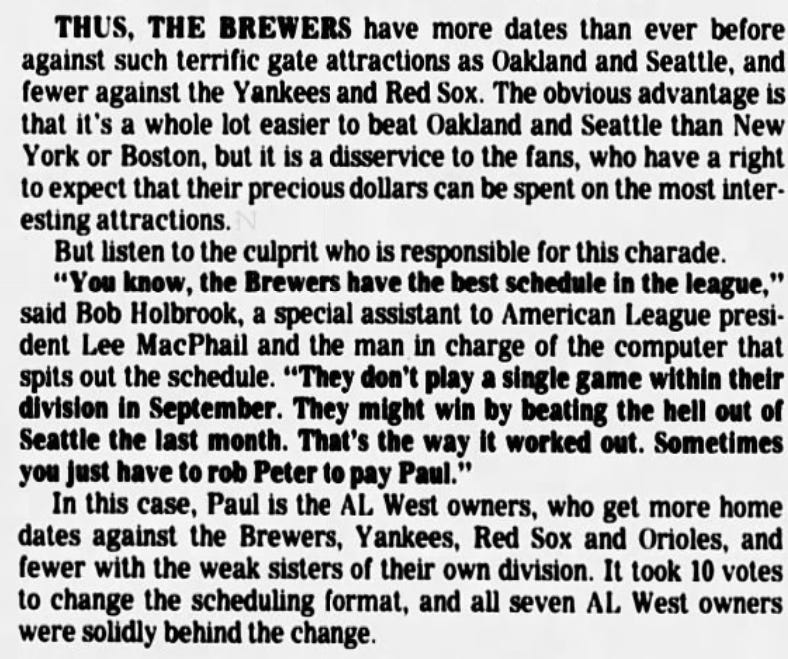
And, of course, the Brewers wound up being in second place after the games of August 31, 1979. They were 8 games behind Baltimore, but technically were still in it.
Milwaukee wound up going 14-11 in the final 25 games of 1979. It absolutely did beat up on Seattle, but the team only managed to go 3-2 against the horrible Athletics, and were swept in a three game series in California early in September.
But how crazy would it have been if the Brewers had won the division outright without playing any other AL East teams for the entire final month?
That dopey 14-team league schedule, it bothered me at the time as much as the ghost runner does now.