

Why The Crowd Was So Small
Happy Thanksgiving! I hope you have a great holiday with your family, wherever
I came across this interesting question on Facebook the other day:
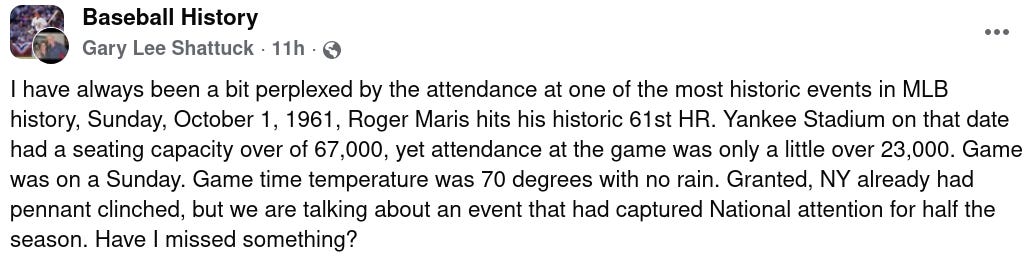
This is actually a good question. Why is it that there was a crowd of only a little over 23,000 at Yankee Stadium on October 1, 1961?
While I don’t think it’s possible to know the exact answer to this question, I do think that we can get a few insights from newspaper articles of the time.
First off, though, I should point out that there should have been a larger crowd there that day. In fact, if history is any guide, fans have always loved seeing players hit milestone home runs.
First of all, it really wasn’t that odd for milestone home run events to draw small crowds. Take Babe Ruth’s 60th home run in 1927 for example:
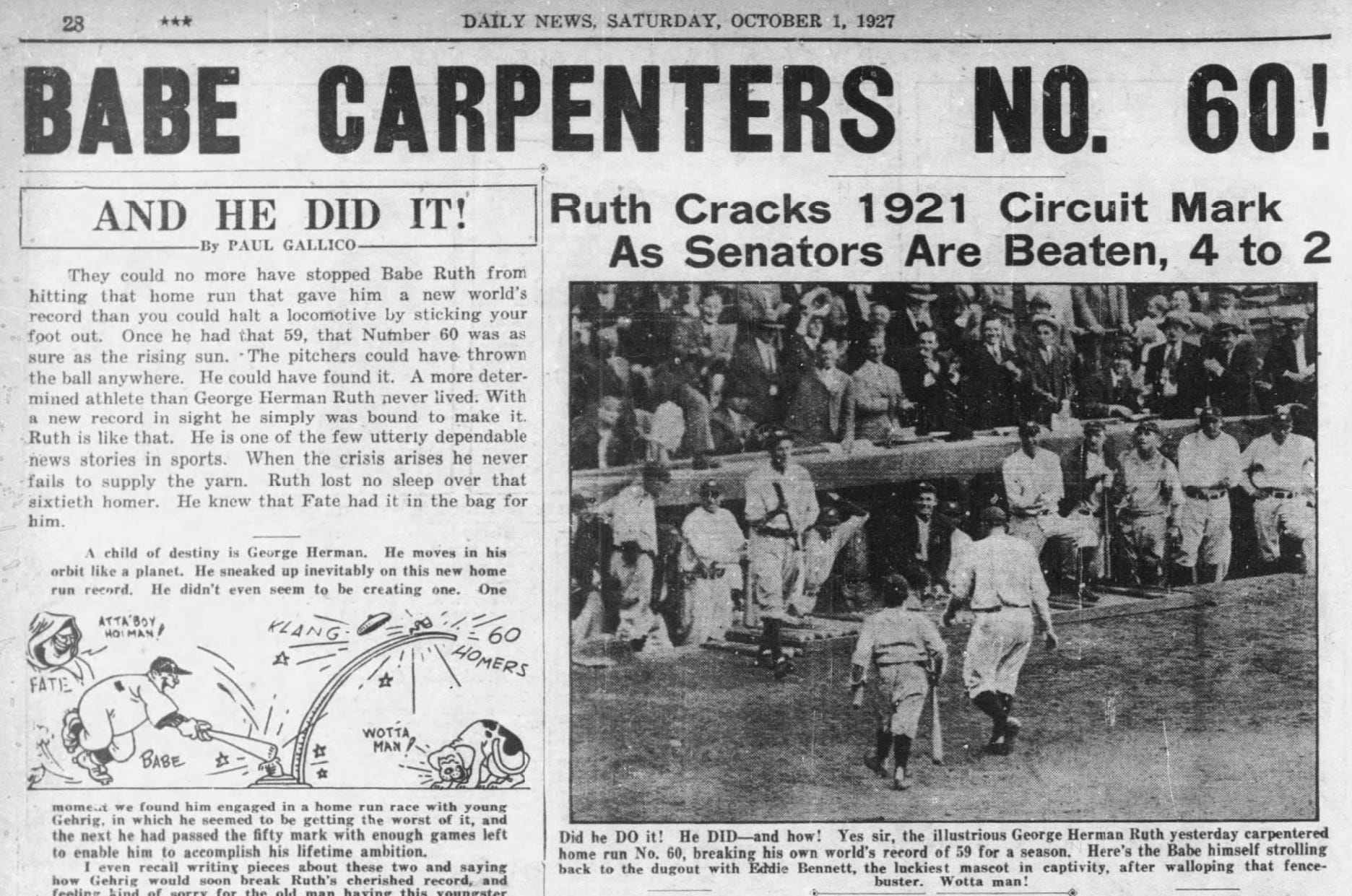
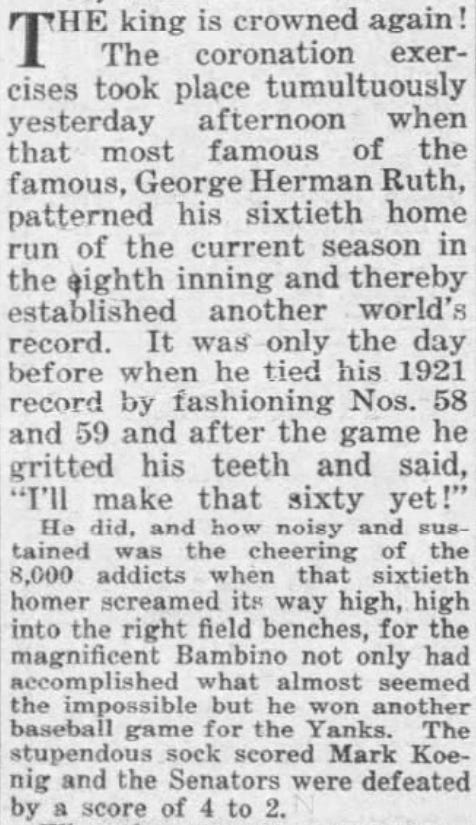
Even with all the hype that The New York Daily News could muster, Ruth’s feat was accomplished in front of a home crowd of only about 8,000 at Yankee Stadium:
Historically, big baseball crowds were reserved for exciting pennant races and doubleheaders on holidays. If you want an idea of how many people Yankee Stadium could accomodate in 1927, look no further than the traditional July 4 doubleheader:
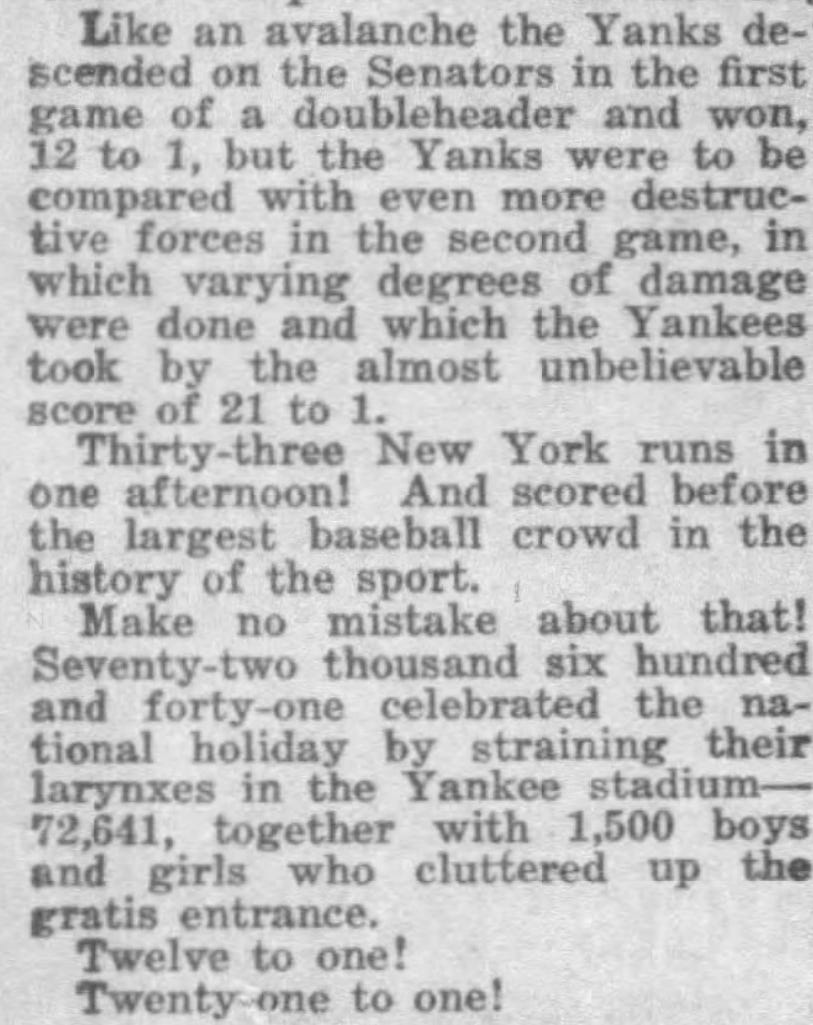
Compared to the crowd of 72,641, that crowd of 8,000 or so was nothing. But you’ve got to remember that the pennant race was already over, and that nobody knew that Ruth would pick that Friday to hit the magical number 60.
We also forget that Maris was in a little bit of a home run slump. It looked like he was a cinch to hit 60 before the end of the season when he hit his 58th on September 17 at Detroit:
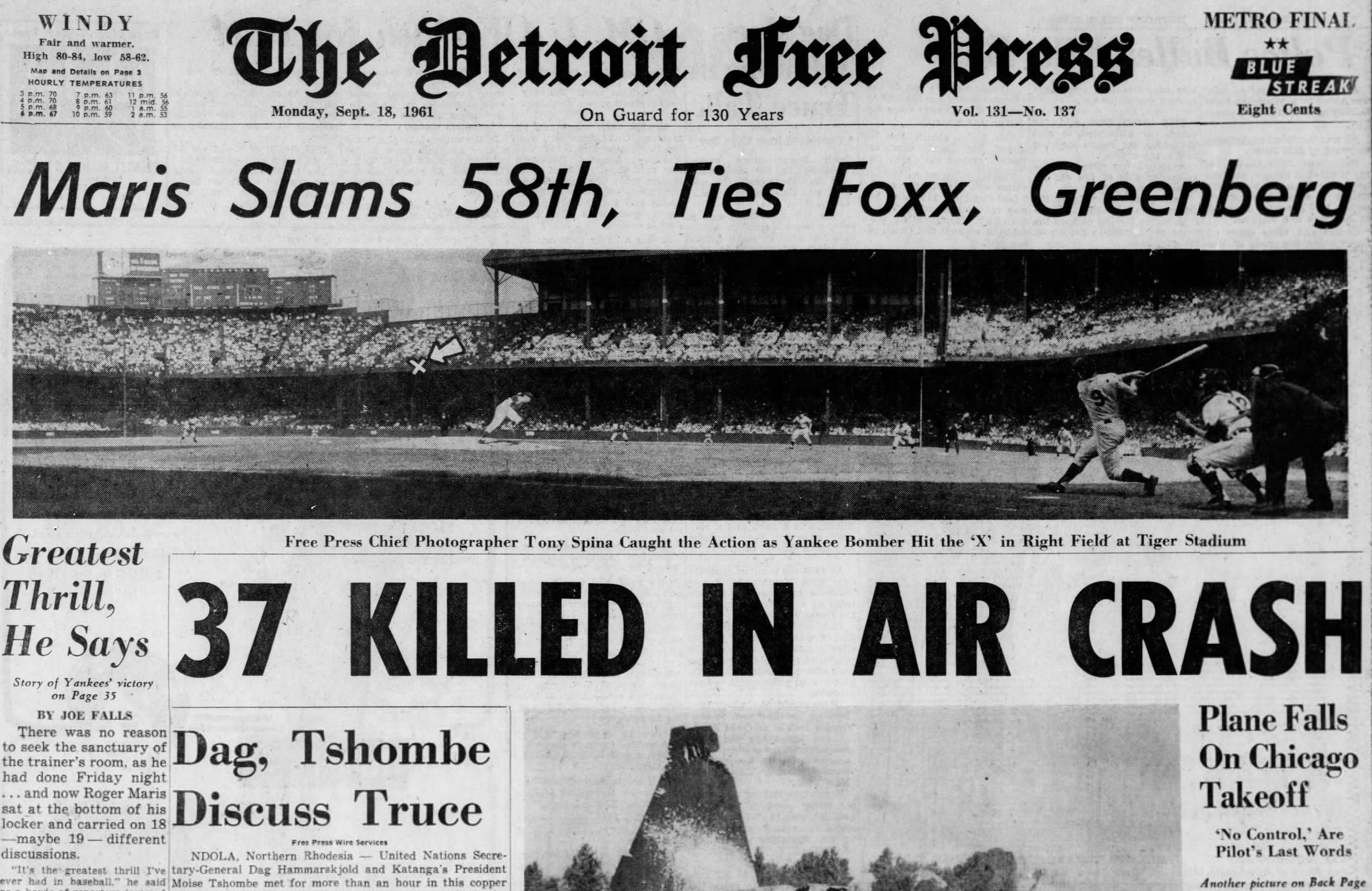
And it’s amazing to me that his 58th home run was seen as more important than a plane crash that killed 37.
Roger then hit number 59 on September 20:
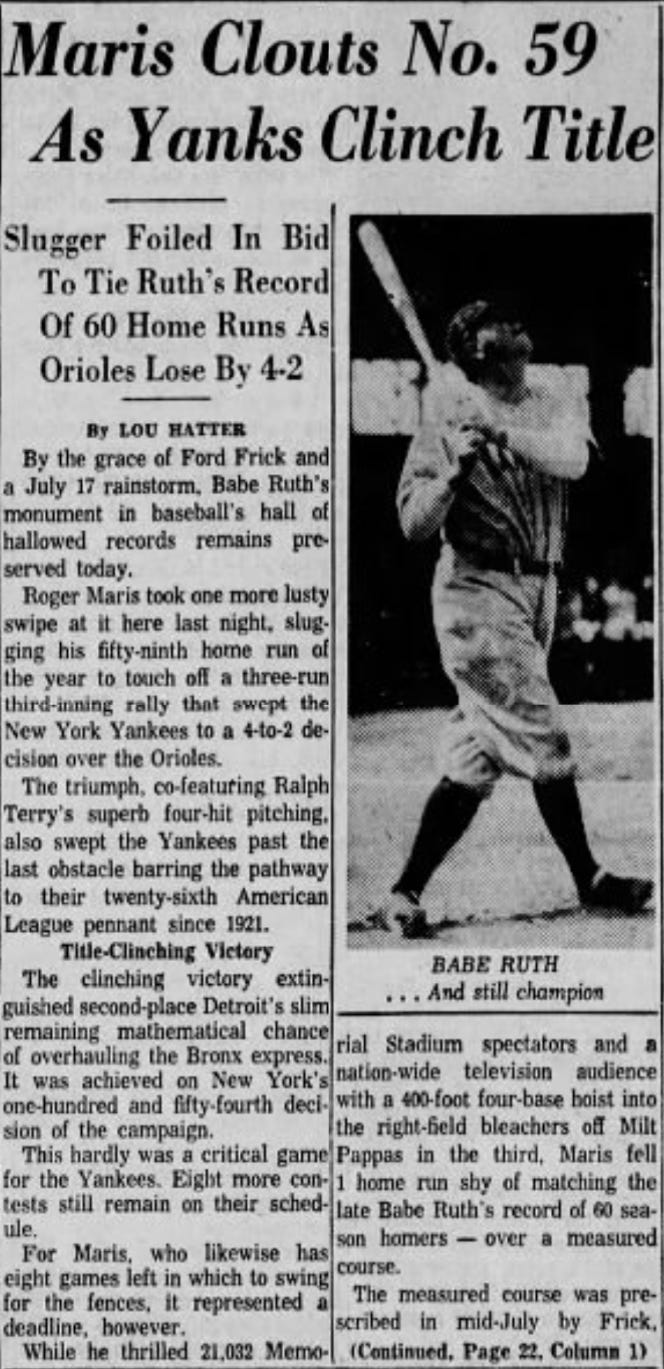
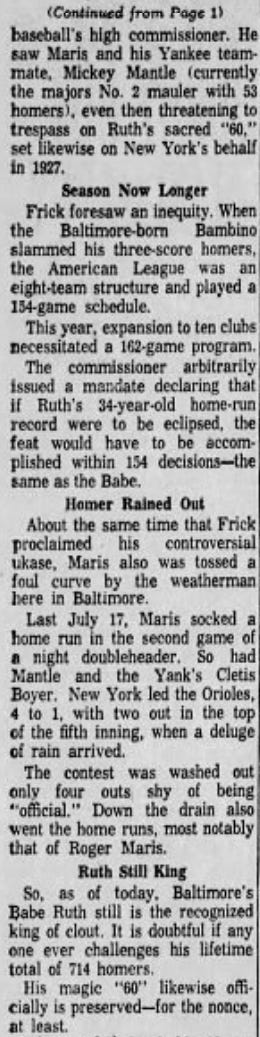
But, as this article says, Maris wound up with only 59 home runs in that game with Baltimore, which marked the 154th official game of the season.
Number 60 didn’t come until September 26 - a Tuesday night home game against the Orioles.
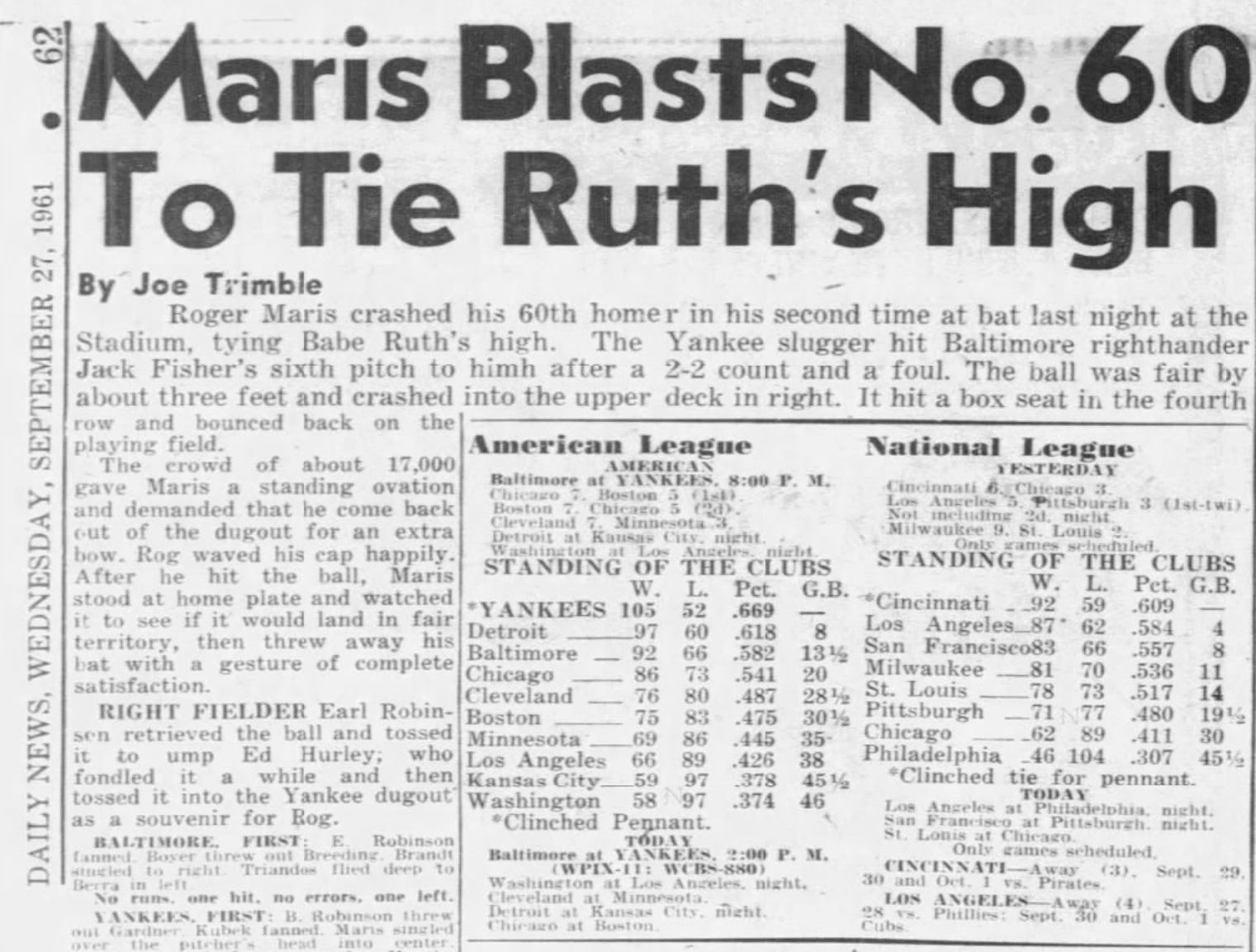
Of course, it’s interesting to note that the Yankees still only drew 17,000 fans for that game.
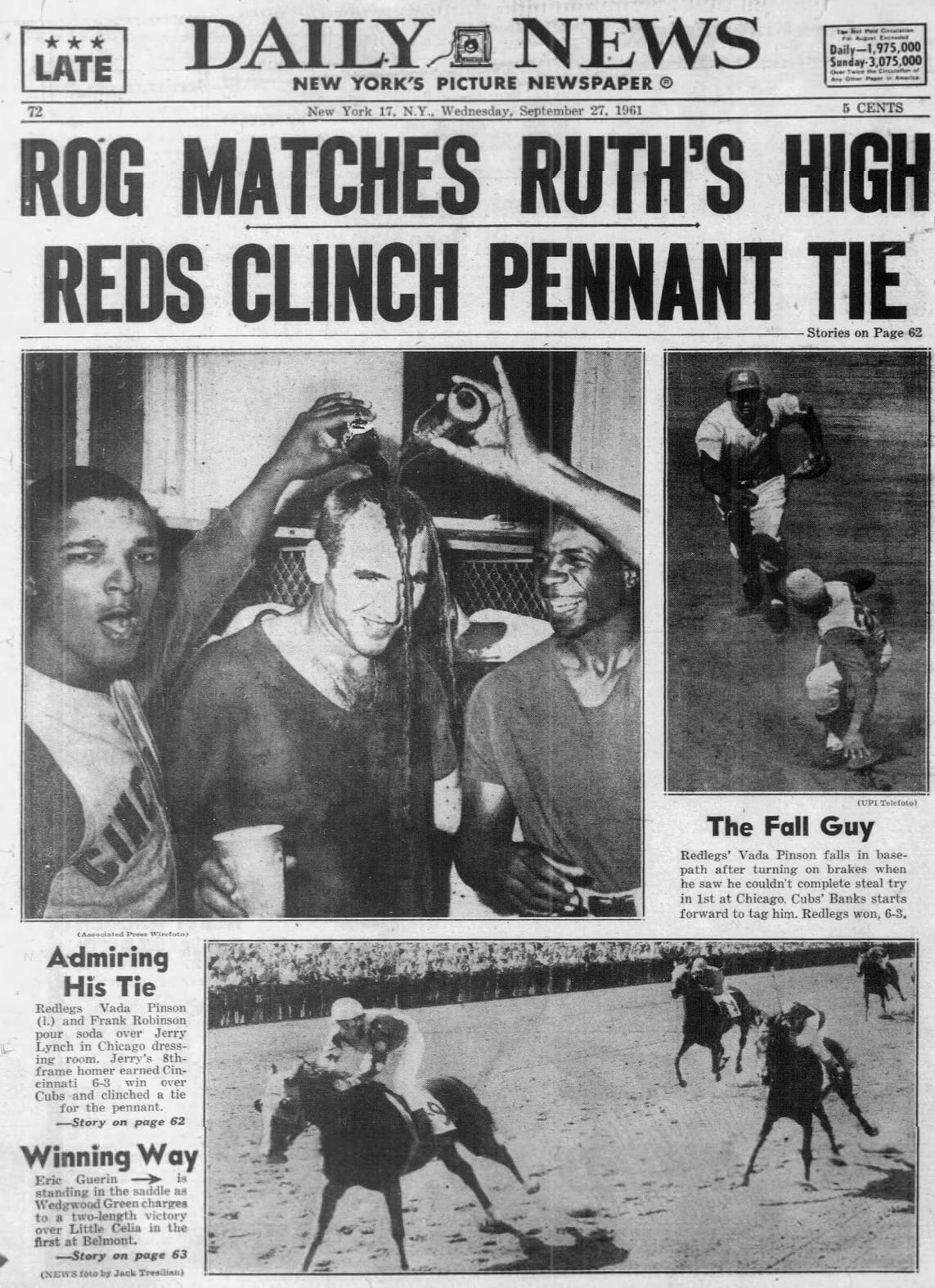
Also, The Daily News didn’t even bother to use a picture from the Yankees game on its back cover:
And then there was that little bit about the famous asterisk.
This was probably the stupidest decision Ford Frick ever made. Frick was a great journalist back in the 1920s, and wrote some fantastic articles about the exploits of the old Yankees. Check out this one, for example:
Still, the fact that the Commissioner of baseball would throw the players under the bus like this in mid-July is absolutely bizarre:
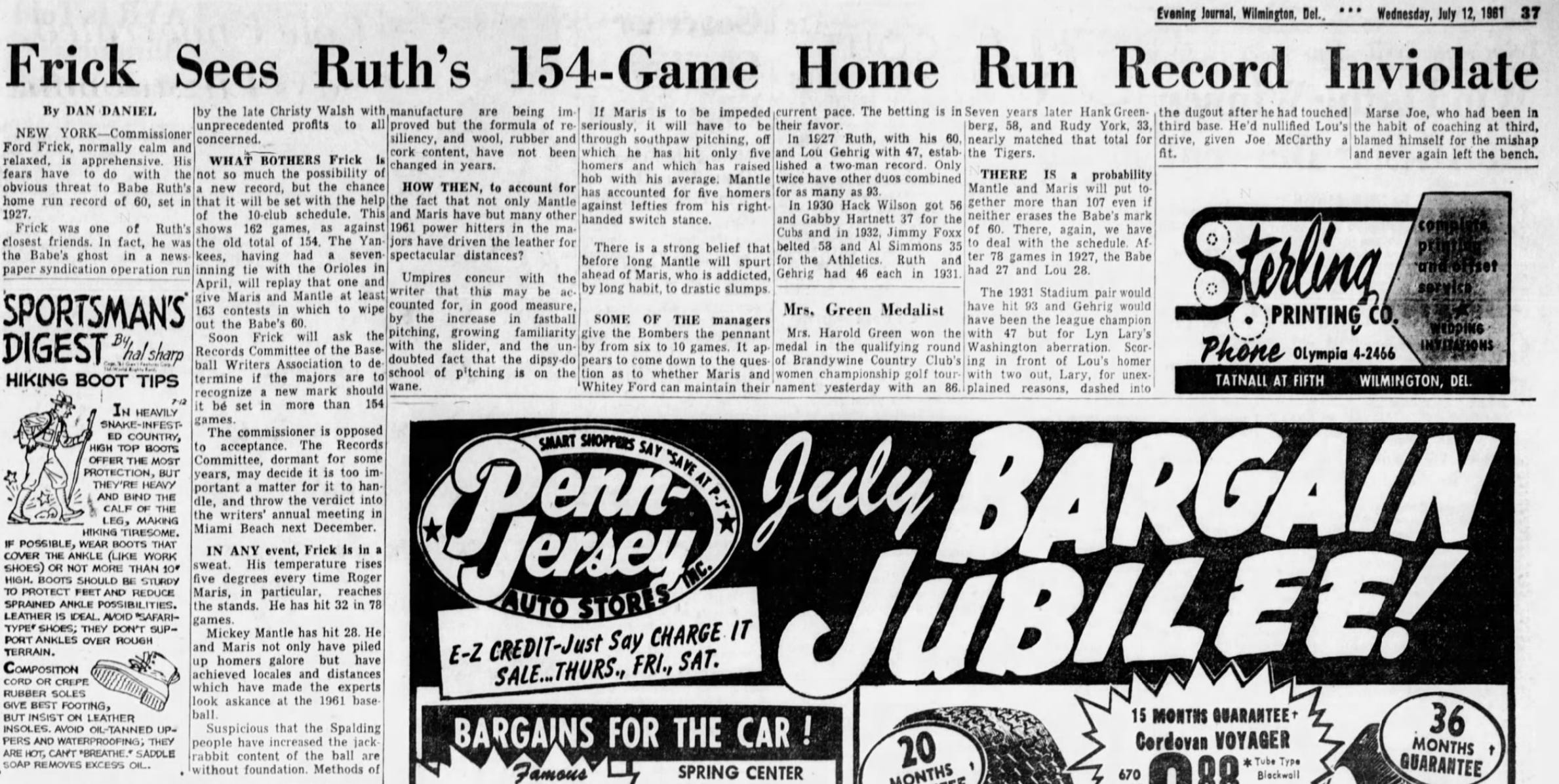
It’s fine to believe that there was only one Babe Ruth and that nothing could ever take his place. But it’s ridiculous to claim that expansion somehow means that it doesn’t count when an old record is broken.
Sadly, though, the story spread, and the fans that might have attended that final game at Yankee Stadium stayed away. We don’t know for sure if Frick’s statements had anything to do with them staying away, but we certainly know that there were fewer people there than we’d expect.
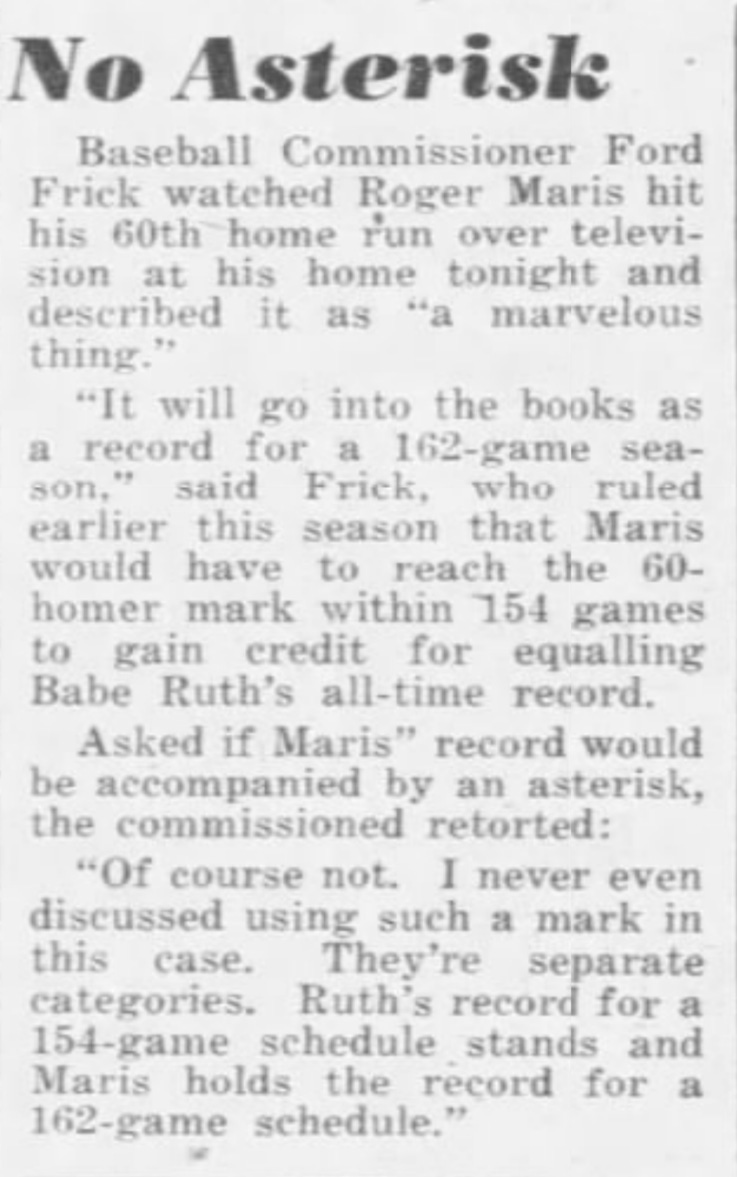
Frick kind of tried to walk back his words before number 61 came, but didn’t do a particularly convincing job of it:
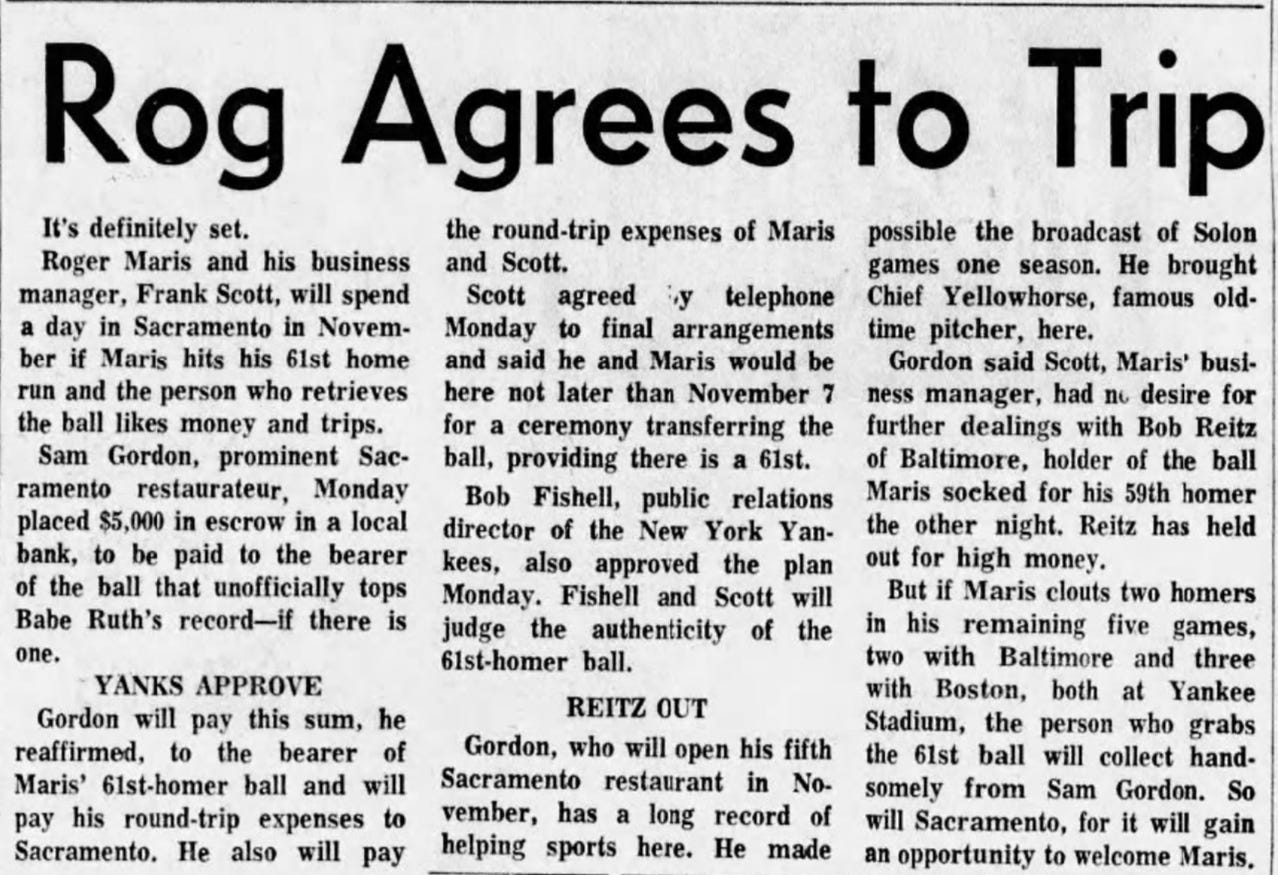
In my mind, though, the most interesting thing is that there actually was an incentive for more fans to attend. A story was printed across the country about a restaurant manager in Sacramento, California named Sam Gordon who offered $5,000 for the record breaking home run:
If you watch the Red Barber television broadcast of the home run, you’ll notice that he mentions that the home run ball is worth $5,000 to whoever caught it:
Barber was referring to Sam Gordon’s request. And I’m sure the old redhead would have wanted to have a second shot at the home run call if he knew what an iconic moment it would later become.
Anyway - as you can see through the grainy video, almost all of the fans at Yankee Stadium that day were sitting in right field.
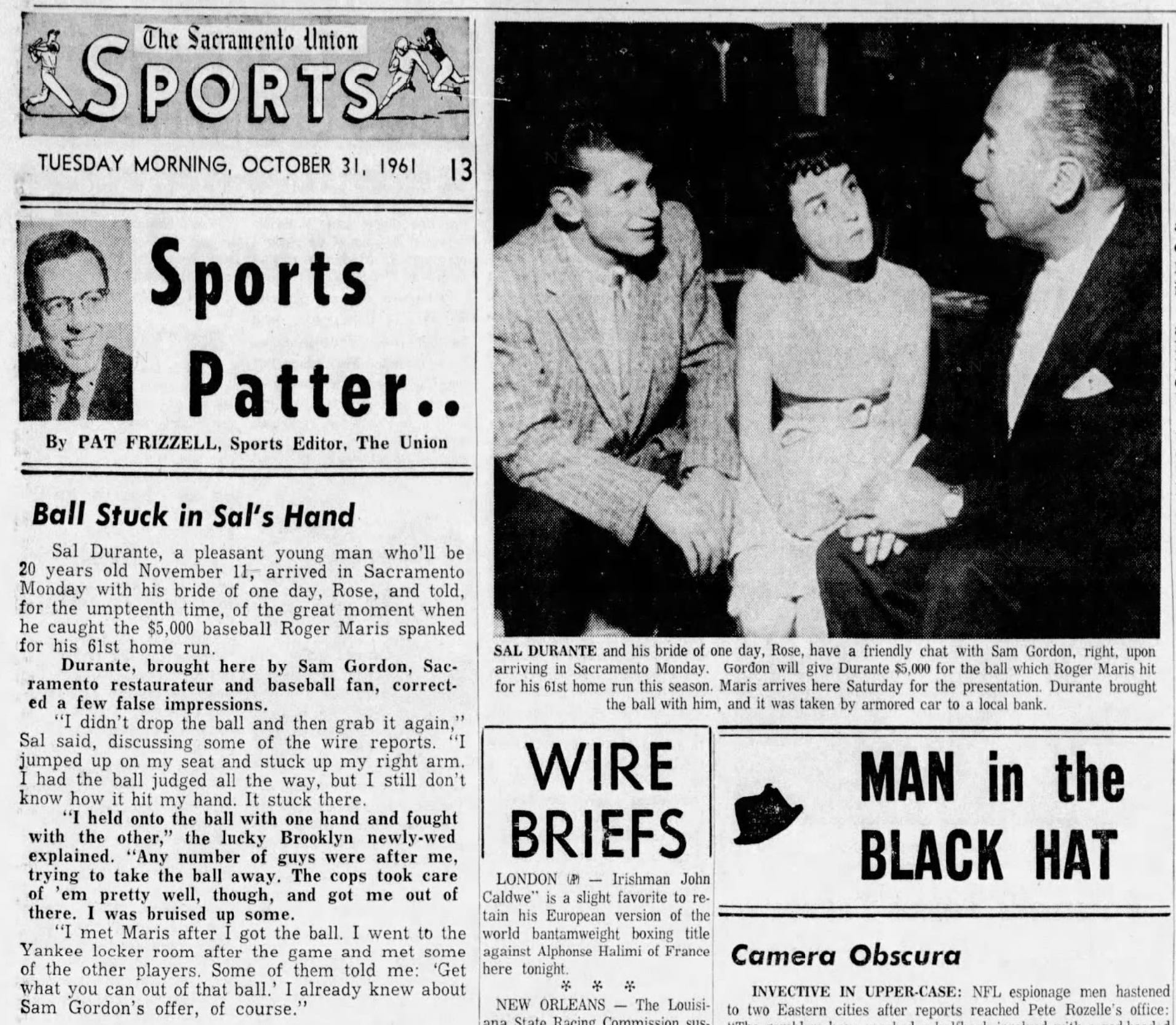
By the way - Sam Gordon lived up to his offer:
I was at the Stadium with my brother and father that day..
Back in the day, Ladies Day (free admission for women) also drew large crowds at the ballpark.