

Work Or Fight
Do you remember about 20 years ago or so, back when New York Yankees fans would chant “1918” to mock fans of the Boston Red Sox?
Well, the more I’ve looked into the 1918 season, the more I realize that just about everything that happened that season was a fluke.
The “work or fight” order first appeared sometime in either late March or early April 1918. And, once it turned up, it seemed like every newspaper in the United States was supporting it.
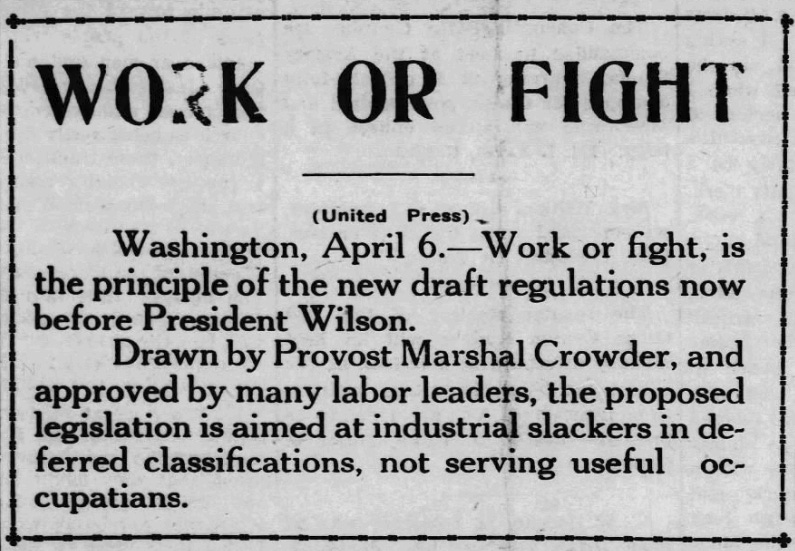
Precisely how a “useful occupation” was defined seems to have been mostly up to the draft boards.
You should know that there was nothing subtle at all about this “work or fight” order. It was as clear as it could possibly be, and everybody knew exactly what the rules were:
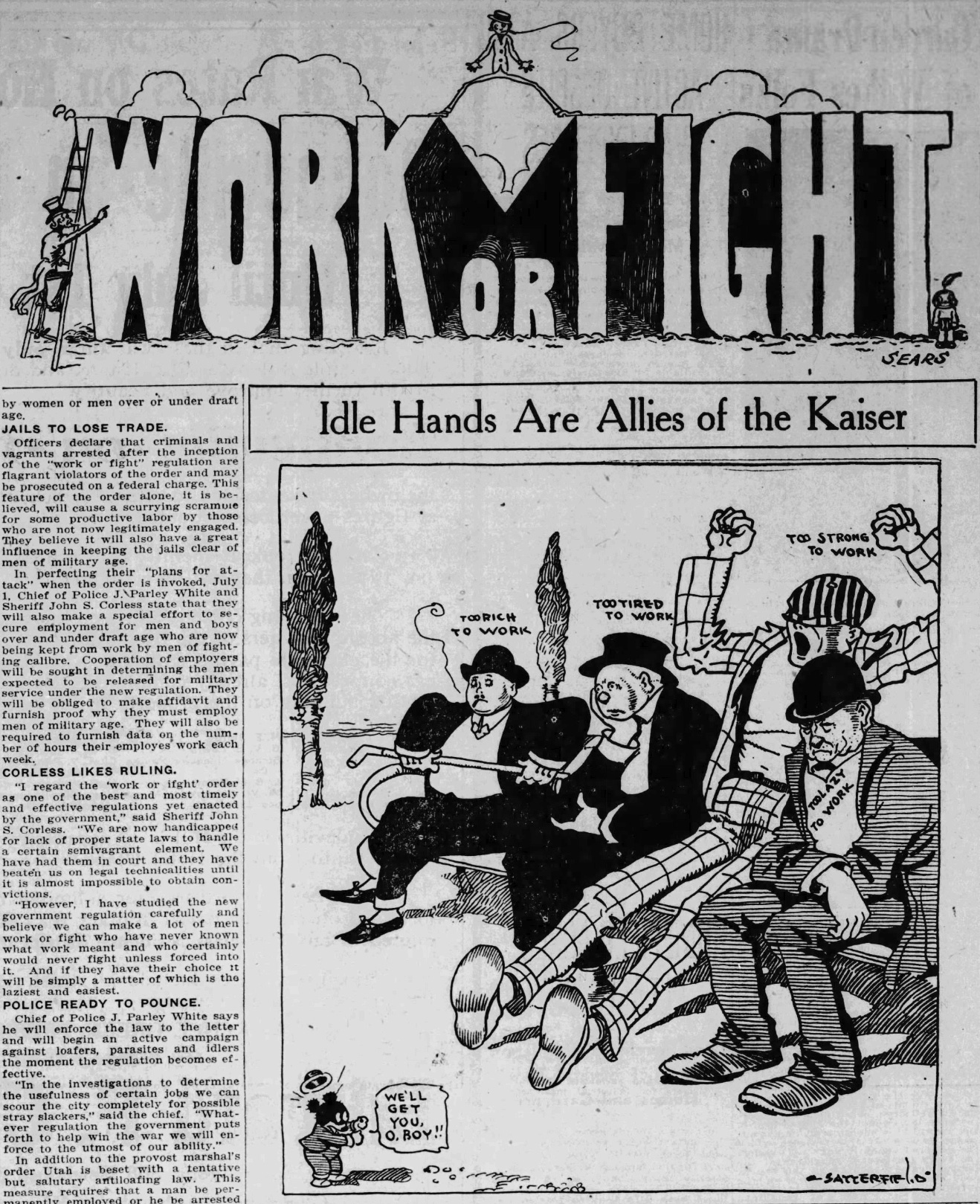
Now, there were a few people here and there in the newspapers who wondered about how all of this might impact the sporting world:
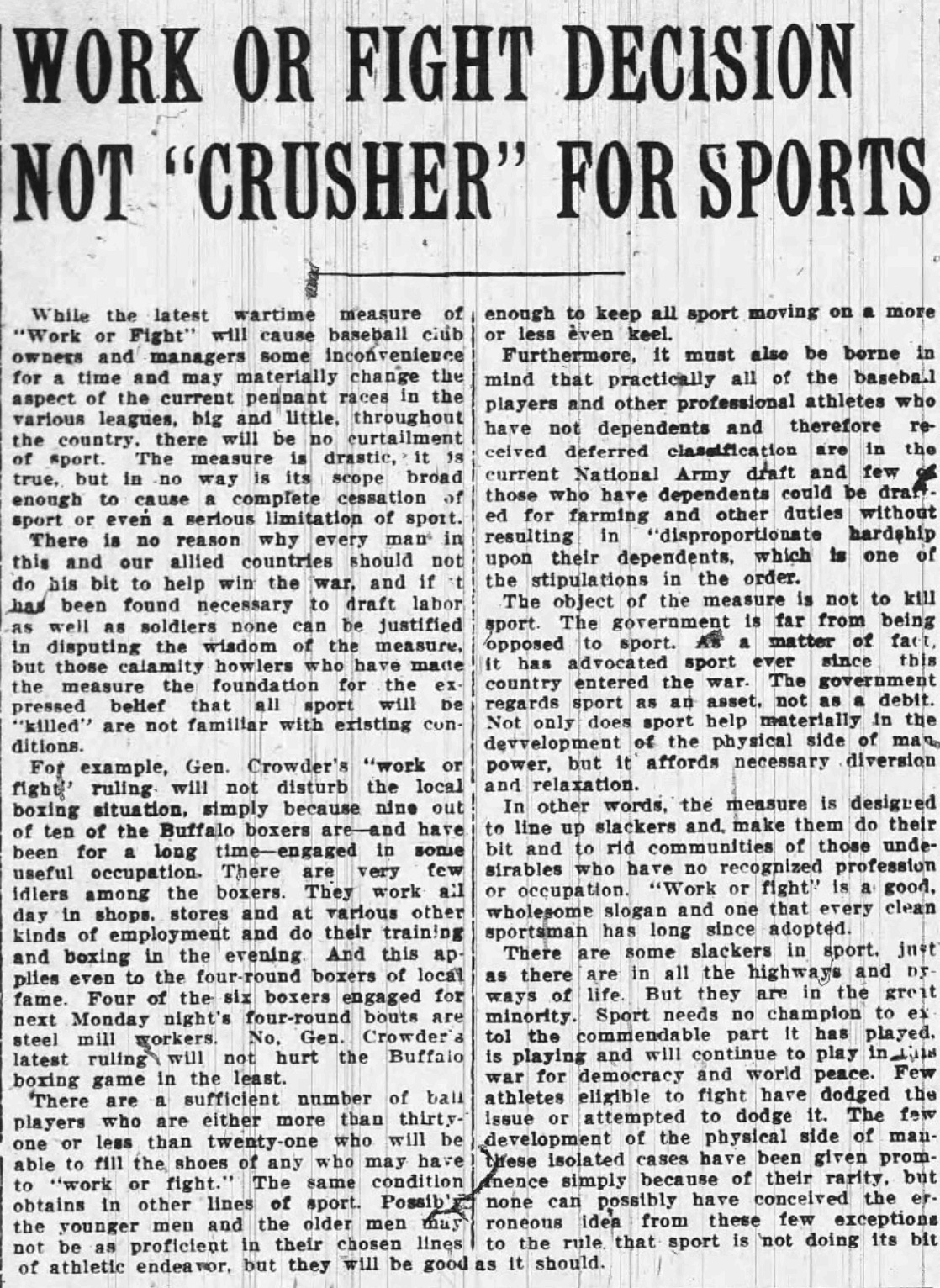
However, even the most famous pro-baseball newspapers, like the old New-York Tribune, decided that the war effort was far more important than the game of baseball. And so you saw articles like this one:
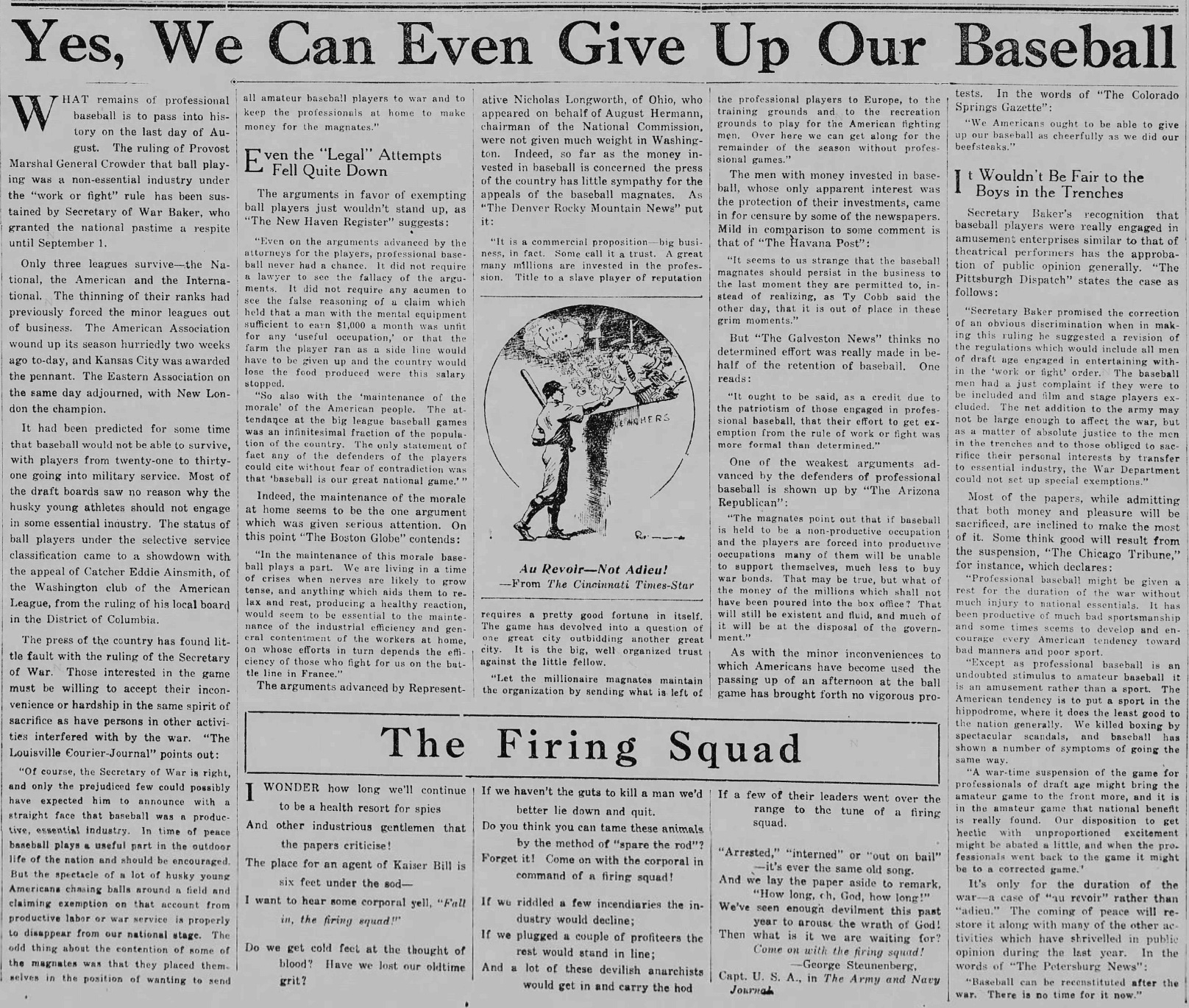
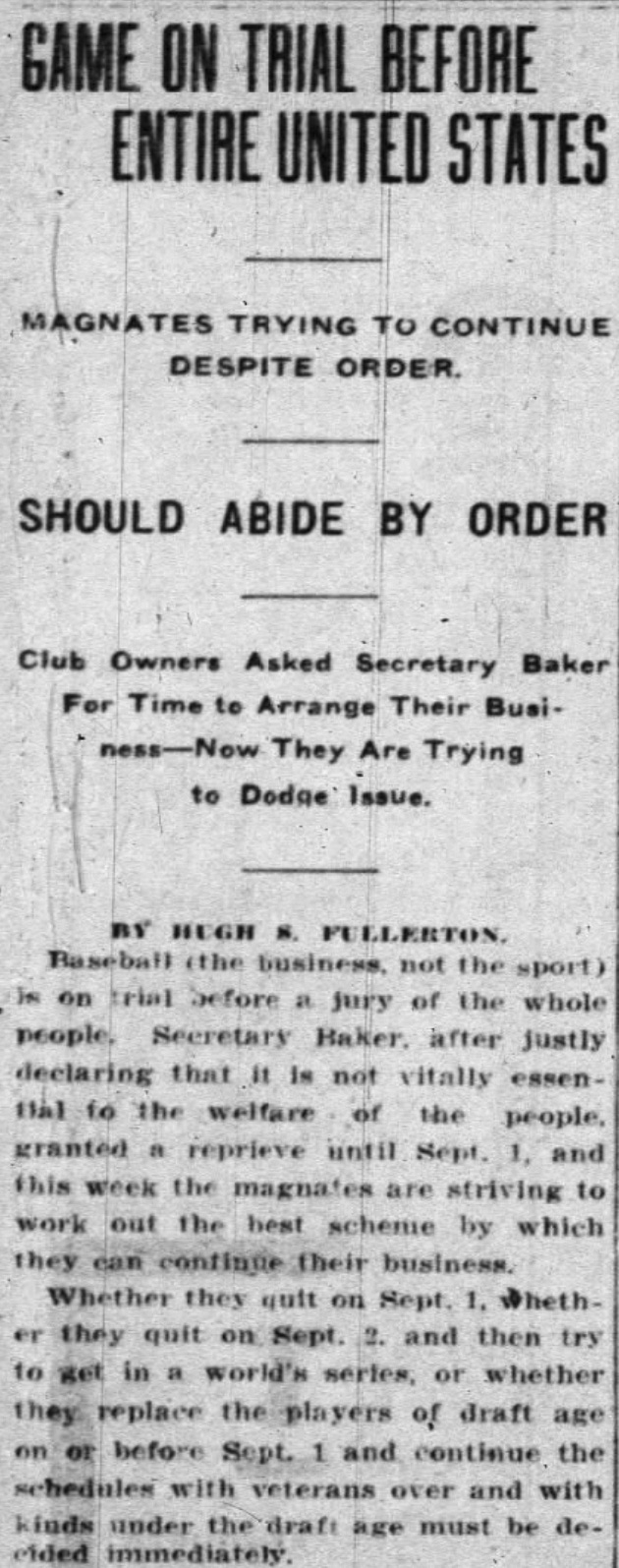
What you have to remember is that the entire 1918 season was filled with talk about forcing players to enlist, find a different occupation in support of the war effort, or risk being drafted. And even the comprompise allowing the season to continue until early September, complete with the traditional World Series, was frowned upon in the sports pages:
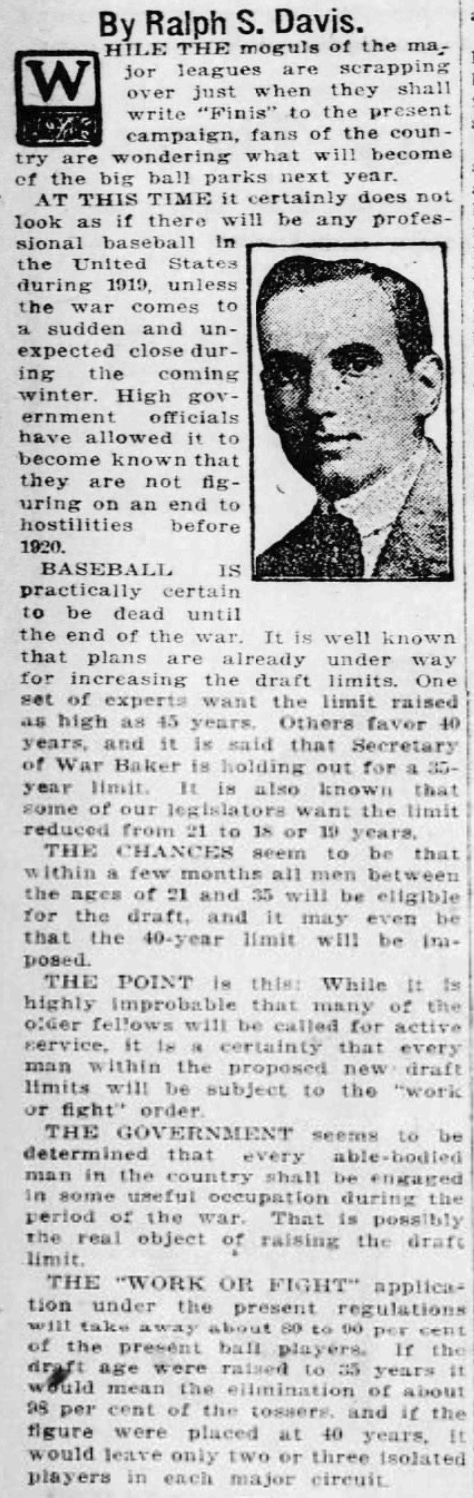
Now, nobody knew when the war was going to end. And so there were assumptions that baseball simply wouldn’t be played in 1919, with hints that the sport might be completely ended:
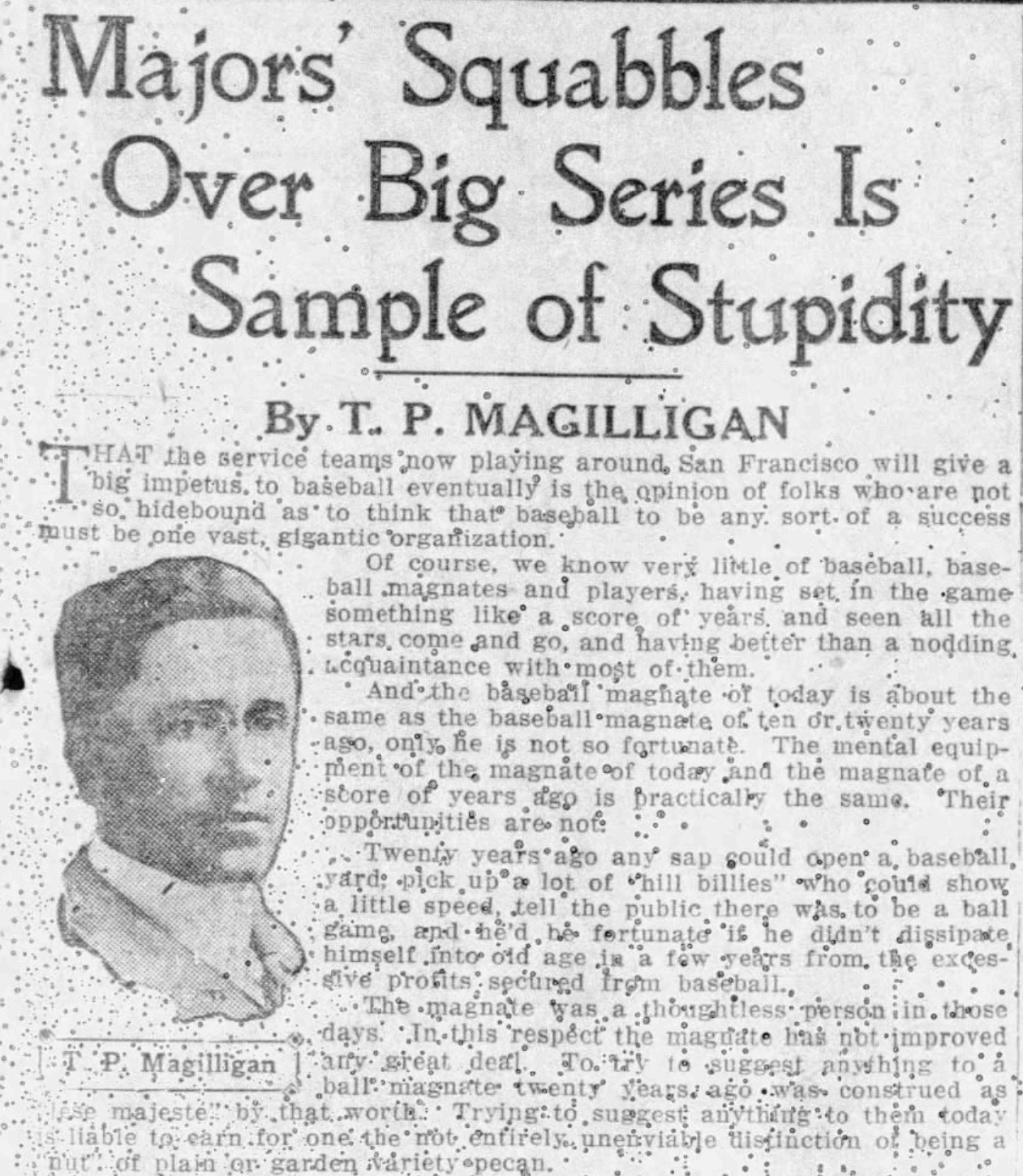
In fact there were a few people who seemed to think that the big leagues were silly for even trying to play a World Series:
And so, when it comes to the curtailment of the 1918 and the shortened 1919 season, you’ve got to keep in mind the general feeling in the baseball media world. The owners almost certainly had a hard time figuring out just where public sentiment was. With nothing more than the media to guide them, they almost certainly worried that the public would be opposed to going straight back to playing baseball as if nothing had happened.